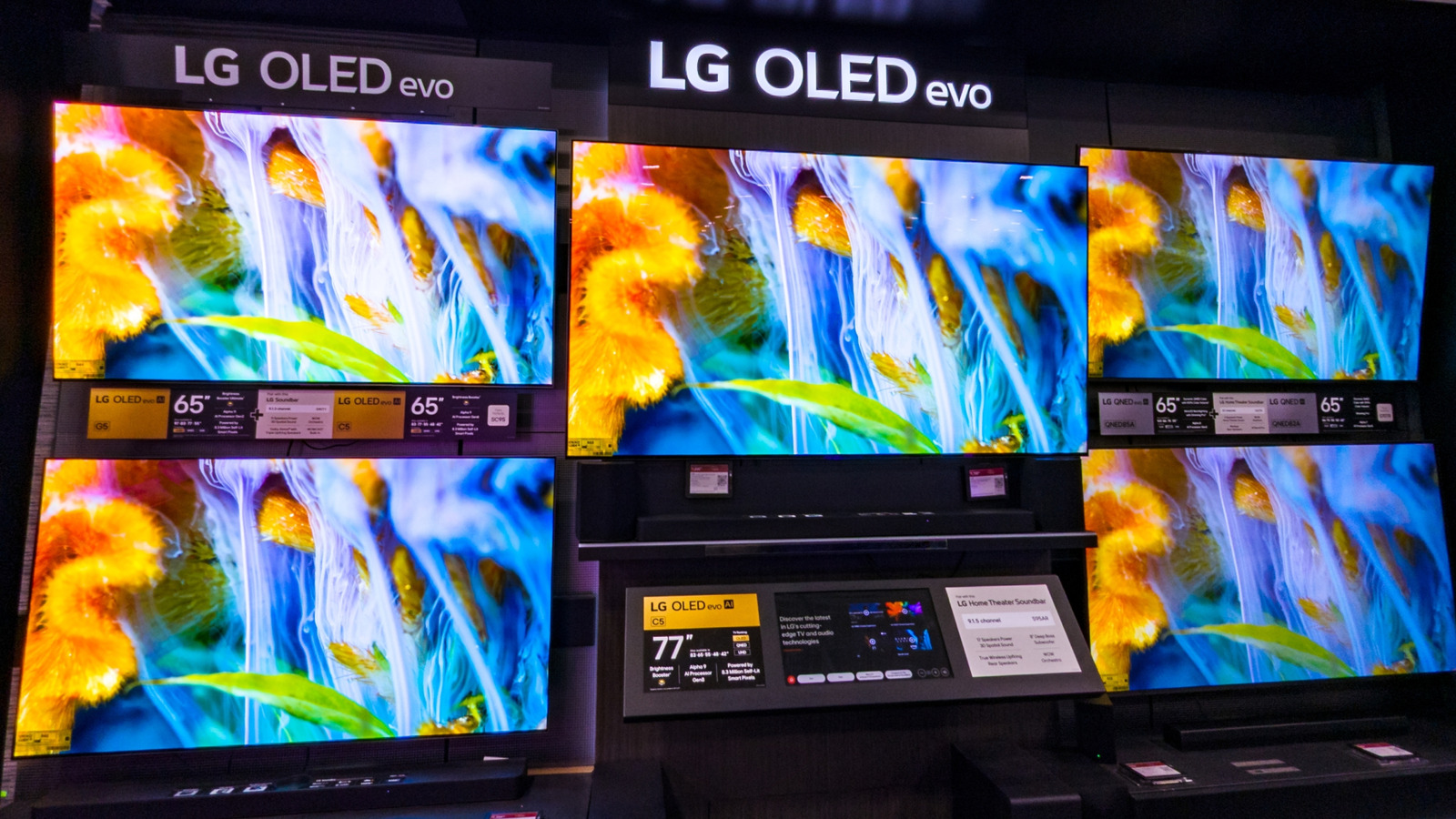
Today’s best TVs and computer monitors use OLED technology. TV makers switched to OLED panels because they provide deeper contrast, vibrant colors, and superior picture quality. However, the technology is not perfect — yet. There’s a missing piece that manufacturers need to find in order to create a truly long-lasting OLED display.
The issue is known as the blue pixel problem. Light is emitted through red, green, or blue pixels at varying intensities to create a full spectrum of color on-screen. However, it takes a higher degree of photon energy to achieve the deep-blue light emission that makes cooler colors appear so rich on an OLED display. This high energy requirement leads to several distinct OLED display disadvantages, including quicker degradation of the blue pixels and noticeable energy inefficiency overall.
The good news is that multiple companies are on the verge of solving the blue pixel problem. In February 2026, the South Korean OLED material firm Lordin announced that it was close to commercializing high-efficiency phosphorescent blue OLED panels. Lordin has secured mass production capabilities in India and a supply of deuterium that can be used to increase the lifespan of various OLED materials. With plans underway to secure $25 million in funding before its initial public offering, Lordin has a real chance in the race to produce OLED panels with more longevity than ever before.
Phosphorescent OLED is the future of long-lasting displays

The search for the missing piece in OLED perfection is not a new pursuit. The OLED blue pixel problem has been a known issue since the technology’s early days. A long-lasting OLED display strives for phosphorescence, which is a way to store electrical energy before emitting light. Unlike fluorescent light, phosphorescence can deliver 100% luminous efficiency at a quarter of the energy cost. OLED panels solved red and green phosphorescence more than 20 years ago, but the blue pixel remains a conundrum.
Back in 2025, LG announced that it was close to achieving a “dream OLED” with blue phosphorescent panels that can reach 100% luminous efficiency even for the blue pixel. Widespread commercialization of a fully phosphorescent OLED display, or PHOLED, has still yet to occur. Other kinds of OLED displays, such as WOLEDs and QD-OLEDs, attempt to get around the issue by creating colors in different ways. With companies like LG and Lordin pouring resources into the blue phosphorescence race, though, it’s clear that sights are set on a PHOLED future.