




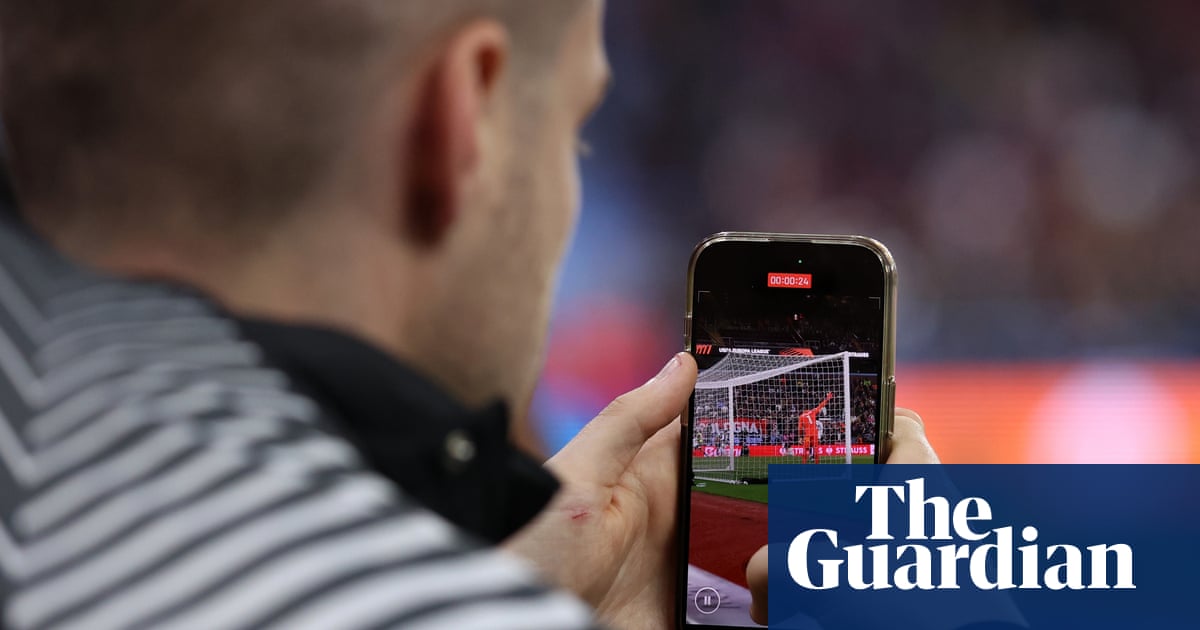
In this World Cup year, Fifa has come out of the blocks quickly. In the past few weeks any number of initiatives have been announced or activated, from a data partnership with Opta to facilitate more betting, to the Fifa Pass for speeding up visa applications for the US this summer, to the unveiling of the official Lego World Cup trophy. Among the ever-expanding list is an intriguing deal with TikTok, a partnership that will give digital creators front-row seats at the 104-match tournament.
In Fifa language its partnership with the short-form video platform will make “the most inclusive event in football history … even more accessible”. According to TikTok’s global head of content, James Stafford, it will bring fans “closer to the action in ways they can’t get anywhere else”. It plans to do so by granting an unspecified number of online personalities behind-the-scenes access, giving them archive and highlights footage to use in their content and, in return, requesting an avalanche of posts that will make the World Cup inescapable for TikTok users.
In choosing TikTok as its preferred platform Fifa is catching up with the times. The use of creators, also known as influencers, is increasingly essential for any consumer business. The NFL has integrated creators (quick definition: online personalities who make their living from posting on social media) into coverage of the Super Bowl since the turn of the decade. But the full possibilities of the creator economy are only beginning to be explored by sports organisations.
Last summer the streaming company Dazn built its own creator network for Fifa’s Club World Cup. It enlisted as many as 50 creators to post videos that built excitement around the event, be they behind-the-scenes tours, interviews with players and coaches or stunts such as racing to see who could make it to the Chelsea v Palmeiras game on time.
“It was a new tournament and we wanted to hit every lever we possibly could to generate awareness in as many places as possible, particularly with a younger audience,” says Joe Caporoso, the president of Team Whistle, a Dazn-owned company that specialises in digital strategy. “We searched through people who had strong organic followings on places like Instagram and TikTok, and who had a history of a high volume of posting consistency around not just the sport of soccer, but also the culture of it. We wanted to make sure we had people and creators who spoke authentically and were not shy about showing everything that goes on around the game.”
From there, Caporoso’s team laid out a campaign that defined the amount of content creators were expected to generate. A group of editors and content programmers made sure each post was optimised for maximum exposure and liaised with creators to make sure no potential talking point or key moment was missed. Dazn and Whistle tracked the performance of each post, monitored the traffic that went back to Dazn’s coverage, and discussed the outcomes with TikTok.
This is a degree of oversight materially higher than that of, say, the BBC over Gary Lineker at the last European Championship. It gives a clue to one reason why creators are coming to the fore in sports coverage. Not only are they generally younger, part of a demographic sports leaders are anxious to attract, not only are they trusted by their audience due to a perceived authenticity, but creators are comfortable working in a media environment where the demands of the client come first. Their productivity can be off the charts. They perform, they shoot, they edit, they strike promotional deals, they post regularly and often. They are, in Caporoso’s words, “one-person companies”.
TikTok says the Club World Cup creator platform drove more than 500,000 fans to Dazn’s service and that 90% of fans take “at least one off-platform action” after viewing sports content on their app. Fifa says its creator platform is designed for similar purposes, such as directing new viewers to its match coverage, but it could perform other functions too. It could be a new revenue stream, for example, with Fifa taking a cut from the advertising revenue generated on TikTok through the deal. It could be a way of expanding the reach of sponsorship deals Fifa has elsewhere. It establishes a relationship with a tech giant who may yet be tempted into paying for broadcast rights more broadly. Finally, the new platform could also provide a means for shaping the way the World Cup is talked about.
Instead of allowing the post-match debate or attention between matchdays to be channeled by media companies, a creator platform deal keeps sports organisers in the conversation. “It’s a way for them to become a partner and to have their say, a bit of their say, in how their material is presented on second screens,” says François Godard of the media research company Enders Analysis. Creators offer the possibility of drumming up enthusiasm should interest begin to wane, but also keeping discussion away from topics that might be problematic. When Dazn secured an interview with Donald Trump before the Club World Cup final, it asked Emily Austin, from its roster of creators, to conduct it. A Maga enthusiast and marketer of Trump Derangement Syndrome merchandise, she flattered the US president and Fifa while celebrating the success of the tournament.
Creators present an efficient and effective way of reaching audiences with a defined message. Godard, however, is sceptical of how useful they might be in driving audience growth for sport. “In our data, we see that the viewership of traditional TV by the 16-to-34 age group has collapsed over the past 10 years, but not in sports,” he says. “That’s because sports is unique. It’s live, and there’s no alternative.”
Reports in the US have suggested the picture is complicated somewhat by traditional broadcasters having acquired the rights Fifa wants to share with influencers. According to the publication Puck, TikTok would need a sublicensing deal with the broadcaster Fox, an arrangement yet to be struck. In the UK the BBC and ITV jointly hold rights to linear and digital broadcasts. The BBC said it would not comment on rights negotiations.
Godard believes that instead the platform is a play to develop new places where Fifa may ultimately sell its rights, even as it extends the offering on its Fifa+ broadcast platform (thanks to a new deal with Dazn). Whatever the outcome, it may be just that creators have the power to disrupt the media environment that has made Fifa decide to embrace them.


