




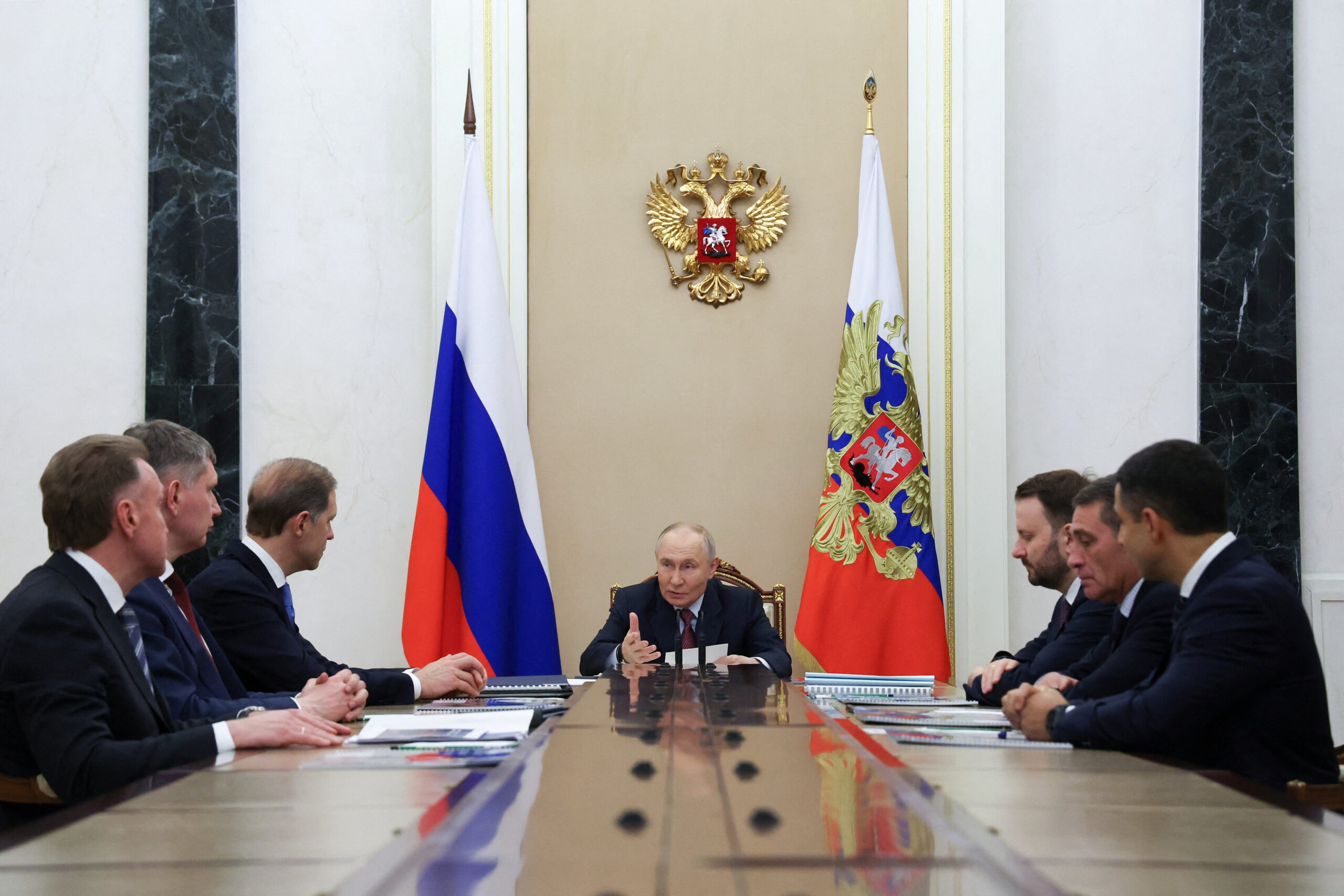
With the full-scale invasion of Ukraine set to enter a fifth year, there are growing indications that things are not going according to plan for Russian President Vladimir Putin. On the front lines of the war, Russia continues to suffer catastrophic casualties while failing to achieve any meaningful breakthroughs. Despite holding the battlefield initiative throughout 2025, the invading Russian army managed to capture less than 1 percent of additional Ukrainian territory.
Putin also has cause for mounting concern on the home front. The Russian economy is showing signs of strain amid sanctions pressure and other negative factors including falling oil prices and declining energy export revenues. Meanwhile, the recent US raid in Venezuela and subsequent seizure of a Russian-flagged oil tanker in the Atlantic Ocean have underlined how the war in Ukraine is diminishing Moscow’s ability to project power internationally.
This deteriorating picture is now fueling debate over how much longer Russia can maintain the current invasion. It is also raising more fundamental questions about the fragility of the Putin regime. Given the Russian state’s multiple twentieth century implosions, such speculation is inevitable. However, there is currently little to indicate that the country is close to repeating the collapses of 1917 and 1991.
Most studies of autocracies have concluded that the biggest single threat to regime stability comes from existing elites. Putin is apparently well aware of this and has worked hard to minimize the danger of a potential palace coup. While dissent is still possible among Kremlin powerbrokers, Russia’s current ruling class is too closely tied to Putin to mount any serious challenge. One of the Russian ruler’s longstanding allies, Dmitry Kozak, reportedly opposed the full-scale invasion of Ukraine and advocated for de-escalation. But rather than triggering open resistance, this disagreement led to Kozak’s quiet removal from office.
There have also been reports of disagreements within the Kremlin over the handling of the war economy, with diverging opinions on key issues such as financial policy and attracting international investment. However, these differences of opinion have not translated into a serious public split.
The single biggest wartime test for the regime so far came in summer 2023 with the Wagner mutiny. This dramatic episode exposed a potential regime vulnerability, but the uprising ultimately proved short-lived due to a lack of defections from within the Russian military and political establishment.
Crucially, while there was little evidence of any rallying around the flag during the brief mutiny, no major security institutions or regional authorities sided with the Wagner rebels. Instead, most chose to wait rather than commit. Once the initial threat had been contained, Putin was able to reassert his authority. This was widely seen as vindication of the highly personalized style of government established during Putin’s reign, with no rival power bases capable of presenting a direct challenge.
Further opposition from disgruntled military personnel cannot be ruled out, but there appears to be virtually no prospect of a broader anti-regime protest movement emerging within Russia. A number of protests took place during the first weeks of the full-scale invasion but failed to gain momentum. Draconian new legislation is now in place, increasing the penalties for any public opposition to the war. An unprecedented round of mobilization in September 2022 proved deeply unpopular among the Russian public, but most opponents chose to flee the country rather than protest.
The degree of Russian public support for the invasion remains disputed. While polling data consistently demonstrates strong pro-war sentiment, skeptics point to obvious issues regarding the credibility of opinion surveys conducted in military dictatorships. Nevertheless, it seems clear that the organizational capacity for any meaningful opposition in today’s Russia is weak, while the information environment is tightly controlled.
Eurasia Center events

The Putin regime has been careful to minimize the risk of any backlash over heavy Russian losses in Ukraine. During the last decade of the Soviet era, public anger over the deaths of conscript soldiers in Afghanistan helped destabilize the USSR. Similar processes were also evident during the Chechen wars of the early post-Soviet period.
Putin has tailored his military recruitment policies with this threat very much in mind. Rather than relying on conscripts, he has focused on enlisting men predominantly drawn from ethnic minorities and the prison population. The Russian army also depends heavily on volunteers enticed by the promise of large initial bounties and generous salaries.
Despite the Kremlin’s best efforts, risks remain. Russia’s disproportionate use of ethnic minority troops could lead to a surge in anti-regime moods and separatist sentiment in places like Ingushetia and Dagestan. If current downward economic trends continue, Moscow may also find it increasingly challenging to fund the big payouts necessary to secure a steady flow of new volunteers. The war will inevitably remain Putin’s top priority, but money diverted to the army from other sectors will create the potential for discontent elsewhere.
The same logic could also apply to Russian losses in Ukraine. So far, the huge human cost of the invasion has not sparked a major domestic backlash, but with monthly casualty figures now reportedly reaching record highs, public dismay may yet become a destabilizing factor.
Western policymakers need to be aware that while there is no reason to expect an imminent collapse of the Putin regime, the end could come suddenly. Few were predicting the demise of the Tsarist Empire in 1916, or the fall of the Soviet Union in the late 1980s. Putin has constructed formidable defenses during his twenty-six years in power and has done much to anticipate any possible sources of internal opposition. Nevertheless, the costs of maintaining this system could spiral out of control amid a fifth year of war, leading to dangerous consequences that he may be unable to contain.
An awareness of the Putin regime’s weaknesses and vulnerabilities should inform the Western approach to the war and help shape the faltering peace process. Western leaders will also likely be guided by concerns that if Putin does fall, this could lead to a future Russia that may be far darker and even less predictable than the current regime.
William Dixon is a senior associate fellow at the Royal United Service Institute specializing in cyber and international security issues. Maksym Beznosiuk is a strategy and security analyst whose work focuses on Russia, Ukraine, and international security.
The views expressed in UkraineAlert are solely those of the authors and do not necessarily reflect the views of the , its staff, or its supporters.


The Eurasia Center’s mission is to enhance transatlantic cooperation in promoting stability, democratic values, and prosperity in Eurasia, from Eastern Europe and Turkey in the West to the Caucasus, Russia, and Central Asia in the East.
Image: Russian President Vladimir Putin chairs a meeting on the development of the chemical industry at the Kremlin in Moscow, Russia. February 2, 2026. (Sputnik/Vyacheslav Prokofyev/Pool via REUTERS)


