A growing number of brands are daring to be bold on social media. Ryanair — the Irish low-cost airline — is a well-known example. Another standout contender that blends humor, internet culture, and a fearless brand voice is Duolingo, the language-learning app.
In this article, we’re diving into the genius behind Duolingo’s social media strategy, exploring how the brand turns memes, social media trends, and its chaotic mascot into viral content. And why millions of users can’t get enough of it.
What Is Duolingo?
If you don’t know already, Duolingo is a language-learning platform that helps people learn new languages through short, gamified lessons. Founded in 2011, the app offers courses in dozens of languages (from Spanish and French to Japanese and Korean) and has become one of the most downloaded education apps in the world.
What Does a Typical EdTech Social Media Strategy Look Like?
Let’s leave Duolingo aside for a minute and talk about the typical social media strategy used by most EdTech brands. Because these companies focus on education and learning, their social media content usually aims to be helpful, informative, and professional. The goal is often to showcase expertise, promote the product, and support users in their learning journey.
You’ll often see:
- Educational tips and study advice
- Tutorials or quick language-learning lessons
- Motivational posts about learning and self-improvement
- Polished graphics or professionally produced videos
- Product updates and feature announcements
- A formal, helpful brand voice with little risk-taking
While this type of content can be useful, it rarely generates the kind of viral engagement seen across today’s social platforms. Duolingo, however, takes a completely different approach.
Duolingo’s Social Media Strategy: Chaos, Humor, and Internet Culture
So, how come Duolingo’s social media strategy is so different? Well, that’s because the brand leans heavily into something entirely different: entertainment.
Instead of treating social media like a classroom, the brand treats it like the internet. Its content is built around memes, trends, and humor that feels native to each platform. At the center of it all is Duo the Owl, Duolingo’s mascot, which has evolved from a friendly lesson reminder into a chaotic online personality.
A few things define Duolingo’s approach:
- Entertainment first, marketing second
- Heavy use of memes and trending formats
- A strong mascot-driven personality
- Self-aware humor that resonates with younger audiences
- Content designed to feel native to platforms like TikTok and Instagram
Their social media presence doesn’t feel like marketing at all. It literally feels like a brand that genuinely understands how people behave online—and knows exactly how to join the conversation.
Duolingo’s TikTok Strategy
If there’s one platform that truly defines Duolingo’s social media success, it’s TikTok.
Rather than promoting language lessons or app features, Duolingo focuses almost entirely on entertainment. Most videos feature Duo the Owl reacting to trends, acting out exaggerated scenarios, or joking about users who ignore their daily lessons.
One example shows Duo asking, “How was your lesson today?” followed by the line: “I know you did it while pooping.” The post is absurd, relatable, and perfectly aligned with internet humor.

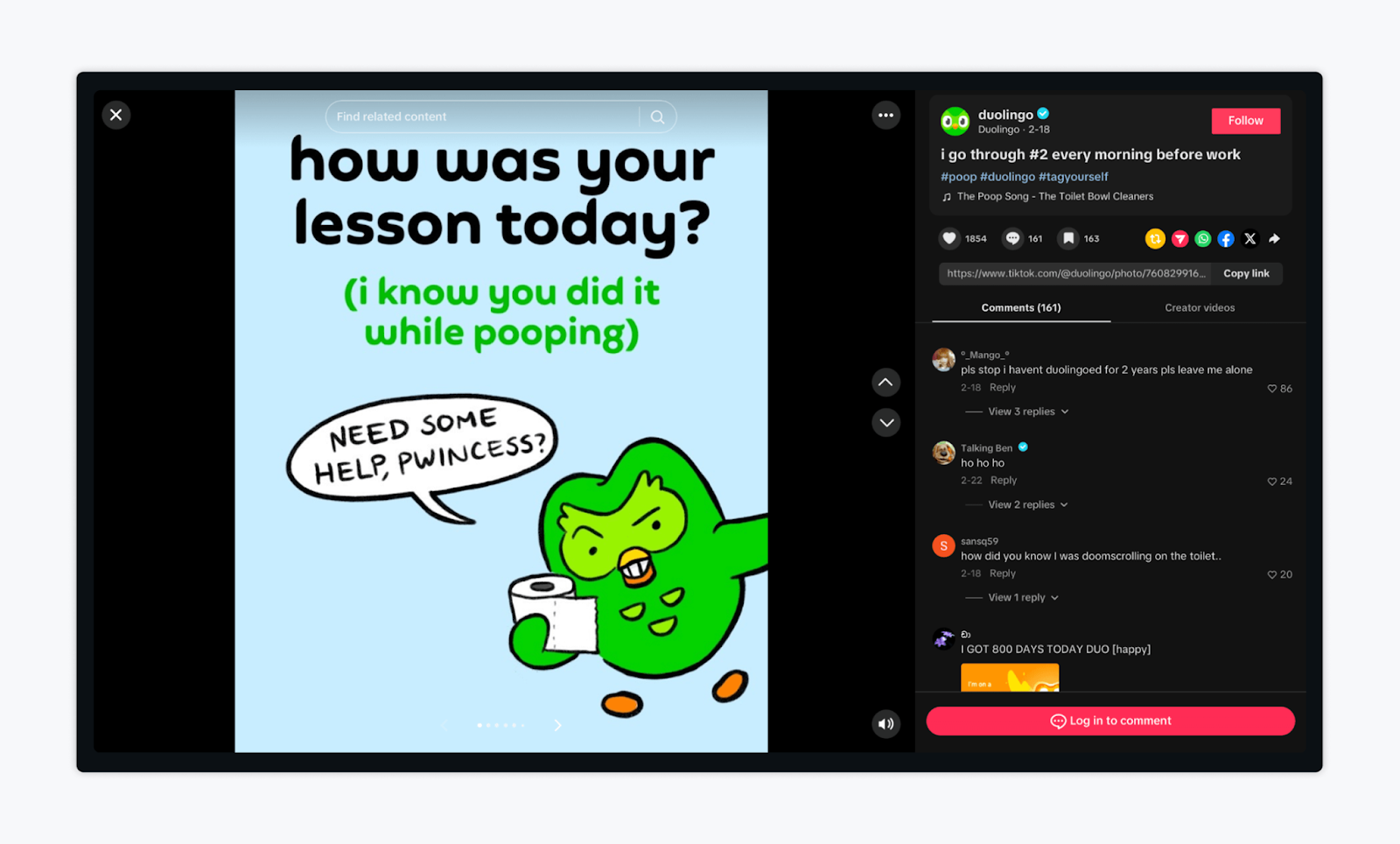
Why it works? Well, because it’s simple, self-aware, and highly shareable!
Duolingo’s Instagram Strategy
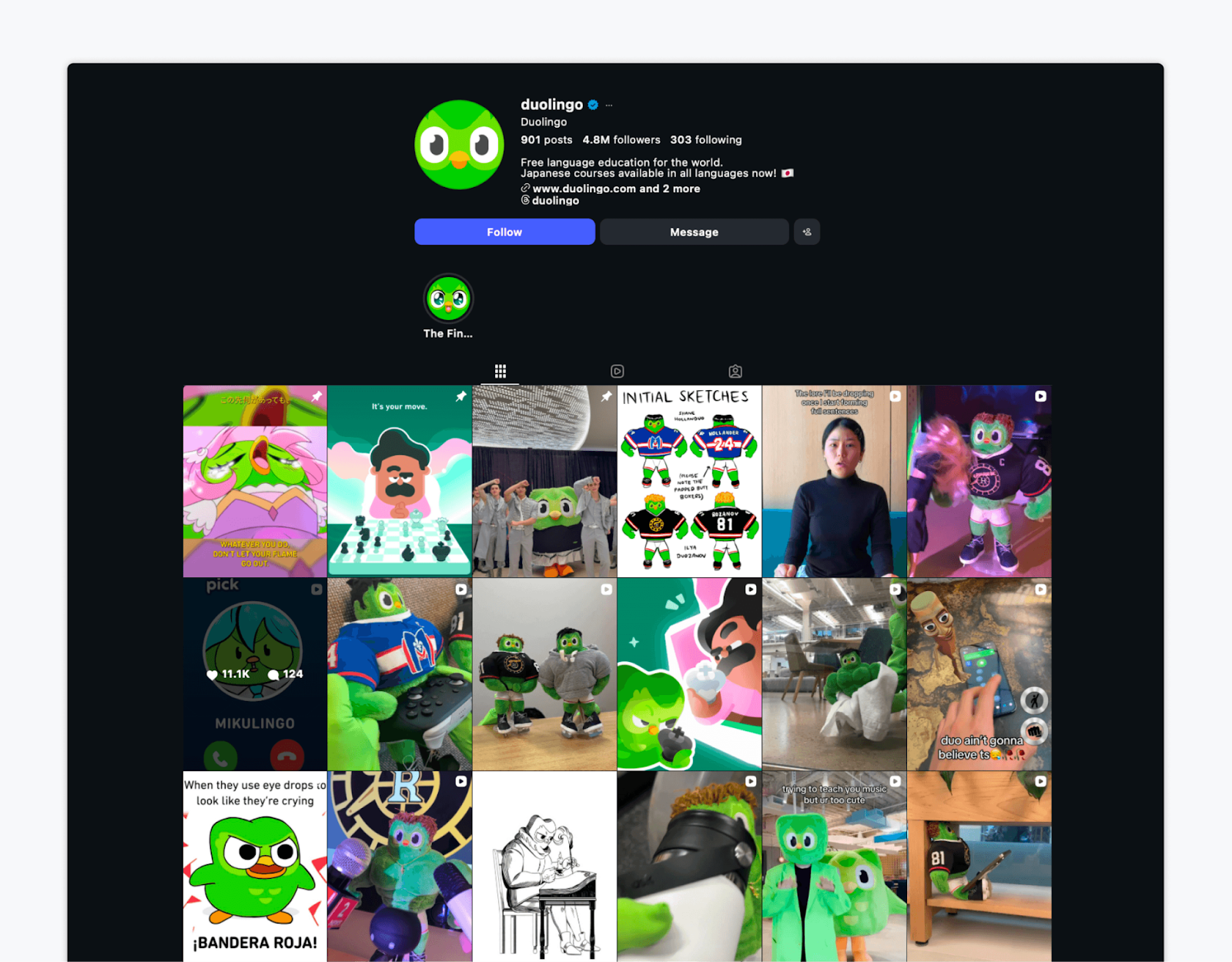
Duolingo’s Instagram presence closely mirrors its TikTok strategy, but the content is adapted to fit the platform’s visual-first format. The brand relies heavily on Reels, simple memes, and short-form videos featuring Duo the Owl reacting to trends, pop culture, and everyday language-learning struggles.
A quick look at their Instagram feed shows a wide mix of content: Duo dancing in costume, animated memes, behind-the-scenes office clips, and trend-based Reels. The posts don’t follow a rigid visual style—instead, they prioritize humor, relatability, and speed.

Duolingo’s Threads Strategy
On Threads, Duolingo keeps things short, witty, and culturally relevant. The platform’s text-first format allows the brand to lean into quick jokes, playful reminders, and timely references to pop culture.
For example, one post reads: “You have 20 days to learn Spanish for Bad Bunny’s halftime show, don’t disappoint me.”

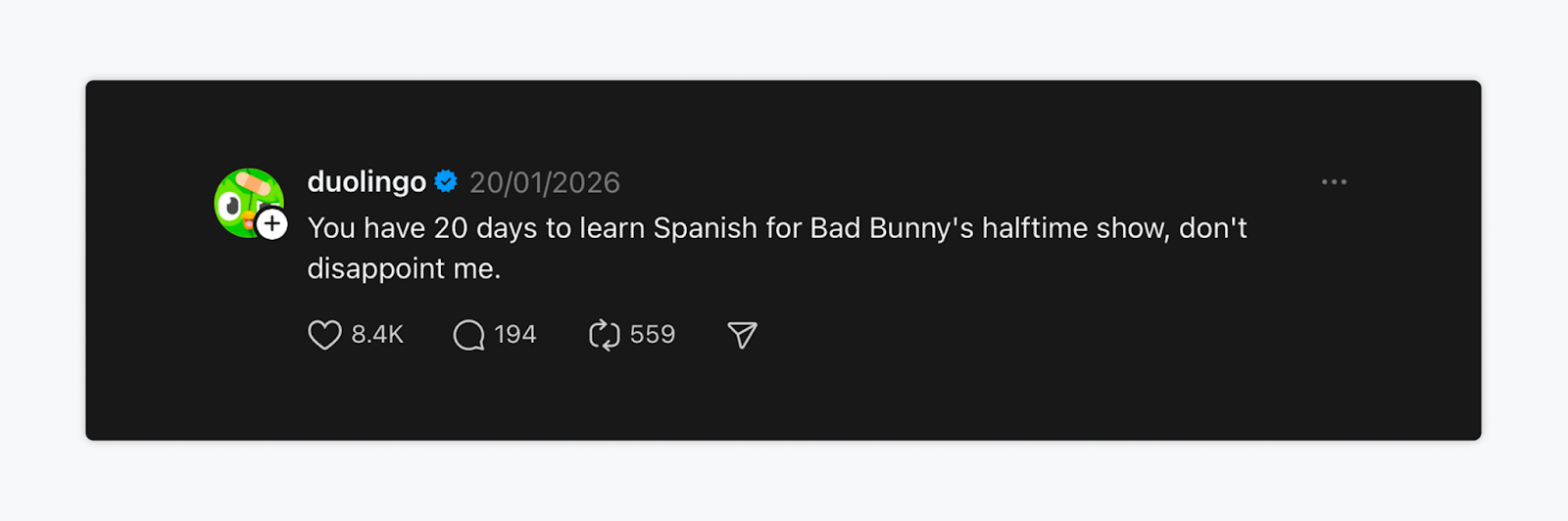
What makes this effective is the cultural timing. Duolingo connects language learning to a major entertainment moment, making the content feel relevant and playful rather than promotional.
This strategy works well on Threads because the platform rewards fast, conversational content.
Duolingo’s LinkedIn Strategy
If you think Duolingo becomes fully corporate and serious on LinkedIn, think again.
Of course, the brand still posts the usual content you’d expect on the platform — company news, new feature announcements, and open job positions. But even here, Duolingo keeps its recognizable tone and sense of humor, creating content that feels much more human than the typical corporate LinkedIn post.
For example, Duolingo frequently posts interactive polls that tap into relatable workplace moments.

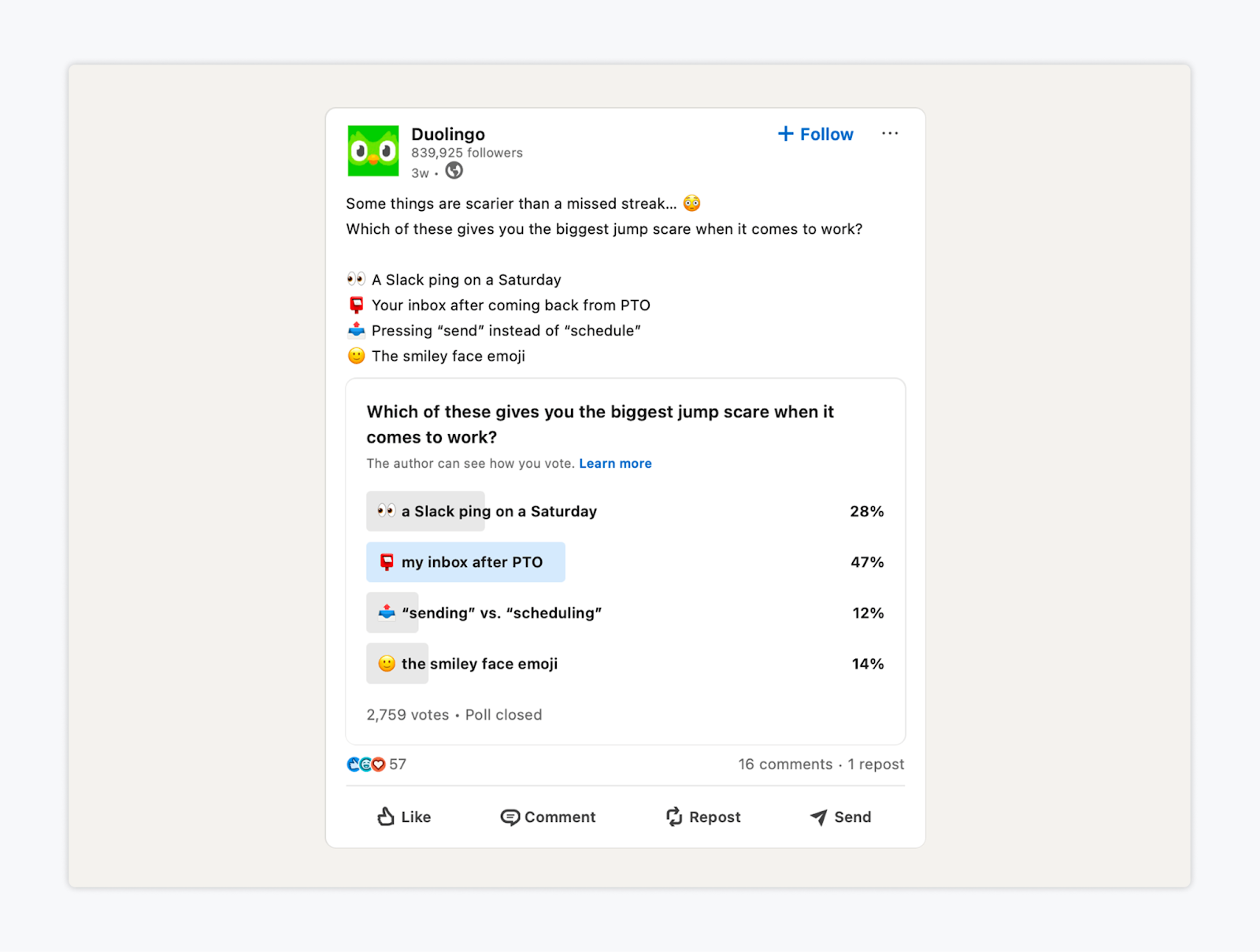
They also occasionally share more thoughtful posts, like a carousel message from Duo acknowledging that life can feel overwhelming and offering a small motivational boost.
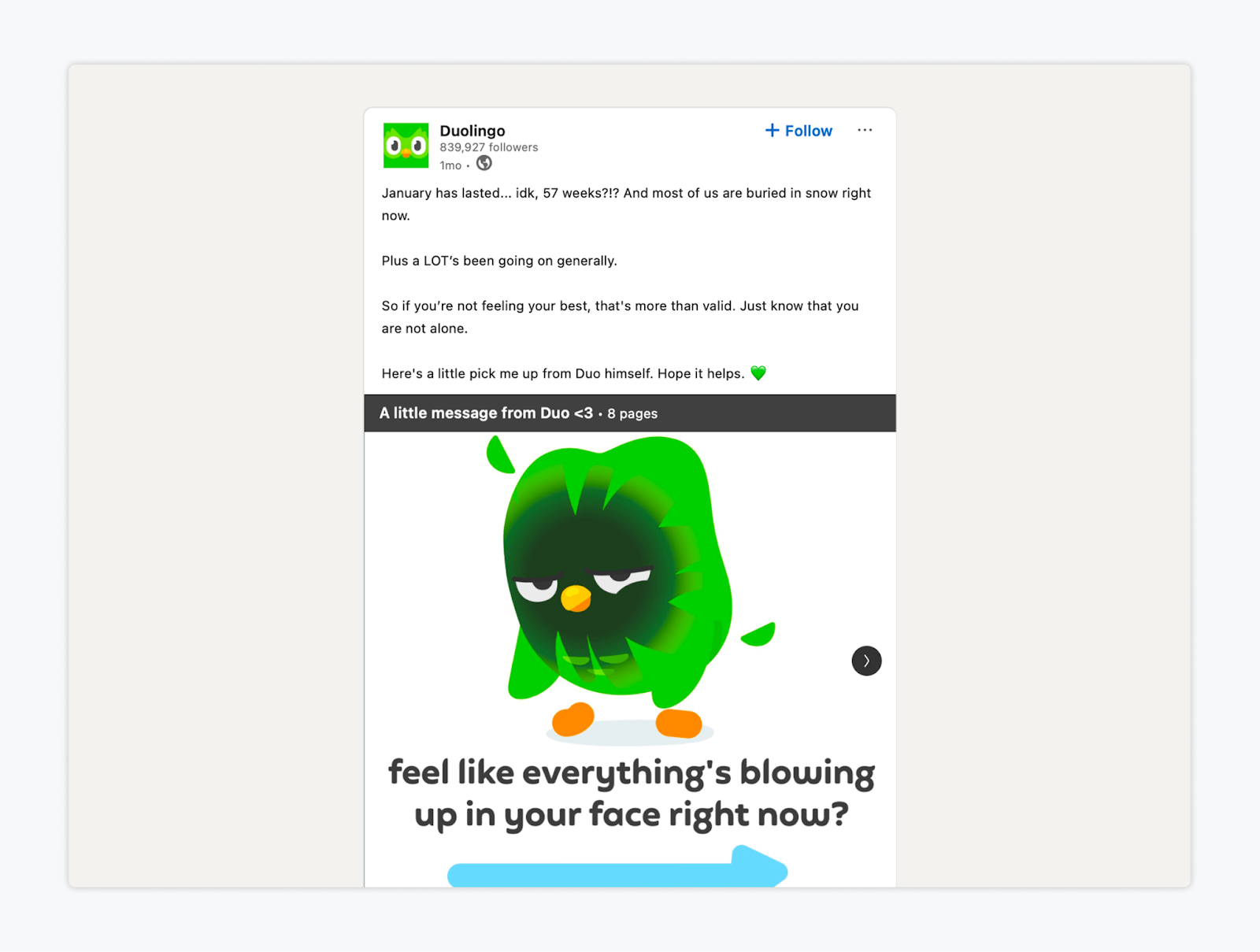
All in all, even on LinkedIn, Duolingo manages to balance professional updates with personality, proving that a brand voice doesn’t have to disappear just because the platform is more business-focused.
FAQs
Duolingo intentionally embraces a chaotic, humorous tone because it fits the culture of modern social media platforms. They don’t try to act like a traditional education brand; the company uses Duo the Owl as a playful character who participates in memes, trends, and exaggerated scenarios. This “unhinged” style helps the brand stand out in crowded feeds, capture attention quickly, and create content that people genuinely want to watch, share, and engage with.
While Duolingo’s strategy may seem extreme compared to traditional brand marketing, it’s actually very deliberate. The humor and chaotic tone are carefully designed to resonate with younger audiences who value authenticity and entertainment. At the same time, the company still maintains a professional presence through its product, educational content, and corporate communication.
TikTok has been the biggest driver of Duolingo’s viral growth. The platform allows the brand to experiment with trends, short-form humor, and mascot-led content that resonates strongly with younger audiences.
Do You Love Duolingo’s Social Media Strategy As Much As We Do? 🫶
Duolingo proves that social media works best when brands embrace personality and internet culture. By leaning into humor, trends, and the chaotic charm of Duo the Owl, the language-learning app has built one of the most recognizable and engaging brand presences online.
The takeaway? Don’t just promote — entertain. When content feels native to the platform and relatable to the audience, people are far more likely to engage and share.
Of course, before any post goes live, it still needs to be reviewed and approved. Whether you’re managing content for your brand or multiple clients as an agency, having a smooth content approval system is essential.
Gain helps teams streamline that process with customizable content approval workflows, built-in automated reminders, and auto-publishing for content that’s been approved.
Try Gain for free today! 🚀