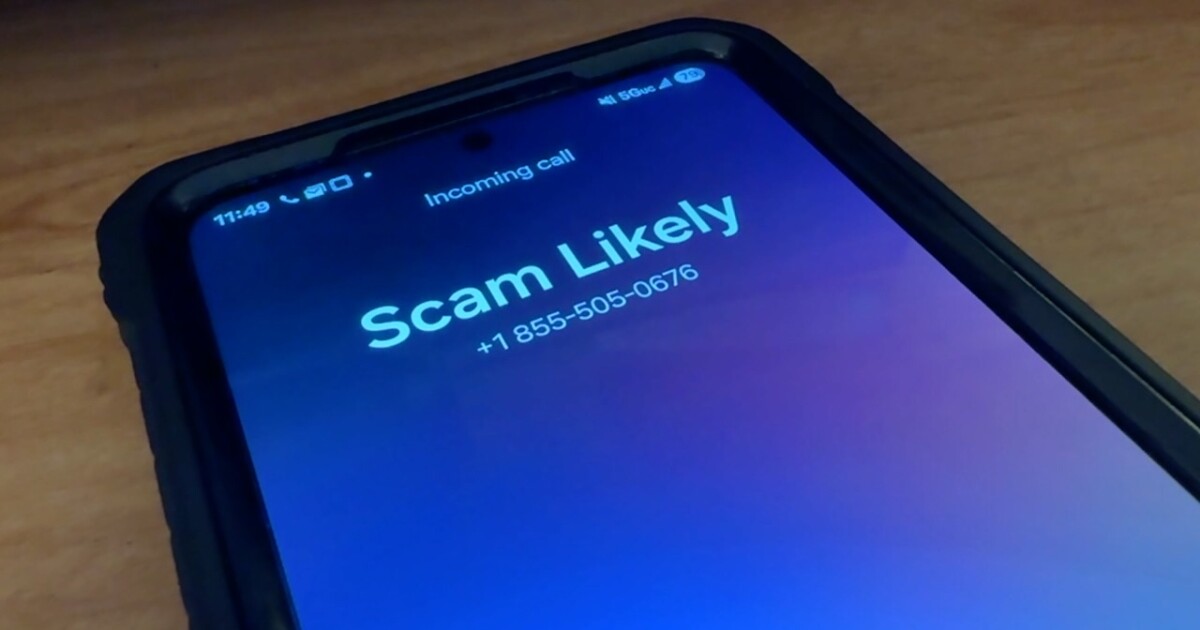
BALTIMORE – The U.S. Postal Inspection Service is warning the public about a new wave of scams powered by artificial intelligence.
Scammers use AI tools to make their schemes more realistic and harder to spot.
“So what we’re seeing more and more now is that the scams are the same, but you’re seeing it become more realistic, whether it’s voice cloning or image cloning and just being able to use AI to reach audiences more easily,” Eric Shen said.
Shen, a United States Postal Inspector with 20 years of experience, noted that scam attempts exist on various platforms.
“Text messages, emails and some phone calls as well,” Shen said.
The agency, which has been around for more than 200 years, is involved because many of these scams are still linked to email.
“Whether it’s money sent through the mail or constant communication through the mail,” Shen says.
In a lottery fraud case, a Jamaican national from Maryland was recently sentenced to approximately three years in prison and ordered to pay nearly $4 million in restitution. Investigators say victims were told they would have to pay taxes and fees before claiming false winnings, sending money through the mail and losing their savings.
Shen has a personal connection to the issue, as a family member fell for an investment scam.
“I have family members who have been victims and yes, I have been an inspector for over 20 years. And that is why I am still an inspector. I love this job and I love what I can do to help the public,” Shen said.
Investment scams had the highest reported losses at the FBI Internet Crime Complaint Center in 2024, totaling $6.5 billion. This is a fraction of the $16.6 billion reportedly lost to cybercrime by 2024.
To combat this problem, the US Postal Inspection Service is asking the public to “spot the bot.” Telltale signs of AI-generated imagery include inconsistencies in the background, extra fingers on the hands, and incorrect scaling of objects such as trucks. These images often appear on official-looking flyers, in emails, or on posters with QR codes as part of scams by scammers designed to steal personal information and money.
Other warning signs include scammers promising guaranteed returns, pressuring individuals to recruit others, or asking to move conversations from dating platforms or other social media platforms to apps like WhatsApp or Telegram. Officials recommend always double-checking web addresses, looking for minor changes compared to official sites such as usps.com.
Shen encourages victims to avoid scamming others.
“Don’t think about the past, don’t be ashamed. Get really proactive and something we really want them to do now is become a fraud fighter with us and educate the public, educate the next person so they don’t get scammed,” Shen said.
If you think you are a victim of a scam, stop communicating immediately. Contact your bank to reverse or trace money transfers and report the fraud to law enforcement agencies such as the US Postal Inspection Service, the Federal Trade Commission and the FBI.
This story was reported on air by a journalist and was converted to this platform with the help of AI. Our editorial team checks all reporting on all platforms for fairness and accuracy.