AWOL Vision Aetherion Max
The AWOL Vision Aetherion Max is a premium ultra-short-throw projector designed for scale. It prioritizes image stability, brightness, and color performance, rounded out with a built-in Google TV platform. It isn’t a projector that will casually fit into every room, but for users with the space (or anyone planning a purpose-built media room), the Aetherion goes big.
Ultra-short-throw (UST) projectors are meant to be a practical alternative to massive TVs. They promise big-screen immersion without permanent installations, and I appreciate not having to climb a ladder to mount anything to my ceiling. The irony is that the best UST projectors still require something many homes don’t have: space.
After a week with AWOL Vision’s Aetherion Max, it became clear that I don’t have a room with a wall large enough, or a layout flexible enough, to fully take advantage of what this projector can do. And if a review unit can genuinely make you contemplate the whole layout of your home to try and keep it in use, that’s a really good sign. If you have the room, the Aetherion is one of the most technically impressive projectors I’ve used.
A design that signals ambition

Kaitlyn Cimino / Android Authority
Ultra-short-throw projectors create massive images from just inches away, using extreme projection angles and precise optics instead of long throw distances. Even once you understand how they work, the effect is still a little mind-bending and distinctly futuristic. Sitting less than half a foot from the wall, the Aetherion throws an image that would normally require a projector mounted across the room. At three inches away, the image will max out at 80 inches. At just 22 inches away, it will grow all the way to a 200-inch display.
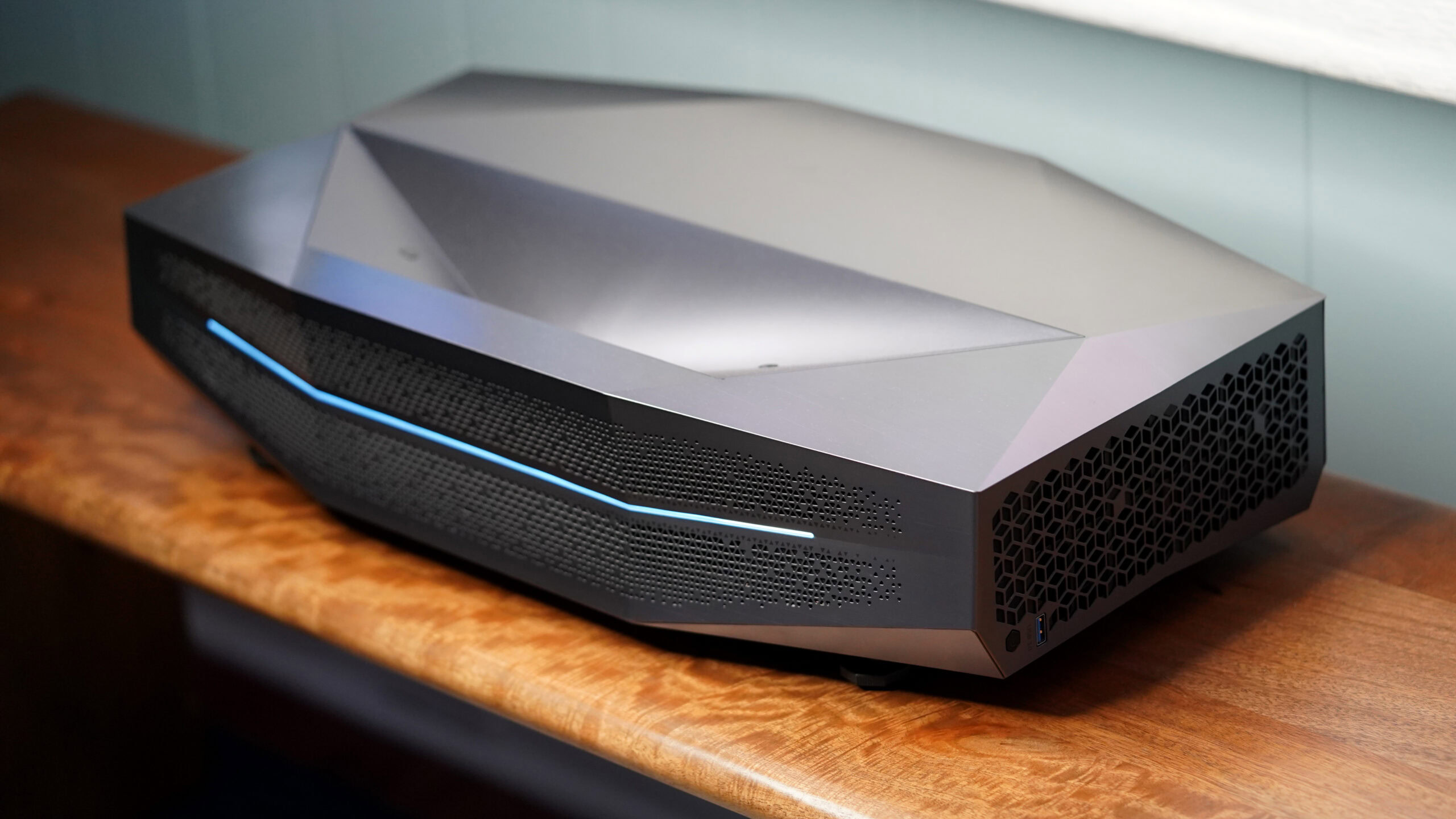
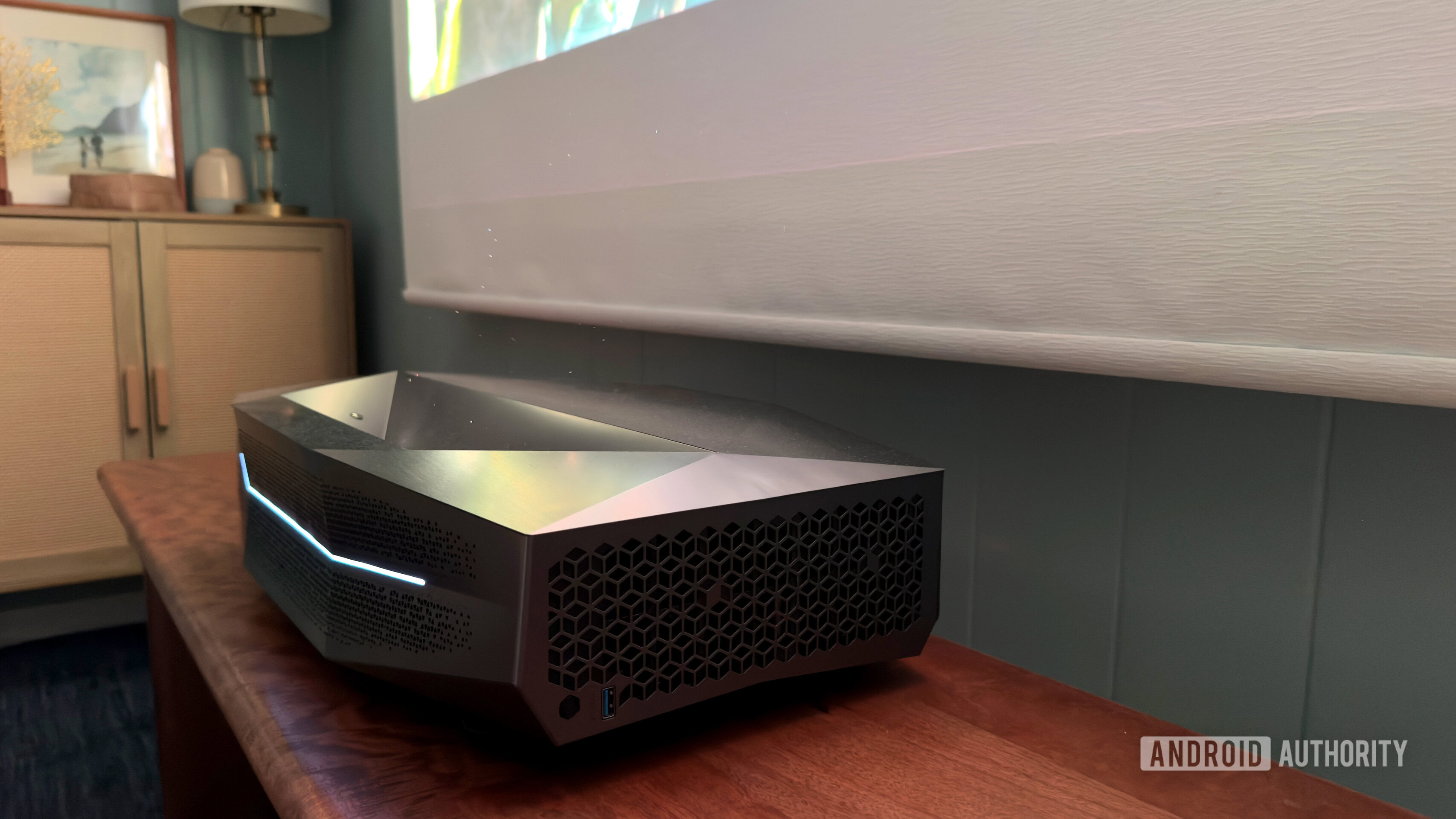
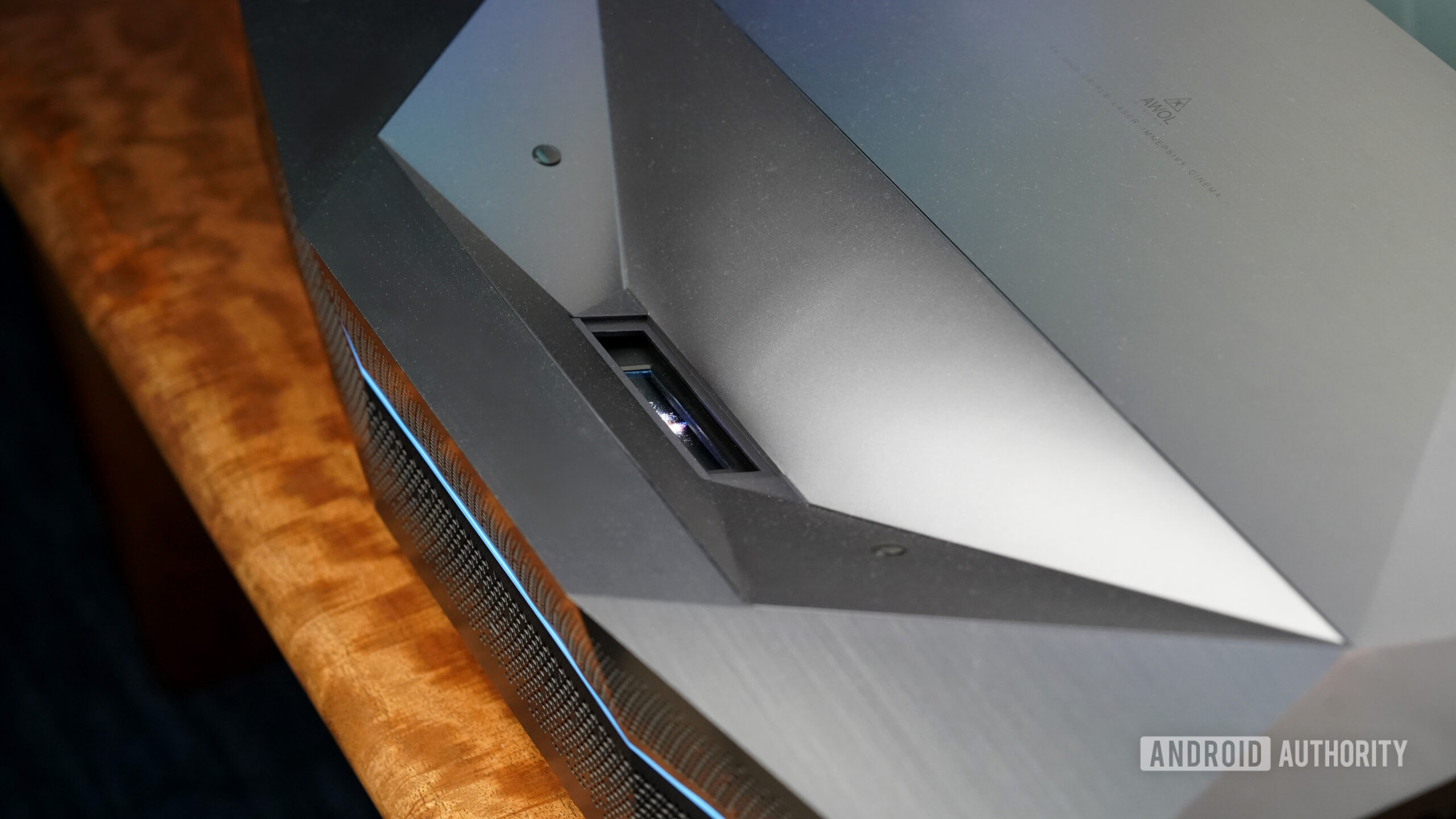
The AWOL Vision Aetherion Max looks like a spaceship, and the bold design is matched with modern specs and streamlined setup.
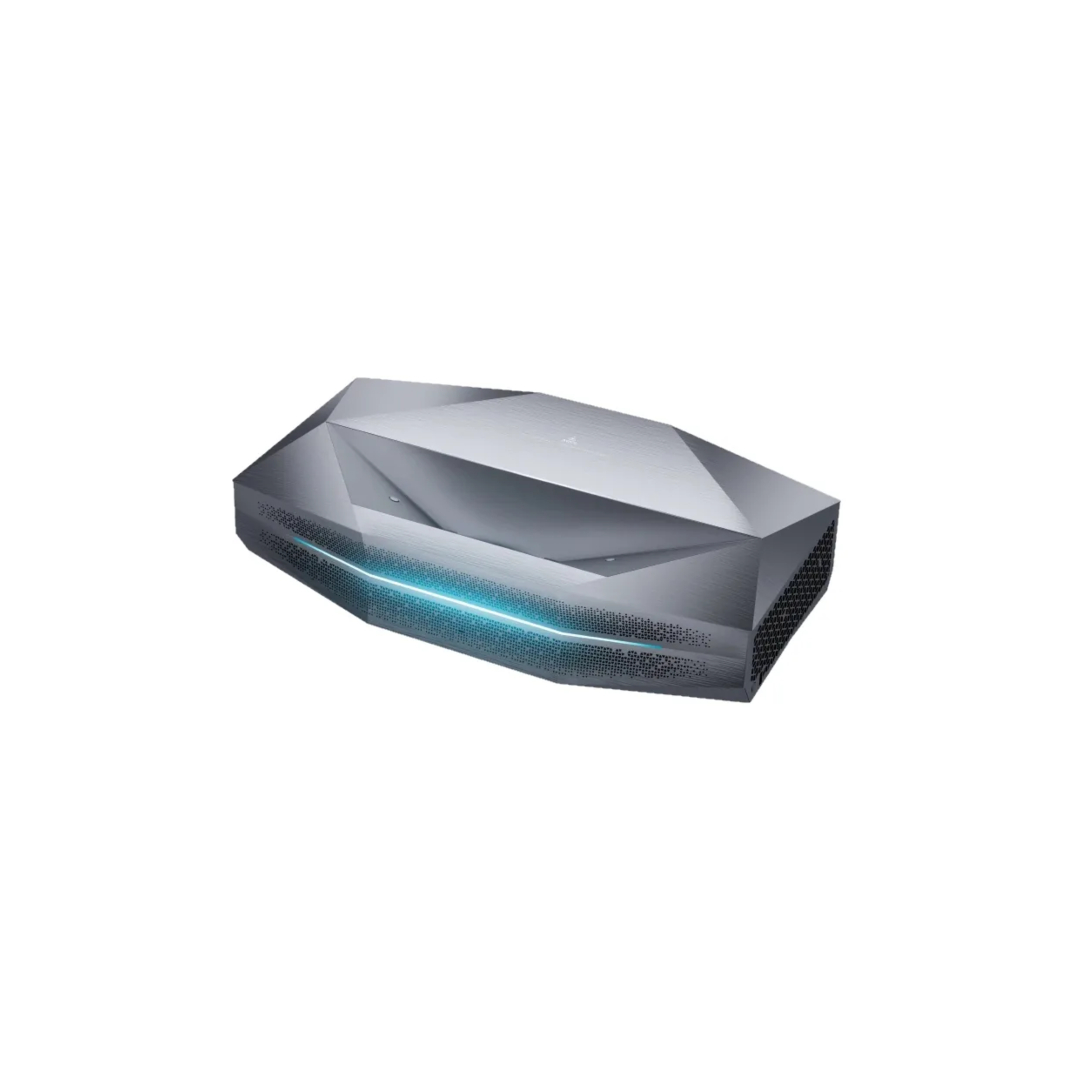
Physically, the Aetherion embraces its high-end ambitions with a design that reads straight out of science fiction. Between its angular shape, sharp lines, and layered surfaces, it looks less like home theater gear and more like a small spacecraft parked at the edge of my living room. Compared to the portable projectors I’ve been testing lately, it’s a behemoth and one that makes little effort to blend into my home decor. Measuring 22.13 × 12.72 × 5.49 inches and weighing in at 19.3 pounds, it’s also not about to be carried outside for a backyard movie night (at least not by me).

Kaitlyn Cimino / Android Authority
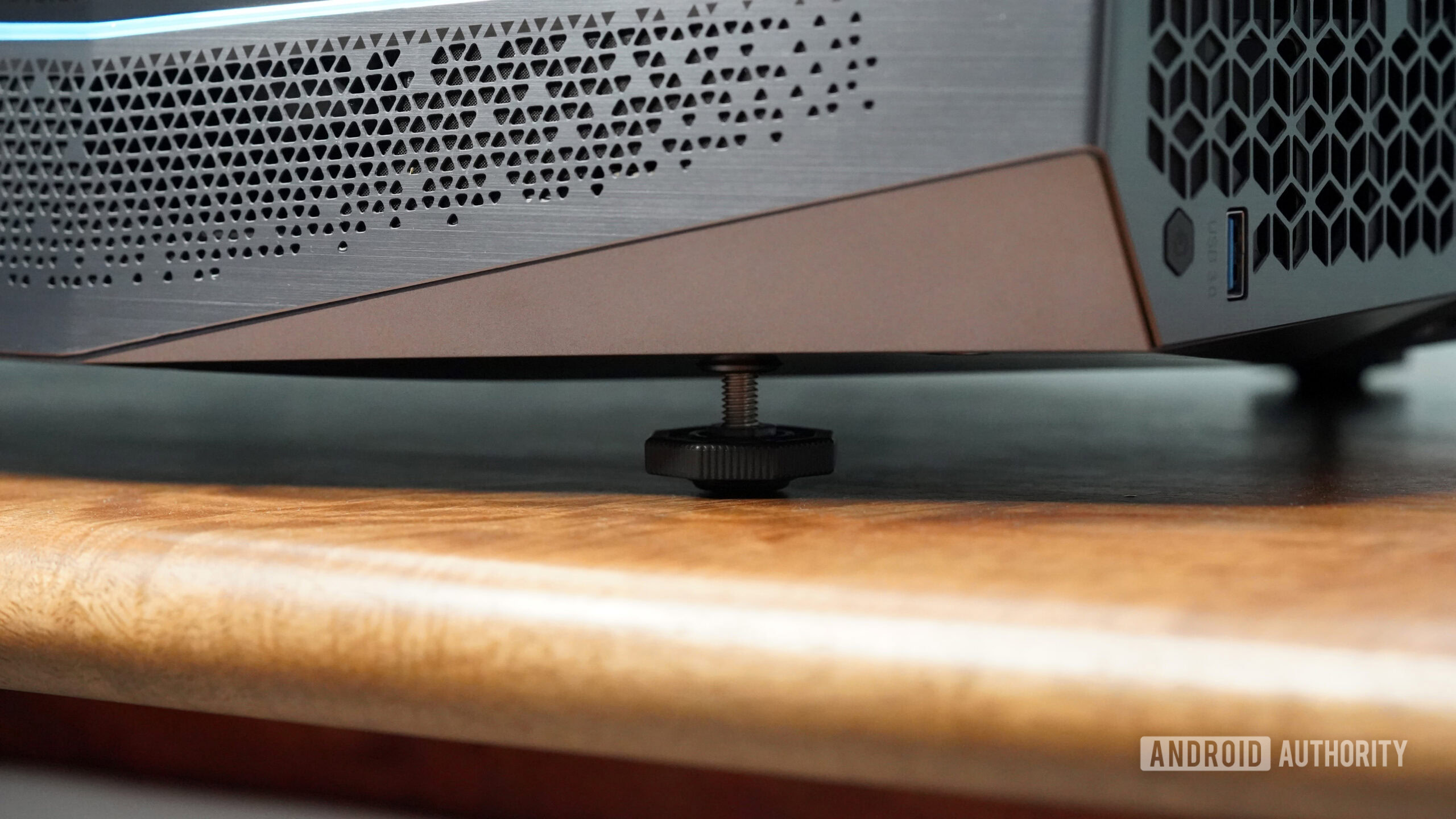
That bold, almost overbuilt design mirrors the Aetherion’s defining purpose. Everything about it, from the chassis to the optics, assumes you’re planning to go big. Practical touches, including the motorized dust-sealing lens cover, reinforce that this is hardware meant for regular use rather than occasional movie nights. Setup remains straightforward by UST standards, though placement precision still matters. To that end, adjustable feet make fine-tuning placement easier, once you remember which way to turn to make them longer or shorter.
Don’t want to miss the best from Android Authority?


Best at scale
Kaitlyn Cimino / Android Authority
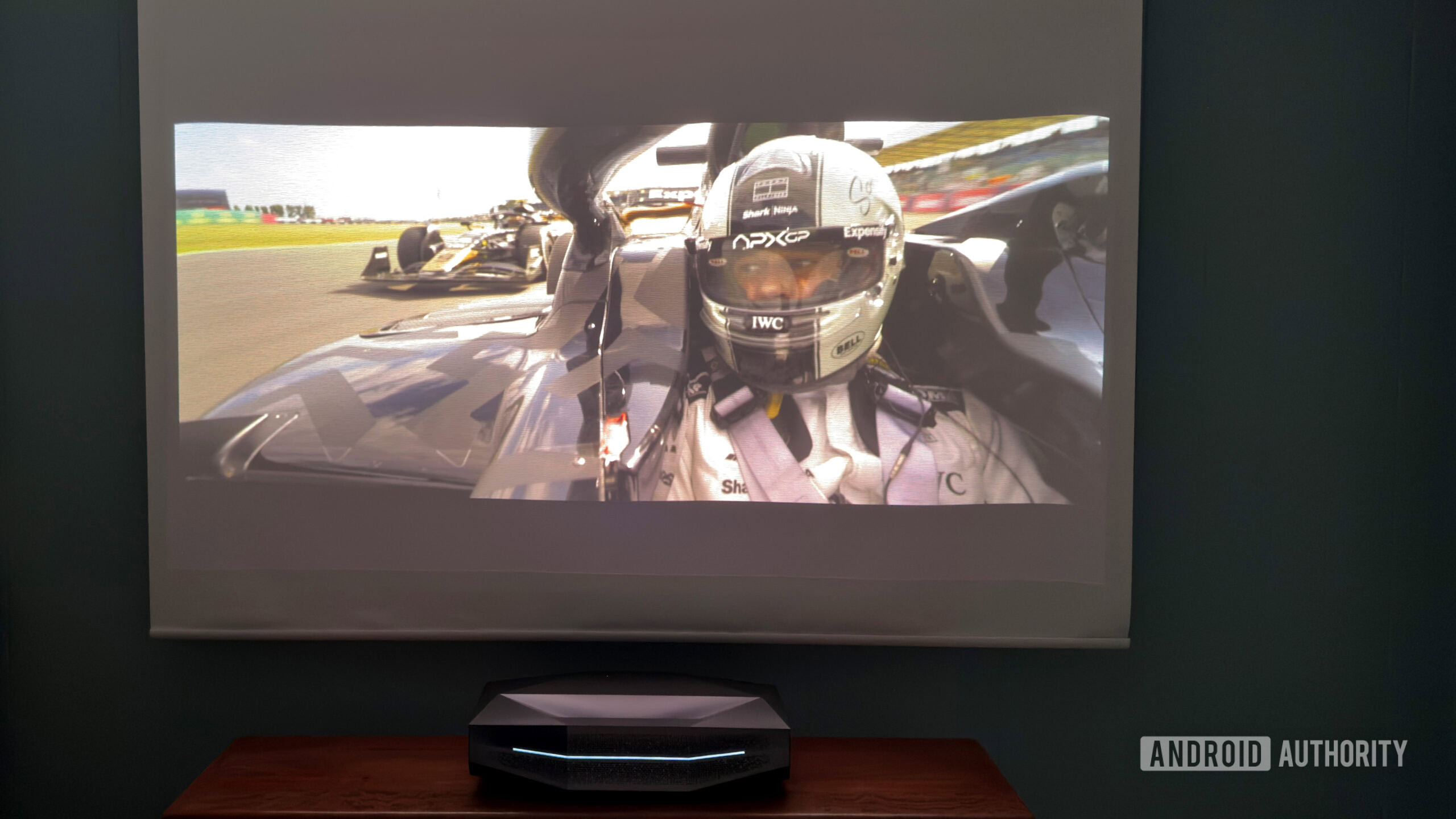
The Aetherion’s defining feature is PixelLock, AWOL Vision’s system for maintaining pixel-level alignment across exceptionally large images. It sounds abstract, but UST projectors tend to unravel as screen sizes grow. Many look excellent at 100 or 120 inches, then begin to show their limits as you push further. Edges soften, uniformity drops, and the image starts to feel strained rather than expansive.
The Aetherion is designed to scale all the way up to 200 inches, and it remains composed when it does. In my smaller setup, that level of precision bordered on excess, but it’s exactly the kind of performance that pays off in rooms designed to accommodate it. High-speed racing sequences in F1 highlighted how well the Aetherion handled motion and clarity at large screen sizes. Wide, atmospheric scenes in Sinners made it easy to see how well fine detail held together across the frame as the image scaled up.
Most UST projectors start to show their limits as screen sizes grow. The Aetherion won’t.
The Aetherion’s triple-laser light engine delivers brightness and color volume that favor larger spaces. Strong Rec.2020 coverage gives HDR content depth without oversaturation, with rich reds, controlled blues, and greens that avoid the exaggerated push common to brighter laser projectors. Highly stylized scenes in Wicked 2 (emphasis on testing greens) served as a useful stress test for color accuracy, with saturated costumes and stage lighting staying controlled rather than overwhelming. If you’re catching on that this review doubled as an excuse to dip into a few early Oscar-season contenders, you’re not wrong.
Kaitlyn Cimino / Android Authority
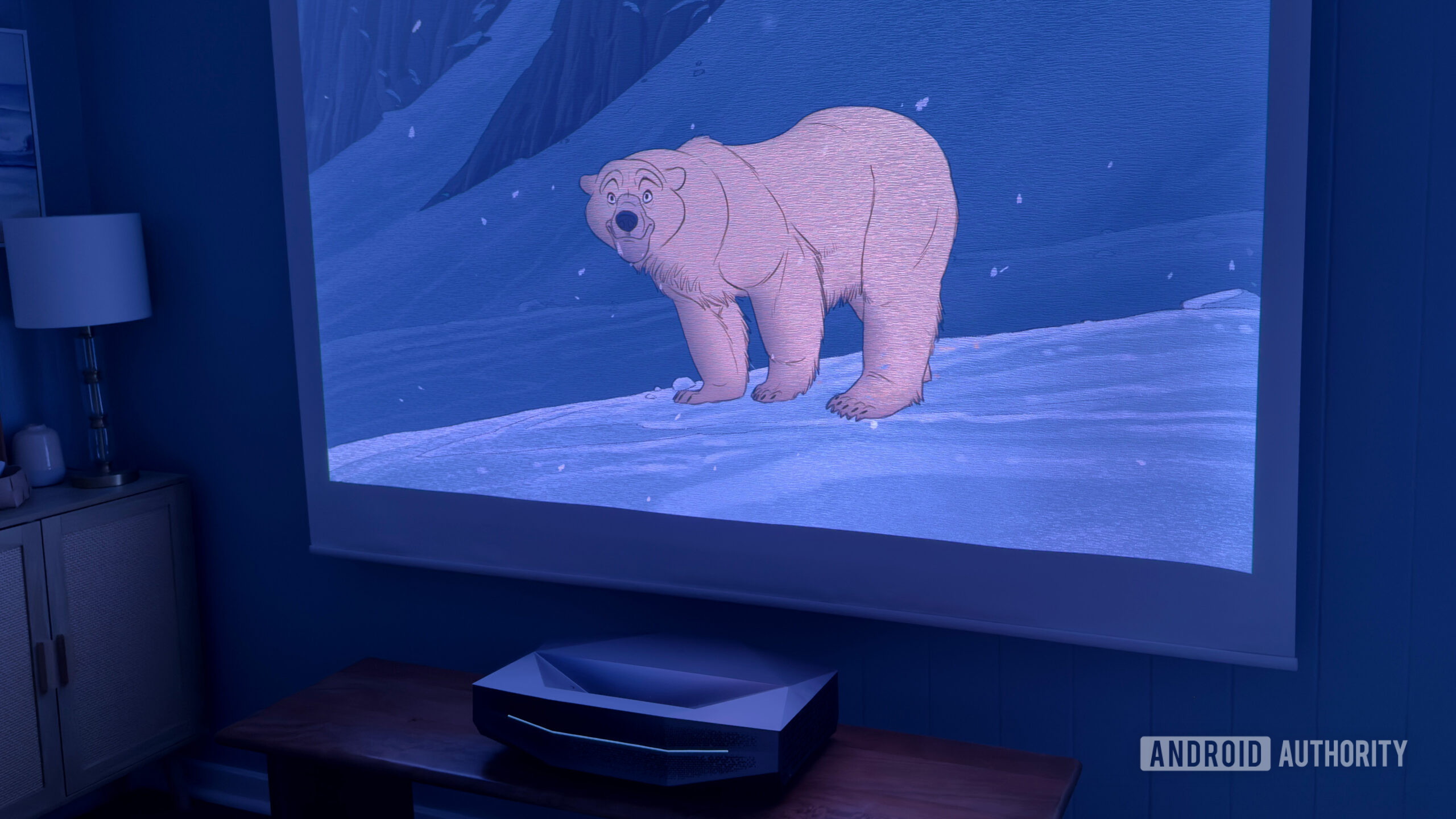
On paper, the Aetherion is rated at 3,300 ISO lumens, and it never felt short on brightness in real-world use. The projector also held up well with ambient light in the room (including conditions similar to the bright showroom environments where the Aetherion was recently shown publicly). In my modestly lit space, black levels were very solid for a UST projector, and shadow detail held well in darker scenes. HDR support is comprehensive, including Dolby Vision, HDR10+, and HLG. None of the specs are necessary to enjoy the animated short Snow Bear, but if you want to get in your feels, it doesn’t disappoint on a large scale.
A powerful platform
Kaitlyn Cimino / Android Authority
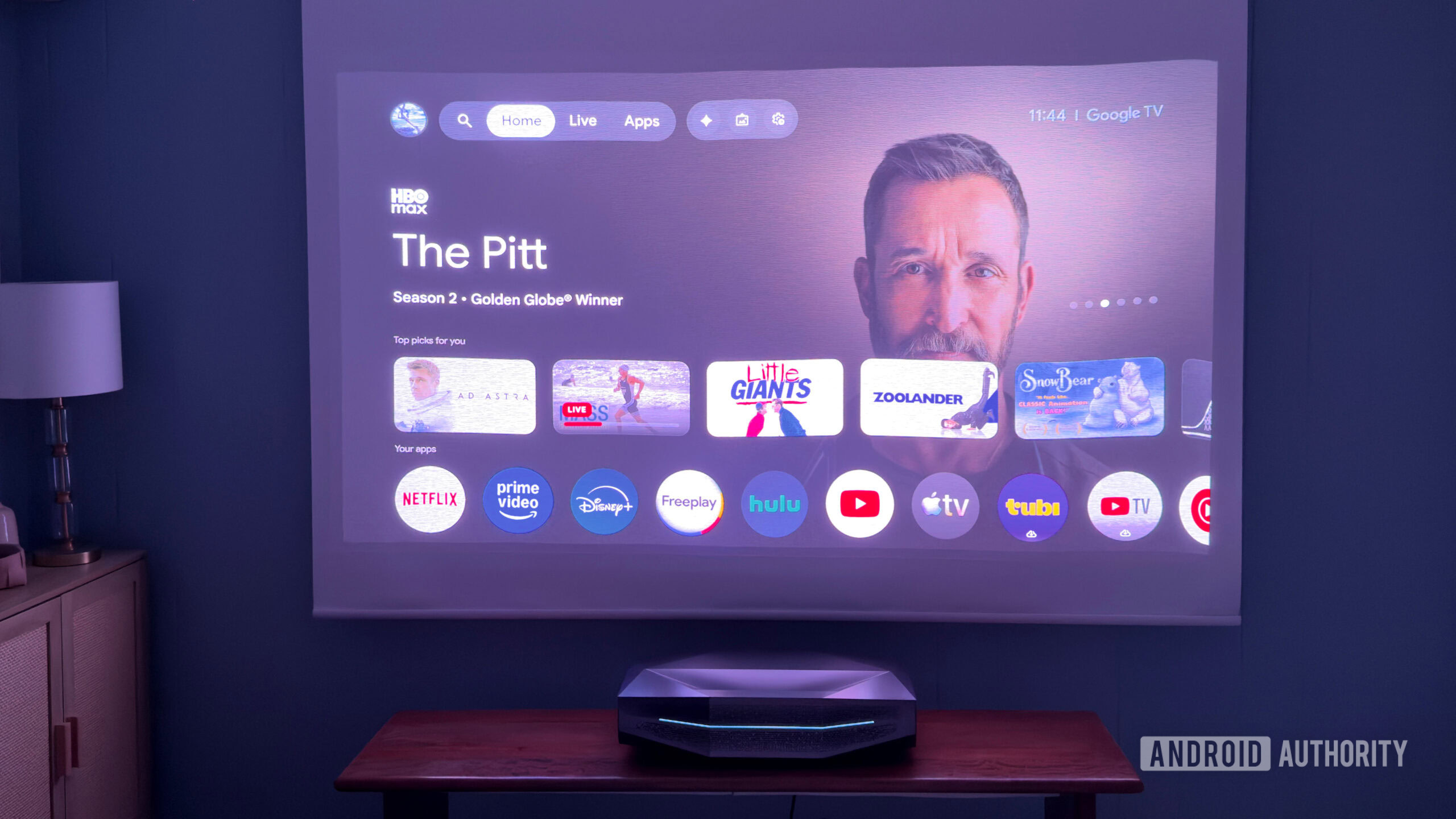
Image quality may be the headline feature, but the Aetherion also impressed me as a standalone device, which matters when the projector itself already takes up a fair amount of physical space. Its implementation of Google TV is fast, stable, and polished enough that it doesn’t feel like an afterthought.
Kaitlyn Cimino / Android Authority
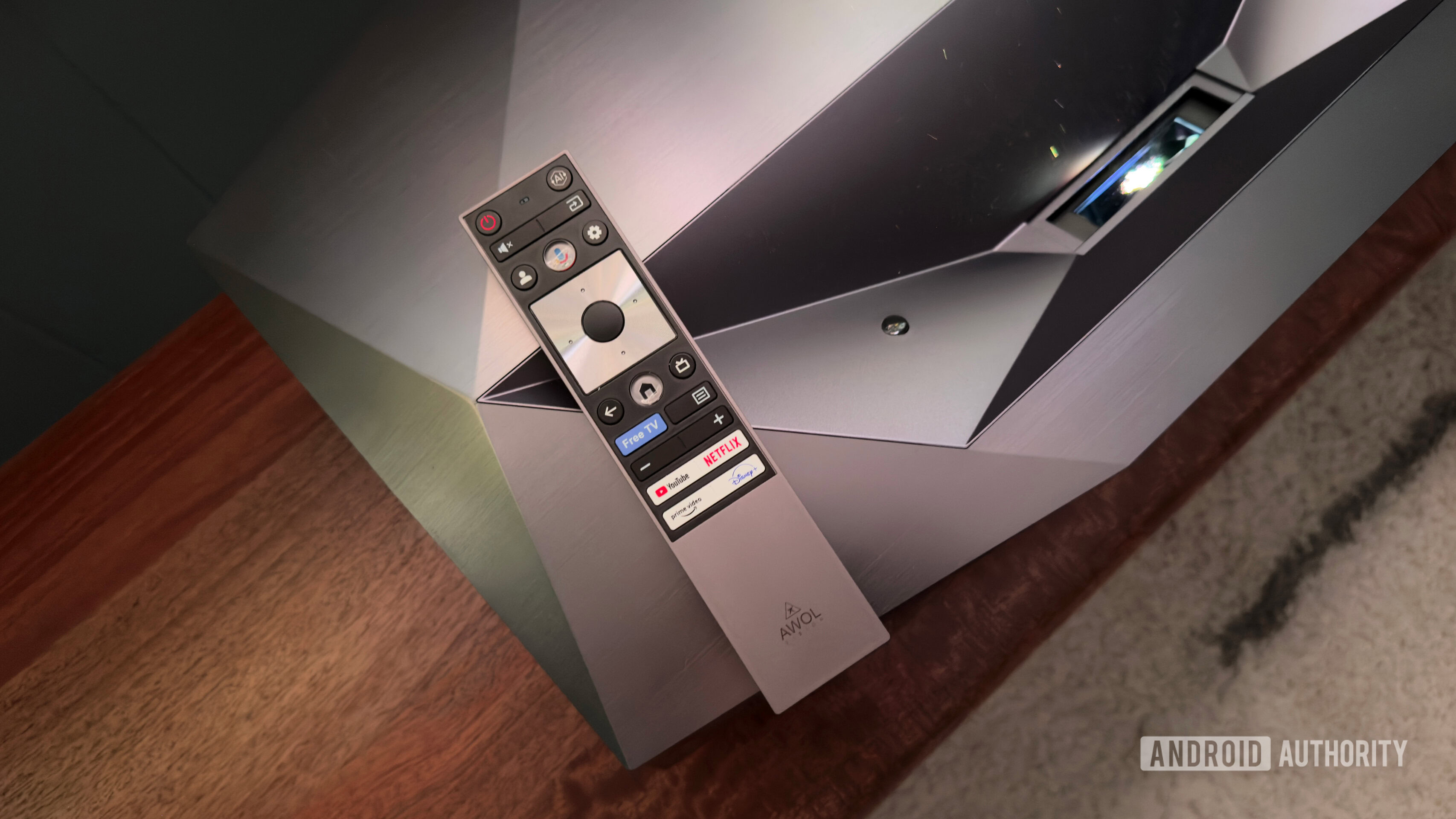
Navigation is fluid, apps load quickly, and the interface behaves more like a modern TV than an accessory platform. With ample onboard storage and memory, there was little reason to add a streaming stick or external box, which keeps the setup simple. Casting via Chromecast or AirPlay was seamless, and day-to-day streaming was reliable throughout my review period. The included remote keeps things familiar, with straightforward controls and built-in voice support. I only wish the volume controls were placed elsewhere so I wouldn’t open Netflix repeatedly by accident when trying to turn up my movie.
That sense of all-in-one packaging extends to gaming. Projectors aren’t typically the first choice for players sensitive to input lag, but the Aetherion held up well here. Support for VRR, ALLM, and Dolby Vision Gaming, paired with low input latency, offers a responsive experience. Fast camera pans stayed smooth, inputs registered immediately, and the usual projector-related delay never surfaced during testing.
When a projector is this large, it helps that the software and connectivity are seamlessly integrated.
Finally, the device features forward-looking connectivity, including Wi-Fi 7, Bluetooth 5.4, three HDMI 2.1 ports, DisplayPort support, and a mix of USB 3.0 and USB 2.0 ports for external storage and accessories. This helps the Aetherion slots cleanly into current-generation media setups without extra effort.
AWOL Vision Aetherion Max review: The verdict

Kaitlyn Cimino / Android Authority
The Aetherion makes one thing clear: this isn’t a projector you buy and then figure out where to put. It’s a projector you buy because you have the space or because you’re willing to build around it. At smaller screen sizes, it still performs well, but that’s not where it distinguishes itself. If forced into a tight layout, some of its potential will inevitably go unused. That doesn’t make the Aetherion impractical, just focused. I don’t have the right room for it. The fact that I wish I did means this is an attractive piece of hardware.
Starting in March, the AWOL Vision Aetherion line will be available in multiple configurations. The version I tested, the Max variant, is priced at $4,499, reinforcing that it’s meant for dedicated setups rather than casual upgrades. A slightly lower-spec’d sibling called the Pro carries a $3,499 price tag, reflecting its lower light output (about 2,600 ISO lumens versus 3,300 ISO lumens on the Max model). Both models support up to 200-inch screens, Google TV, and the same suite of modern connectivity and gaming features. However, early-bird pricing and bundle offers are also available via a Kickstarter campaign launched in early 2026, with limited discounts ahead of general availability.
If your home can’t accommodate a massive wall, the Aetherion may be more projector than you need. But if you’re building a dedicated media room or have an accommodating living space, the payoff is image clarity that holds up at scale, color that’s cinematic, gaming performance, and a built-in smart platform.


Powerful brightness even in lit rooms • Controlled, cinematic color performance • Built-in Google TV
MSRP: $4,499.00
The AWOL Vision Aetherion Max is a flagship 4K ultra-short-throw (UST) triple-laser projector designed for home cinema and gaming, offering up to ~3,300 ISO lumens brightness, rich 110 % Rec.2020 color, 6,000:1 contrast with PixelLock tech for edge-to-edge sharpness up to 200 inches, plus VRR/ALLM and Dolby Vision/HDR support — all on a smart Google TV platform with low-latency gaming performance.
Positives
- Excellent image at large sizes
- Powerful brightness even in lit rooms
- Controlled, cinematic color performance
- Built-in Google TV
- Gaming support
Cons
- Requires space to justify its strengths
- Large and visually assertive build
- Premium pricing limits its audience
Thank you for being part of our community. Read our Comment Policy before posting.