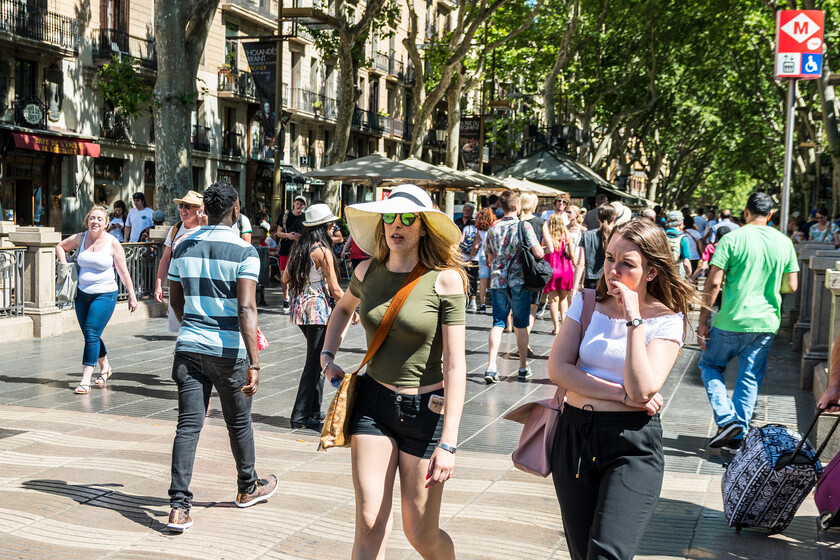
Mercadona may be taking over the retail at a national level, but in Barcelona there is another phenomenon that seems to advance even faster than the business share of the Valencian chain grows: 24-hour supermarkets. They grow. A lot. Lot. So much so that according to the latest data from the County Council, during the second half of 2025, almost a hundred were put into operation, which translates more or less into one opening every two days.
There are so many that they have even crept into the public debate.
Super 24 hour drip. The data has been disclosed The Vanguard and they are to say the least surprising. During the first half of 2025, 92 24-hour supermarkets opened in Barcelona. If we go back further, to the period between October 2020 and the end of last year, the number of activated businesses is even more significant: the total amounts to 643.
The Catalan newspaper speaks of “openings” or “start-ups”, not of net growth in supply (it is likely that there are also stores that close), but even so the data is striking. It shows that on average 3.5 businesses are activated each week.
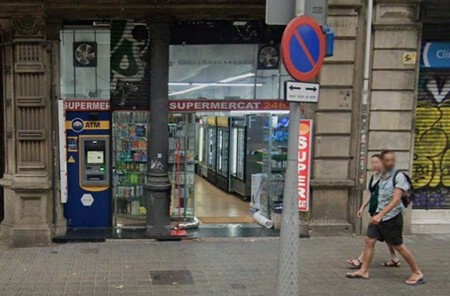

Is it that striking? Yes. And not only because of the figure itself. Data from the City Council confirm that, far from showing signs of saturation, the sector continues to expand with the sixth production. In the fall of 2025, there was already talk that between 2020 and 2024, 686 licenses had been granted for these premises, which translated into three openings a week. Now the pace has increased.
The City Council’s records also reflect that this expansion has not been uniform nor is it affecting the entire city equally: although openings have been noted in Sant Andreu or Nou Barris, most are concentrated in El Eixample and Sant Martí. Between them they have close to 140 openings in just a few years.
Two suspects: tourists and expats. At this point, the question is obvious… What is the reason for this super 24-hour boom? Why does the phenomenon seem to be affecting the Catalan capital above all? To answer these questions, you just have to visit one of these places. In the majority there are two characteristics that attract attention, as Luis Benvenuty, a reporter for The Vanguard. The first is the prices. The second, the assortment they offer.
Customers find drinks, sausages, sweets, pasta… but also items that are more difficult to Buy in traditional supermarkets, such as souvenirs clearly focused on tourists. As for rates, the prices are also significantly higher than those found in conventional stores.
For example, a can of Coca Cola can cost €1.5, the same as a bottle of water. It is not strange that the prices in this type of business are above those applied by the rest of the sector, but there are also those who see in these rates an offer aimed primarily at tourists and expats with high purchasing power.

And the controversy broke out. The problem is not the proliferation of this type of establishments itself, but how it is developing. In September The Catalan Newspaper revealed that in just two years the inspection of 209 premises had revealed 2,700 violations. The majority (more than 1,400) were by activity, although many were motivated by the impact on the landscape (600), public health issues (243), waste (157) or non-compliance with the Treasury (113) or in the workplace (118). In total they resulted in more than 500 files.
Commercial fabric earrings. Although there are dozens of premises in which inspectors found no anomalies, the violations pose a problem for the group. The SER specifies that on average each of these supermarkets commits around 13, which explains why there are professional groups in Barcelona that already warn of the risk of degradation of the commercial fabric.
“Betting on public-private collaboration and promotion to attract certain demand would bring us much closer to a solution. In this way we would transform our commercial hubs,” advocates Barcelona Oberta.
From the streets to local politics. Proof of the extent to which 24-hour supers are expanding in Barcelona is that they have already entered the political debate, covering the entire ideological spectrum. The PP, for example, has demanded greater control and the application of “exemplary” sanctions to those who break the law. Meanwhile, ERC warns of “the substitution” of indigenous businesses.
The City Council has already proposed to improve the regulation and control of this type of business. In fact, they claim that since mid-2024 their inspectors have opened almost 300 sanctioning files and more than 450 restitution files, but the question remains as to what extent it will affect the expansion of a business model that (as suggested by municipal records) generates more and more interest.
Images | Sandor SAmkuti (Flickr) and Google Earth
In WorldOfSoftware | After decades committed to being a tourist power, Barcelona already surpasses Paris or New York in something: overcrowding