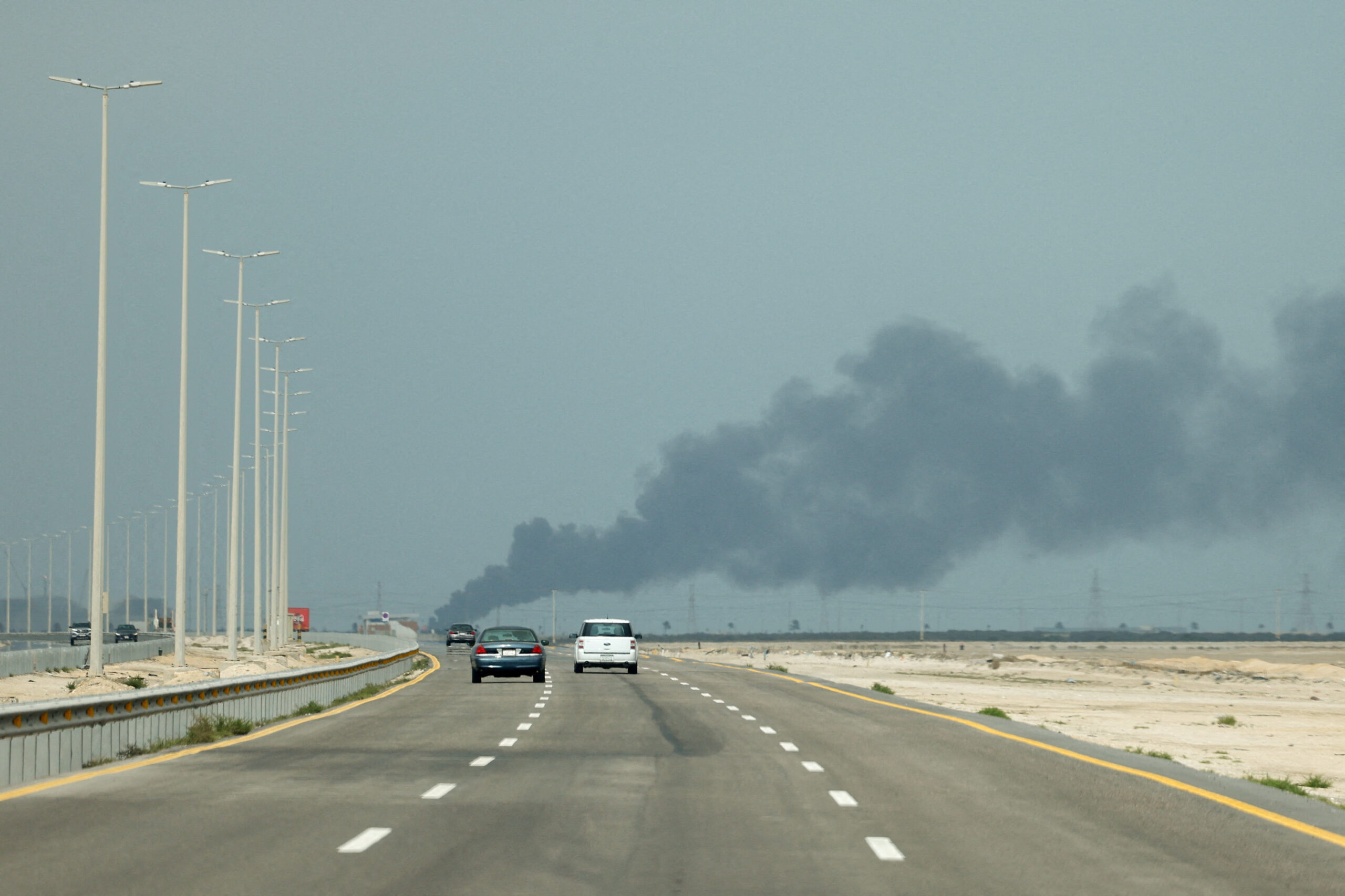
UK Prime Minister Keir Starmer says Britain plans to deploy Ukrainian drone warfare specialists to the Middle East as part of international efforts to counter the growing threat posed by swarms of Iranian drones. Amid Iranian airstrikes across the region, Starmer announced on March 1 that Britain would “bring experts from Ukraine to help Gulf partners shoot down Iranian drones attacking them.”
For Ukrainian President Volodymyr Zelenskyy, Starmer’s proposal represents long overdue recognition of his country’s status as a military force to be reckoned with. “Ukraine’s experience in defense is, in many respects, irreplaceable,” Zelenskyy commented following Starmer’s remarks. While the Ukrainian leader has yet to commit to a role in the Gulf, he has offered to dispatch Ukraine’s leading anti-drone specialists if regional leaders can first convince Vladimir Putin to pause his ongoing invasion.
Britain’s decision to call on Ukrainian expertise serves to underline modern Ukraine’s remarkable transformation from military backwater to world leader in drone warfare. When the Russian invasion of Ukraine first began in 2014, decades of post-Soviet neglect had left the Ukrainian military in a sorry state. At the time, Kyiv could only call on a few thousand combat troops and had to rely on a ragtag collection of volunteer battalions to contain Kremlin forces in the east of the country.
A series of ambitious reforms followed, but it was not until the full-scale invasion of February 2022 that the Ukrainian army truly came of age. Faced with the existential threat of Russia’s invasion, the Ukrainian nation rose up to resist. The ranks of the army swelled to include around one million troops, while the country’s stagnant defense industry was soon taking the first steps toward an unprecedented resurgence that continues to this day.
Over the past four years, much of Ukraine’s defense sector growth has focused on new technologies as Ukrainians have sought ways to counter Russia’s often overwhelming advantages in terms of funding, manpower, and conventional weapons. A thriving domestic ecosystem of defense tech startups has emerged, with a particular emphasis on drone production. Ukrainian developers are able to test new ideas almost immediately in combat conditions, leading to a culture of relentless innovation that has turbo-charged the evolution of drone warfare and reshaped the battlefield.
Ukraine’s prowess has not gone unnoticed, with numerous European partners seeking to benefit from Ukrainian military know-how. In recent weeks, Germany became the latest NATO country to unveil plans for Ukrainian military instructors to train their troops. Ukrainian trainers are also reportedly sharing their drone warfare insights with multiple other European countries including Poland and Britain.
This represents a striking shift in the relationship between Ukraine and the country’s allies. Throughout the period from 2014 until 2022, Western military trainers routinely traveled to Ukraine to provide instruction, while the defense sector discourse in Kyiv revolved around Ukrainian efforts to adopt and incorporate NATO standards. After four years of defending themselves against the biggest European invasion since World War II, it is now Ukraine that is setting the standards, while NATO commanders try to catch up.
Ukraine’s NATO partners have much to learn, it would seem. The Wall Street Journal recently reported that during a spring 2025 exercise in Estonia involving NATO forces and Ukrainian drone crews, the Ukrainians easily overcame a far larger NATO contingent, sparking considerable alarm and much debate. Meanwhile, many Ukrainian soldiers have noted that the military equipment provided by the country’s Western partners is often now redundant due to the lightning pace of the technological advances taking place on the Ukrainian battlefield.
Eurasia Center events


Ukraine’s emergence as a major military power is a nightmare scenario for Russia. When Vladimir Putin launched the full-scale invasion four years ago, he identified the “demilitarization” of Ukraine as one of his two key war aims. If demilitarization was the goal, the invasion has failed in spectacular fashion. Far from being demilitarized, today’s Ukraine now boasts the largest and most technologically advanced army in Europe.
Across the continent, there is growing awareness that with the United States seeking to reduce its transatlantic security commitments, Ukraine is destined to play a central role in the future defense of Europe. Indeed, it is difficult to imagine any European security strategy that doesn’t include Ukraine as a core contributor. A country that spent years fruitlessly seeking an invitation to join NATO is now acknowledged as a guarantor of Europe’s security at a time when faith in the effectiveness of the alliance has fallen to record lows.
Zelenskyy’s proposal to send specialists to the Middle East in exchange for a Kremlin ceasefire should probably not be taken literally, but it does reflect the confidence of a man who knows his country is more prepared than most for the realities of twenty-first century warfare. Zelenskyy clearly recognizes that Ukraine’s unrivaled experience is a valuable commodity, and is also well aware that this military strength represents a major trump card as he seeks to negotiate a settlement that will safeguard Ukrainian statehood and secure the country’s European future.
The war unleashed by Putin in 2022 was meant to strip Ukraine of its army, its identity, and its sovereignty. Instead, it has transformed Ukraine into one of Europe’s leading military powers and positioned the country at the cutting edge of global defense sector innovation. This new reality will help define Ukraine’s place in the wider world for decades to come, while serving as a formidable obstacle to Russia’s imperial ambitions.
Peter Dickinson is editor of the ’s UkraineAlert service.
The views expressed in UkraineAlert are solely those of the authors and do not necessarily reflect the views of the , its staff, or its supporters.


The Eurasia Center’s mission is to enhance transatlantic cooperation in promoting stability, democratic values, and prosperity in Eurasia, from Eastern Europe and Turkey in the West to the Caucasus, Russia, and Central Asia in the East.
Image: Vehicles move along a road as smoke billows from Saudi Aramco’s Ras Tanura oil refinery after a reported Iranian drone strike, amid the U.S.-Israel conflict with Iran, in Ras Tanura, Saudi Arabia, March 2, 2026. (REUTERS/Stringer)