What started as a practical formula to pay for digital content has, little by little, become a way of life. Subscriptions to listen to music, watch series, store photos, work, protect your computer. Based on small installments, it has become normal for a growing part of our lives to depend on a monthly payment. And when the time comes to do the math, that recognizable feeling of juggling the budget appears: we cancel one, reactivate another, adjust as best we can so as not to go overboard. Perhaps we pay more and more to access, and less and less to possess. That is why the latest twist in the phenomenon draws special attention: now you can also “rent” a television instead of buying it.
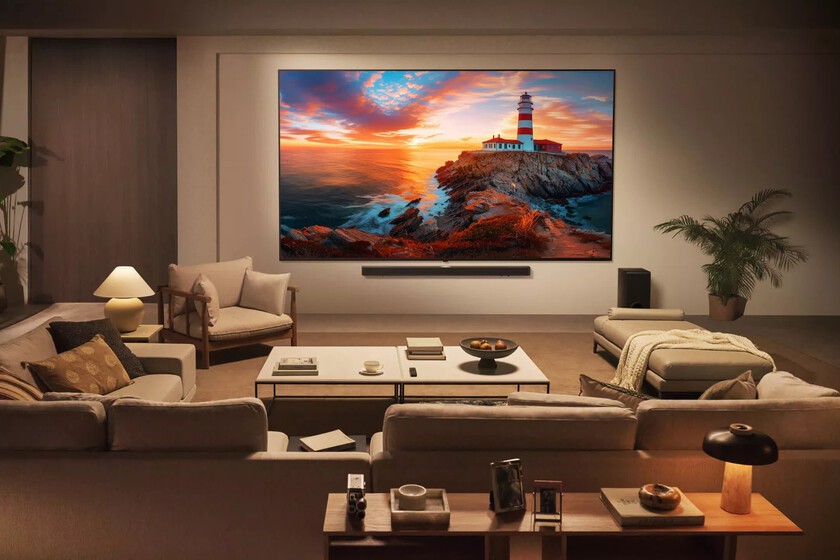
Rent a TV if you can’t (or don’t want to) Buy one. The scene comes from the United Kingdom. There, LG already offers a modality called LG Flex that allows access to a selection of televisions and sound bars by subscription, directly from the company’s website. The logic is similar to that of other services: you choose the product and, at the time of checkout, you select Raylo as an option, since LG presents it as its official partner for this program. The proposal is sold as “flexible access” to premium products, with no initial outlay, and with different subscription durations to adjust the monthly Price. In practice, it is a paradigm shift in an object that we traditionally bought and amortized for years.
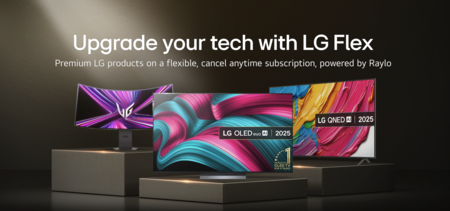

What does “flex” mean? The subscription is proposed with two very different paths: a renewable monthly plan, designed for those who want maximum freedom, and closed plans of 12, 24 or 36 months, which reduce the monthly payment in exchange for a greater commitment. It is a well-known logic: the longer the term, the lower the fee. In addition, the proposal includes a 14-day free trial and, at the end of the period, the user can choose between continuing to pay month by month, requesting a change to a newer model at no additional cost or returning the device. Of course, this last option is not neutral: the withdrawal has a fee of 50 pounds (about 60 euros).
The key is what you are paying. A television like the 83-inch LG OLED evo AI C54 4K (2025) is offered for 3,999 pounds (about 4,620 euros at the exchange rate in that market), with a subscription available from 123.90 pounds per month (about 145 euros at the exchange rate) with Raylo, while an 86-inch LG QNED evo AI QNED9MA Mini LED 4K is listed for 2,499.98 pounds (about 2,890 euros at the exchange rate), with installments starting at 78.35 pounds per month (about 92 euros at the exchange rate). The difference is in the time horizon: if the subscription is maintained for a long time, the accumulated amount may end up exceeding the purchase price. That is why Flex is best understood as a formula to have the television “in use” without purchasing it directly, not as an alternative designed to pay less at the end of everything.

Will it leave the United Kingdom? For now, the experiment remains in the United Kingdom. LG has not communicated plans to expand Flex beyond that market, so, at the moment, there is no basis to assume that it will reach other European countries. But even as an isolated case, the idea says a lot about the moment we are going through: subscriptions are no longer just a method to access digital content or tools, but a commercial language that is also beginning to be applied to physical objects.
Images | LG
In WorldOfSoftware | Apple Creator Studio is not just a subscription. It’s Apple looking to conquer the little tiktoker who uses CapCut and Canva