Image Credit: NASA
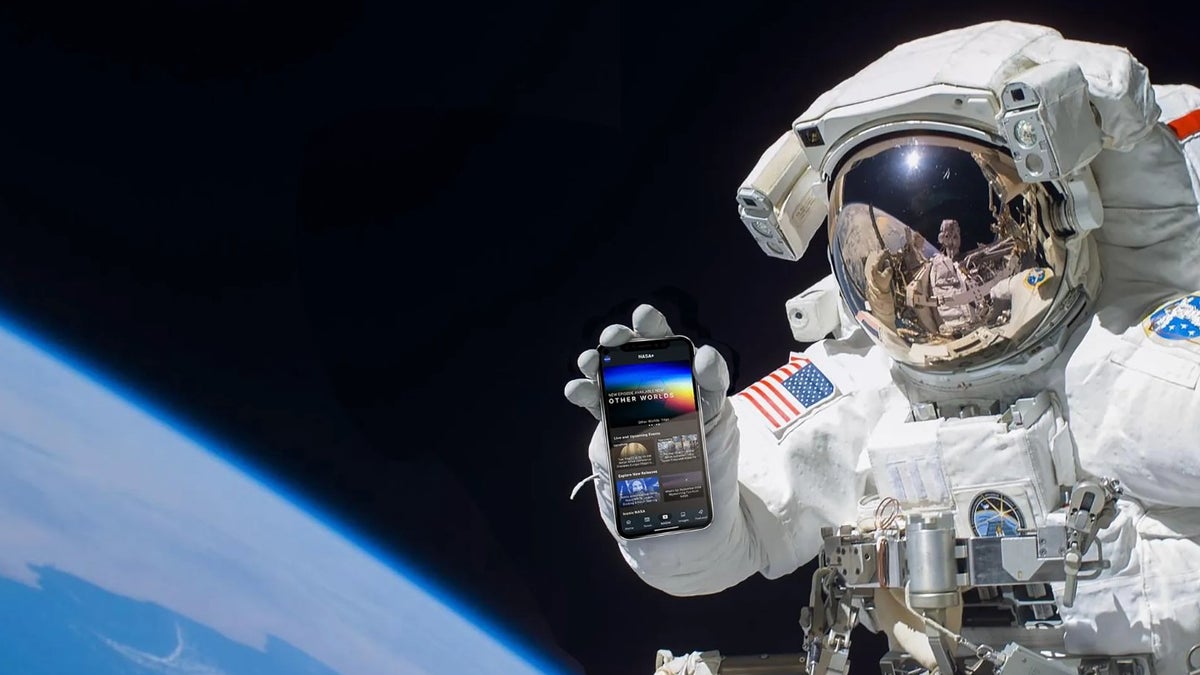
Smartphones have become a basic necessity in our lives, as we take them everywhere we go (even into restrooms). However, there is one place where humans are not allowed to take their phones—space. NASA has a strict guideline that prohibits astronauts from taking their smartphones into orbit. Fortunately, that’s about to change in the upcoming Crew-12 and Artemis II missions.
Astronauts will be able to capture pictures on the fly
NASA has very strict regulations on what can and cannot be taken into orbit. Until now, smartphones fell into the latter category and were not allowed on space flights. However, NASA Administrator Jared Isaacman has announced that, with the upcoming Crew-12 and Artemis II missions, astronauts will be allowed to carry their modern smartphones, whether they be iPhones or Android devices, into space.
For reference, Crew-12, which is planned for February 11, is a NASA-SpaceX mission that will take four astronauts to the International Space Station. The Artemis II mission, on the other hand, is scheduled for March. It’s a 10-day mission in which four astronauts will travel on a free-return trajectory around the Moon and back to Earth.
According to Isaacmann, NASA’s decision to restrict devices like smartphones made sense years ago, but not now. As it turns out, electronic devices like smartphones are primarily designed for Earth’s environment, and exposing them to space, where temperatures swing from extreme highs to lows, can adversely affect them. That’s why such restrictions have been in place until now. Furthermore, NASA’s approval process for making any device space-ready is very slow and can sometimes take years.
The gear currently in use is a great example of how slow the entire approval system is. Before this announcement, the crew of the Artemis II mission was said to carry a 2016 Nikon DSLR camera along with a GoPro. By allowing the Crew-12 and Artemis II crews to carry modern smartphones, Isaacman is asking tough questions of the authorities: do such rules still make sense with advancing technology, or are we simply following them out of habit?
Interestingly, this wouldn’t be the first time astronauts carried a personal smartphone on a space mission. Two iPhone 4s also went into orbit with the crew during a space shuttle mission in 2011. However, there’s no information on whether these phones were used to take pictures and videos or were simply resting at the side in the spacecraft.
A few other Apple devices, like the Macintosh Portable, iPods, AirPods Pro, and Apple Watch, have also been taken to space in the past. That said, you may wonder how astronauts connect with their family during missions if carrying personal smartphones is restricted in space. As it turns out, astronauts to date have used specialized tablets that they carry with them to connect to the internet and talk with family members.
Carrying modern smartphones like the iPhone 17 or Pixel 10, for instance, will allow crews on upcoming space missions to capture astonishing images on the fly. They no longer need to grab a bulky camera. Instead, whenever they spot something picture- or video-worthy, they can simply pull out their personal phone and capture it. And if phones become really common in space missions, I’m pretty sure that sometime in the future we’ll definitely be comparing whether an iPhone, Samsung, Google, or any other brand takes the best photo of Earth from the Moon.