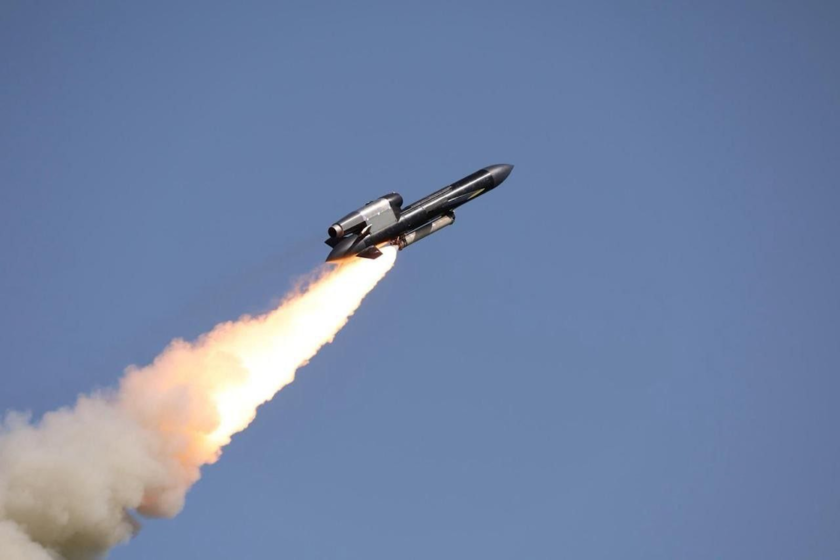
A single advanced interceptor missile can cost more than dozens of attack drones combined, and several have been launched in Ukraine and Iran to neutralize a single threat. This imbalance has led to situations where protecting a target is much more expensive than attacking it. Therefore, in modern warfare, the key is no longer just who has the best weapons, but who can sustain their use without going bankrupt.
The paradigm shift. For decades, intercepting a ballistic missile has been one of the most expensive operations in modern warfare, with systems like the Patriot requiring the firing of two or three multimillion-dollar interceptors each to ensure a kill.
This model has worked in limited conflicts, but recent wars have shown its limits when the volume of threats grows massively. In both Ukraine and the Middle East, air defense has become a cost battle where the attacker launches cheaply and the defender responds expensively. In that context, the idea of shooting down missiles for less than a million dollars is not an incremental improvement, but a radical change in the rules of the game.
Ukraine and logic. Since the 2022 invasion, Ukraine has developed a military industry based on economic efficiency, producing drones and missiles at a fraction of the cost of traditional Western systems. Companies like Fire Point have transferred this philosophy to air defense, proposing a system capable of intercepting ballistic missiles at a much lower cost than the current one.
The goal is quite clear: break the bottleneck of extremely expensive operators and systems, and enable scalable defense in volume. This logic, moreover, comes directly from the battlefield, where survival depends on both effectiveness and cost per unit.
The goal: below one million. The goal of intercepting a missile below the million-dollar threshold means attacking the core of the current strategic problem, where each defense costs more than the attack it tries to neutralize. If Ukraine achieves this milestone in 2027, as it has indicated this week, it would change the economic equation of air warfare, making it viable to respond to massive attacks without quickly depleting resources.
Not only that. Even with somewhat lower success rates than systems like the Patriot, simply being able to launch more interceptors at a lower cost could make up for that difference. In practice, it would mean that defense would cease to be a scarce resource and become something replicable on a large scale.
The context: saturation and scarcity. Let us think that the war in Ukraine and the Iranian attacks in the Gulf have highlighted a common problem: the shortage of advanced systems and the impossibility of maintaining the rate of consumption. Patriot missiles are limited, expensive and slow to produce, while threats (whether drones, missiles or swarms) can be manufactured and launched in large quantities.
This imbalance has put powers with enormous military budgets in check, forcing them to prioritize objectives and accept vulnerabilities. In that scenario, a cheaper solution is not only desirable, but necessary to sustain any prolonged defense.
The global implications. Here may be the real one quid of that announced advance. If Ukraine manages to develop this system, the impact would go far beyond the current front, generating global demand among countries that cannot afford multi-billion dollar defense systems.
This, a priori, would democratize access to air defense, allowing more actors to protect their space without depending exclusively on the United States or limited systems such as the European SAMP/T. Furthermore, it would alter the strategic balance, since it would reduce the effectiveness of attacks based on saturation and volume. In other words, it would make it much harder to win a war simply by launching more missiles.


The new balance. Therefore, the real change is not only in the Price, but in reversing the economic logic of the conflict, which indicates that defending is no longer more expensive than attacking. If that point is reached next year, many current strategies would become meaningless, from the massive use of drones to saturation bombing.
From that perspective, Ukraine would be on the verge of achieving something truly unprecedented in modern military history, redefining the relationship between cost and power in war. And that, more than any specific weapon, aims to mark the future of conflicts.
Imagen | Fire Point
In WorldOfSoftware | Ukraine is close to achieving a milestone that no one has achieved: building the largest drone industry without China’s help
In WorldOfSoftware | Thousands of cigarette butts are crossing into Russia without Ukraine being able to do anything. Their goal: to become missiles