If we had to bet on which of the two operating systems users want more, Windows 10 would still have a lot of numbers. Not only because it was a solid launch, but also because it came at the right time: in July 2015, with the mission of erasing the bad memory that Windows 8 and Windows 8.1 had left behind. For years, Windows 10 was the comfortable place, but Microsoft has been playing another game for some time.
Windows 11 is going well, very good. Not only is it growing, but it is doing so at a pace that no longer allows for too many doubts. According to data shared by Satya Nadella during Microsoft’s financial results presentation (fiscal second quarter), Windows 11 has reached the symbolic milestone of 1 billion users, with a year-on-year growth of 45%. It is a huge fact due to the number, but even more so because of what it suggests: that migration is finally accelerating.
A strategy that has worked. The reading fits with something we have been seeing for a long time: Microsoft has stepped on the accelerator to push the jump to Windows 11. And it has not always been easy. In fact, until not so long ago the consensus was different. Unofficial figures from November 2024, crossed with historical data, described a disappointing and slower than expected adoption. Windows 11 seemed to move forward with difficulty, as if the public could not find enough reasons to abandon Windows 10. But the pace has changed, and not exactly a little.
Arriving before Windows 10. The comparison leaves a particularly striking detail: Windows 11 has reached 1 billion users before Windows 10. In numbers, Windows 11 needed 1,576 days (almost four years and five months) to reach that barrier, while Windows 10 took 1,706 days (four years, eight months and two days). Even so, it is worth putting it in perspective: Microsoft set an even more aggressive goal with Windows 10, aiming for it to be installed on 1 billion devices in just three years.
A goal that changed. That plan was ambitious, yes, but it also had small print. In its roadmap, Microsoft planned to add part of the mobile ecosystem as “installations”: Windows Phone and Windows 10 Mobile. The problem is that that future never came. The collapse of Windows Phone and the subsequent cancellation of the project left that approach meaningless, and Microsoft ended up adjusting expectations. In fact, in April 2015 Terry Myerson, then head of Windows, was already talking about “1 billion devices” in “two or three years” after the launch. A more elastic formulation, less rotund, and much easier to land when the board changes.

A milestone amidst challenges. Because the jump from Windows 10 to Windows 11 is not—nor has it been—a smooth transition for everyone. The first wall is technical: hardware requirements. Many computers are left out of the official update because they do not have TPM 2.0 or a compatible processor. In other words, there are users who are pushed to renew equipment even when theirs continues to function reliably.
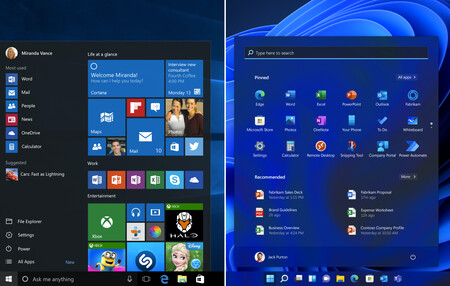
The second obstacle is more intangible, but just as important: experience. Windows 11 arrived with visible changes compared to Windows 10 (design, interface, organization) and also a different philosophy, with more presence of functions driven by artificial intelligence, new features that can arrive at any time and a model of constant evolution that does not always work in its favor. Added to this is the usual noise: a chain of incidents after some recent updates that have caused people to talk. Windows 11 is a solid system, but also one in constant transformation, and that has a cost.


Despite everything, Windows 11 is advancing. Maybe it’s pure inertia, maybe because of the end of Windows 10 support, or maybe because the PC market is moving again. What is relevant is that Windows 11 is gaining ground at a pace that Microsoft can read as a victory. Although, deep down, the industry has already changed enough for Windows to stop being king within Microsoft itself. Today it represents less than 10% of the Redmond giant’s revenue. The real jewel in the crown, and the big strategic bet, is elsewhere: Azure.
Images | Microsoft | Andrey Matveev
In WorldOfSoftware | We have been waiting for the new Siri for a year and a half. Now it’s just around the corner with an unexpected twist: Google