Xiaomi has just announced the global launch of its flagship Xiaomi 17 series, but how does the premium 17 Ultra compare to its iPhone competitor?
Although we haven’t specifically reviewed the iPhone 17 Pro Max, we have reviewed the similarly specced iPhone 17 Pro, so we’ll draw on our experience there where applicable. However, you can see the differences between the two in our iPhone 17 Pro vs iPhone 17 Pro Max guide.
Otherwise, we’ve compared the specs of the Xiaomi 17 Ultra and iPhone 17 Pro Max and noted their key differences here. We’d also recommend that you take a look at our Android vs iOS guide which explains the fundamentals of the two operating systems, while our best smartphone list reveals our current favourites for 2026.
Finally, if you want to compare the Xiaomi 17 series, then our Xiaomi 17 vs Xiaomi 17 Ultra has you covered.
Specs comparison table
| Xiaomi 17 Ultra | iPhone 17 Pro Max | |
| Chipset | Snapdragon 8 Elite Gen 5 | A19 Pro |
| Front Camera | 50MP | 18MP |
| Operating System | HyperOS | iOS |
| Rear Camera | 50MP+50MP+200MP | 48MP Fusion trio |
| Screen Size | 6.9-inches | 6.9-inches |
| Storage Capacity | 512GB, 1TB | 256GB, 512GB, 1TB, 2TB |
| Wired/Wireless Charging | 90W/50W | 40W/30W |
Price and Availability
The iPhone 17 Pro Max is currently Apple’s most expensive handset, with a starting price of £1199/$1199 for the 256GB model. The smartphone also comes in a choice of three colours: Silver, Deep Blue and Cosmic Orange.
SQUIRREL_PLAYLIST_10207953
Qualcomm Snapdragon 8 Elite Gen 5 vs Apple A19 Pro
One of the biggest differences between the Xiaomi 17 Ultra and iPhone 17 Pro Max is with their respective processors. While the Xiaomi 17 Ultra runs on Qualcomm’s top-end Snapdragon 8 Elite Gen 5, which powers many of the best Android phones, the iPhone 17 Pro Max runs on Apple’s own A19 Pro chip instead.
We should disclaim that, although we have tried Snapdragon 8 Elite Gen 5 and A19 Pro, we haven’t yet tested the chips within the Xiaomi 17 Ultra or iPhone 17 Pro Max. Even so, we’ve seen high benchmark scores alongside seriously impressive everyday use when testing other phones running Snapdragon 8 Elite Gen 5. With this in mind, we expect the Xiaomi 17 Ultra to offer a similar performance.
As expected from a Pro Apple chip, A19 Pro is also seriously powerful. While reviewing the iPhone 17 Pro, which uses the same chip, we found the phone stayed cool during even intensive tasks like gaming, and achieves impressively high benchmark scores too. Again, like the Xiaomi 17 Ultra, we expect the iPhone 17 Pro Max to offer a similar performance too.
Xiaomi 17 Ultra
iPhone 17 Pro (not the Max)
Xiaomi 17 Ultra features a 200MP telephoto lens
When it comes to photography ability, both the Xiaomi 17 Ultra and iPhone 17 Pro Max promise to excel. The Xiaomi 17 Ultra is fitted with a trio of rear lenses, including a 50MP main, 50MP ultrawide and mighty 200MP telephoto. In comparison, although the iPhone 17 Pro Max is also made up of a main, ultrawide and telephoto lens, all three are 48MP Fusion instead.
This is also the case with the iPhone 17 Pro, which we hailed as being one of the best camera phones. We especially praised the 8x telephoto lens, hailing it as offering the best zoom camera ever on an iPhone. This is especially noteworthy as the Xiaomi 17 Ultra boasts a mammoth 200MP telephoto which promises up to 17.2x optical zoom. Of course, we’ll have to wait until we review the Xiaomi 17 Ultra to see how it fares.


What also impressed us with the iPhone 17 Pro was the abundance of features that enhance images, such as Photographic Styles and Dual Camera mode too.
Both have 6.9-inch displays
Not only are the Xiaomi 17 Ultra and iPhone 17 Pro Max equipped with 6.9-inch displays, but so is the Samsung Galaxy S26 Ultra. It’s safe to say that if you prefer a larger phone, then you’re certainly not short of options.
Unsurprisingly, both the Xiaomi 17 Ultra and iPhone 17 Pro Max are equipped with plenty of premium screen technologies. With the Xiaomi 17 Ultra, you’ll benefit from a HyperRGB panel which Xiaomi explains “leverages independent red, green, and blue subpixels for 2K-level clarity”, an LTPO-enabled 1-120Hz refresh rate and Xiaomi Shield Glass 3.0 for up to 30% more drop resistance than the Xiaomi 15 Ultra.

The iPhone 17 Pro Max’s Super Retina XDR display also sports ProMotion technology (Apple’s term for an LTPO 1-120Hz refresh rate) and retains the Dynamic Island of its predecessors. Other than being bigger, its specs are the same as the iPhone 17 Pro, which we hailed as having one of the best screens around.
Xiaomi 17 Ultra promises faster charging
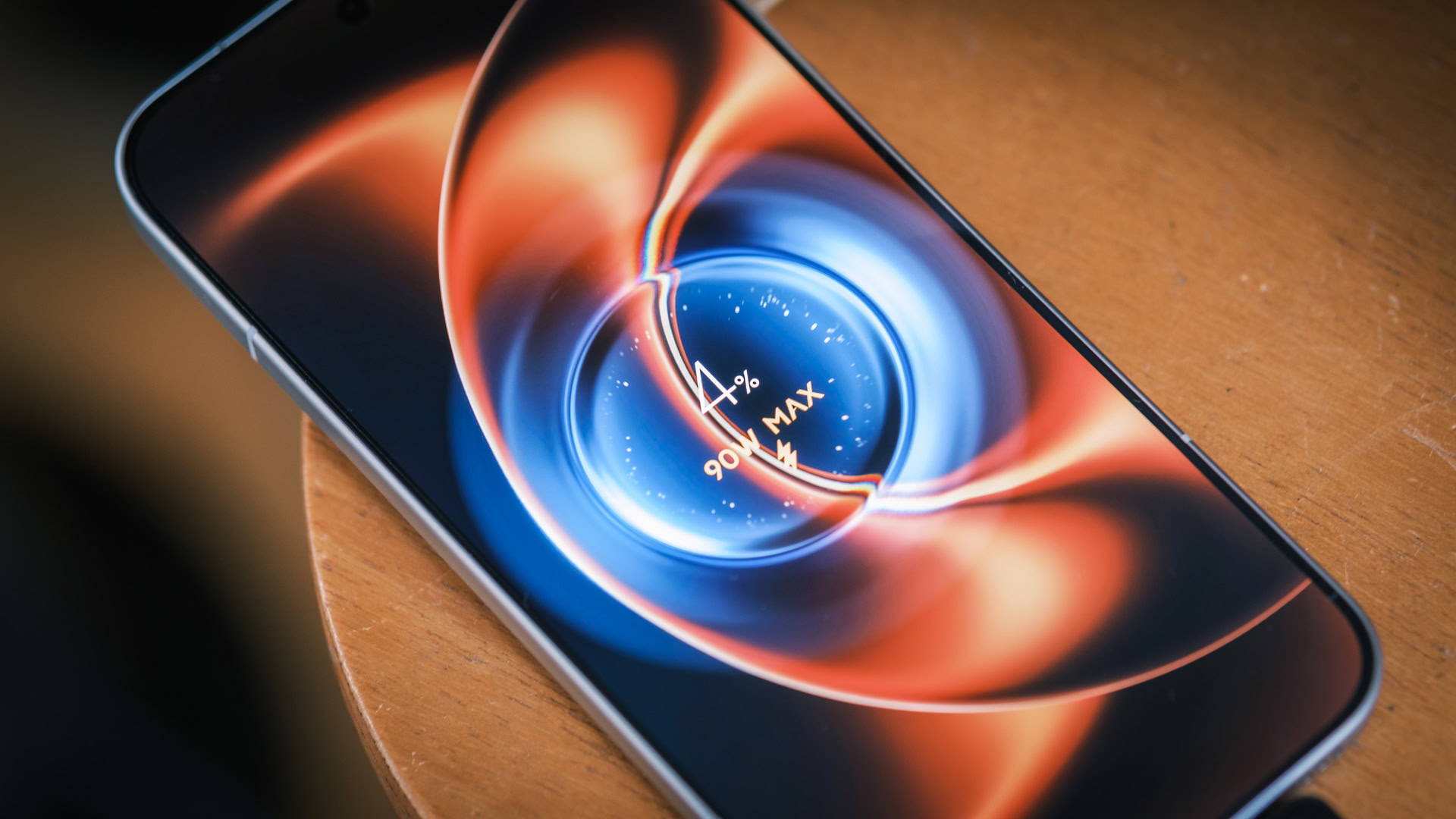
Annoyingly, one area where Apple seems to let itself down is with charging speeds. While the Xiaomi 17 Ultra boasts 90W HyperCharge and 50W HyperCharge wireless support, the iPhone 17 Pro Max supports 40W and 30W wireless.
Having said that, although it’s undoubtedly a shame that the iPhone series hasn’t quite matched the levels of its Android competitors, it’s still worth noting that generally battery life is solid and should comfortably see you through a full day.
HyperOS 3 vs iOS 26
Arguably the most influential difference between the Xiaomi 17 Ultra and iPhone 17 Pro Max is with their operating systems. The iPhone 17 Pro Max runs on iOS, specifically iOS 26 which saw the introduction of Liquid Glass, and remains one of the easiest to use interfaces in a smartphone.

In comparison, while Xiaomi’s HyperOS is an Android skin, it undoubtedly draws inspiration from iOS. With that in mind, if you want a raw Android experience then you’re better off elsewhere.
Although HyperOS is fairly intuitive and easy to run, it doesn’t offer the polished experience that an iPhone does. The main reason for this comes from the sheer amount of bloatware, which includes a second app store, AliExpress, Mi Store and many many more.

Otherwise, Xiaomi has sprinkled a decent amount of AI features across HyperOS with the inclusion of Circle to Search, Gemini access and useful photo editing tools that work well. It’s just enough to be useful, but not so much that it should be the sole reason you opt for a Xiaomi handset.
This brings us to Apple’s own AI kit, Apple Intelligence, which is found in the iPhone 17 Pro Max. Unfortunately, Apple Intelligence still feels like something of an afterthought and although some features such as Writing Assist and Clean Up for photos are useful, we still don’t think this should be the reason you opt for an iPhone.
For a deeper dive into the different operating systems, do make sure you visit our Android vs iOS guide, as our Mobile Editor has explained everything you need to know about the two.
Early Verdict
The Xiaomi 17 Ultra looks like a seriously promising Android smartphone, thanks to its mighty 200MP telephoto lens, powerful Qualcomm chip and speedy charging. With this in mind, if you’re leaning more towards an Android then the Xiaomi 17 Ultra seems like a great option.
However, the iPhone 17 Pro Max is a seriously high-specced phone. Considering we gave the iPhone 17 Pro a 4.5-star rating and a spot on our best smartphone list, the larger iPhone 17 Pro Max is a brilliant option for those in Apple’s ecosystem or anyone looking for a change.