




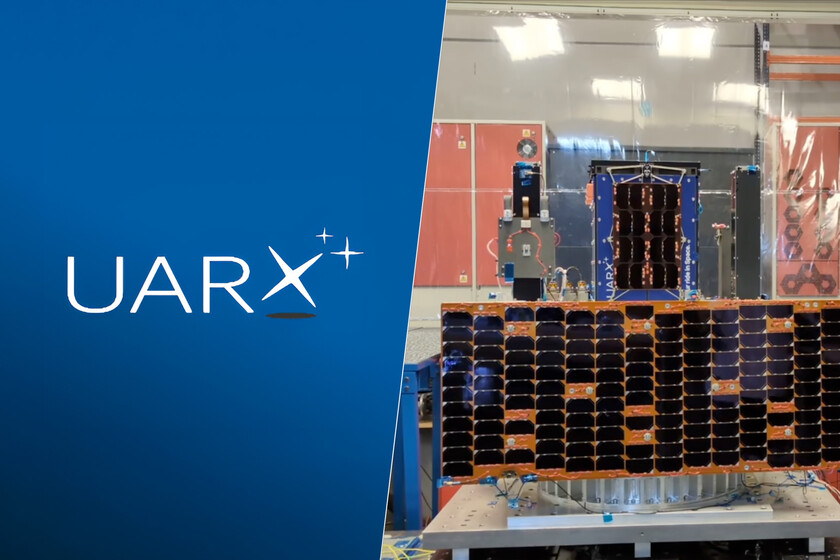
We are used to talking about satellite launches as if that moment marked the end of the journey. The rocket takes off, the cargo reaches orbit and the mission seems accomplished. But that is not always enough: placing a satellite in space is only the beginning of a much more delicate process, that of taking it exactly to the point where it must operate and ensuring that it can fulfill its mission under the expected conditions. In that silent stretch is where new proposals begin to emerge. Among them, a Spanish startup that claims to have its own orbital transport vehicle ready and a first mission planned for 2026.
UARX Space. Behind this proposal appears UARX Space, a company based in Nigrán, on the coast of Galicia. Founded in 2020, the company has defended an unusual strategy within the ecosystem: advance during its first years with a low public profile and focus on technological maturity before presenting itself to the market. That approach raises the idea of coming up with more developed systems.
ready to fly. The most recent turning point comes not from a launch, but from a technical validation. In a post published on LinkedIn a few hours ago, UARX Space points out that its OSSIE orbital vehicle has completed the environmental qualification campaign, a phase that includes vibration tests, tightness and conditions representative of takeoff. The results, according to the company, confirm compliance with the mission requirements and place the system in a state of readiness for flight.
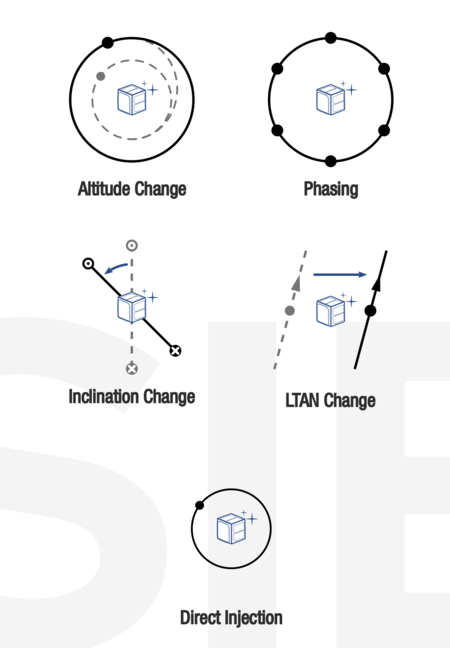
The work of the “tugboat”. The difference between understanding the concept and seeing its real impact is how those capabilities are applied in a specific mission. A vehicle like OSSIE not only moves satellites from one point to another, it undertakes maneuvers that determine whether a constellation works as designed or whether a payload reaches the exact orbit it needs to operate. As we say, the system is designed to execute precise injections, modify orbital parameters and coordinate relative positioning between satellites.

When will the launch be? With that milestone on the table, the next question is when liftoff could come. From what we have been able to observe in the public information of UARX, the first OSSIE mission takes place in 2026 and is limited to the first quarter of the year, with an initial insertion planned in sun-synchronous orbit around 500-600 kilometers. Other information comes to us from a previously published statement, which indicates that the orbital launch system contracted for this important step will be SpaceX’s Falcon 9.


OSSIE will carry twelve loads on its initial flight. One of them will be CORTIS, a UVigo SpaceLab initiative designed to compare the performance of commercial radiation sensors with proprietary developments and test a flight heritage camera planned for another mission. The project has passed vibration tests at the company’s facilities before its integration, a necessary step for any cargo that aspires to travel to space. This collaboration between the academic environment and industrial infrastructure offers a more concrete image of the model that the company is trying to build.


Refuel in orbit, but later. The scope of the project is not limited to the movement of satellites, but rather points to a different way of operating in space. UARX is working together with Dawn Aerospace on the integration of a docking system that, in this first mission, will only have a structural function, but which is part of an architecture designed to allow in-orbit services in the future. Among them appears the possibility of orbital resupply, an idea still in development within the European ecosystem.
Images | UARX Space
In WorldOfSoftware | Starlink’s dominance in space begins to move: another company already has permission for a constellation of 4,000 satellites


