Many technology enthusiasts have spent years imagining a future in which words are enough for the mobile phone to do the rest. Why open an application and navigate between menus if we can ask it out loud and that’s it? “Mark all messages as read”, “Order a car from my location”, “Open the discounts app and tell me what promotions I can use today”. In that ideal future, an agent should take care of everything without us touching the screen.
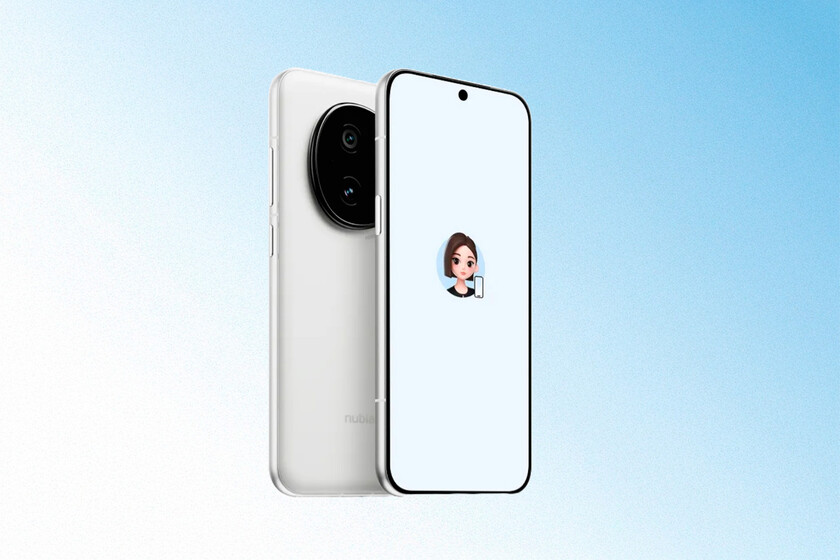
Recent reality, however, has gone another way. Despite the visible rise of AI, interaction with mobile phones remains anchored in known dynamics. The most advanced version of Siri—the one Apple promised with agentic capabilities within Apple Intelligence—is still not here, and the user experience hasn’t changed substantially. In this context, ZTE has decided to take a step that until now no manufacturer had materialized: integrate a deep AI agent at the system level. The result is the Nubia M153.
The mobile that turns agentic AI into its core. Far from being limited to accessory functions, the Nubia M153 is committed to real AI integration. According to Global Times, it includes a preliminary version of Doubao Mobile Assistant, developed by ByteDance and ZTE. Although the assistant continues to be polished, it already demonstrates a striking ability to interact with applications and execute tasks that until now required user intervention.
The demonstrations have gone viral. In In another test, a photo of a hotel is enough to reserve a room at the best available rate. The system identifies the establishment, opens the appropriate app and proceeds with the reservation.
On Weibo, the scene is similar: “Order me three lattes and a Mixue ice cream,” says a young woman. The assistant gets going, asking for details when it needs them (size, sugar) and adding new tasks, such as finding the cheapest pizza service, buying movie tickets or converting photos into AI-generated images.
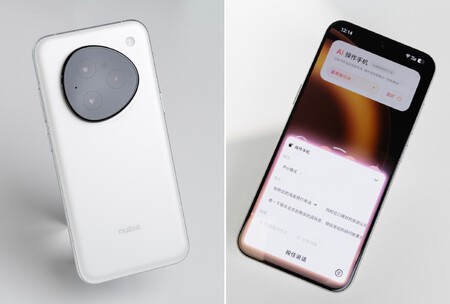

An experiment that has exceeded expectations. The Nubia M153 is not a mass consumption mobile. It is only sold in China and in very limited quantities. According to Sina, ZTE launched about 30,000 units aimed mainly at users with a technical profile interested in testing new agentic capabilities, at a Price of 3,499 yuan (about 425 euros at the exchange rate). Despite this reduced production, the device sold out a few hours after going on sale on December 1.
Under the hood. IT Home details that the phone has a Qualcomm Snapdragon 8 with the Ultra label, 16 GB of RAM, 512 GB of storage and a 6.78-inch LTPO screen with a resolution of 1264 X 2800 pixels. Its camera system relies on three 50 MP sensors – main, wide angle and telephoto – and the design maintains a simple aesthetic, with a white back cover, black module and rounded edges.

Are we ready for the agentic era? The launch also revealed the first brakes. Shortly after the units arrived in users’ hands, several WeChat accounts began displaying suspicious activity notices. The same thing happened on Alipay and Pinduoduo. Everything indicates that the assistant’s autonomous behavior activated automation protection mechanisms, designed to block usage patterns that do not fit with normal human activity. It is, in practice, the first pulse between new generation agents and the traditional platforms that dominate the Chinese digital ecosystem.
Images | ZTE
In WorldOfSoftware | Almost all phones with optical zoom have the same problem. This Chinese brand believes it has solved it in a curious way