As a genre, true-crime documentary has been in the collective zeitgeist for a few decades now. Perhaps it’s beyond its peak due to the sheer amount of TV shows and features that somewhat desensitized us to shock and violence over the years, but that doesn’t mean the demand for it ceased to exist. Our fascination with serial killers, conmen, disgraced celebrities, and other startling criminal investigations will always endure to get us hooked on the latest sensations that streaming services like Netflix (which will have some big changes in 2026), HBO Max, and Prime Video keep feeding us every year. Lately, it’s just been harder to find the truly outstanding and prestigious gems that are deserving of our attention.
For that very reason, we assembled a brief list that focuses on some of the most spellbinding, gripping, and emotionally captivating true crime miniseries available on Netflix that you can binge-watch in a single weekend.
Don’t F**k with Cats: Hunting an Internet Killer

Mark Lewis’ 2019 three-episode miniseries, “Don’t F**k with Cats: Hunting an Internet Killer,” documents the making of a (potential) serial killer through an online group of self-appointed sleuths, who begin investigating a guy who records and publishes videos of him torturing and killing cats. I’ve had my fair share of the most chilling, unsettling, and spine-tingling documentaries about psychotic individuals, but few of those felt so explicitly haunting and traumatizing as this one. The Netflix show painstakingly captures the evolution of how a disturbed young man develops a hunger for killing, gradually going further and further through animal abuse, eventually reaching the state of killing a human being.
Most documentaries about infamous murderers work their way backwards, shining a light on what led them to become the way they are, but “Don’t F**k with Cats” operates with a different approach from a less-explored angle that cuts deep. Nearly everyone you see here are everyday folks like you and me, who become obsessed with finding and exposing this man’s identity. They get even more determined when the authorities take too long to make progress in the ongoing case.
The fact that they eventually succeed is nothing short of a small miracle. A true testament to what society can do when people work together to fight and prevent something truly horrible from escalating much further. This superb documentary is as much about them as it is about hunting down a murderer. It’s a mandatory watch for anyone who can stomach it.
Night Stalker: The Hunt for a Serial Killer
“Night Stalker: The Hunt for a Serial Killer,” a 2021 four-episode miniseries, recalls the investigation and eventual capture of Richard Ramirez, a serial killer dubbed “Night Stalker,” who murdered at least 13 people during his active years, 1984 and 1985, in Los Angeles and the San Francisco Bay Area.
The series delivers a thorough, frightening, and eerie tableau of how Ramirez kept entire cities in complete terror. It revives the ’80s atmosphere and the growing fear among citizens through archive LAPD footage, testimonies from locals and victims, and the first-hand accounts from County Sheriff detective Gil Carillo and former LASD homicide detective Frank Salerno, who were assigned to the case.
Although “Night Stalker” doesn’t really break new ground in its approach, its horrifying subject and the atrocities he committed prove more than potent and absorbing enough to devour its four one-hour episodes in a single sitting or weekend. If you’re a true-crime fan, specifically interested in serial killers who were at large in the 1980s, “Night Stalker: The Hunt for a Serial Killer” should definitely be on your watch list.
O.J.: Made in America
After a theatrical release, Ezra Edelman’s documentary, “O.J.: Made in America,” aired in 2016 on ABC as a five-part miniseries that’s now available on Netflix. Despite being nearly eight hours long, it won the Oscar for Best Documentary Feature, and it’s easy to see why.
Covering the rise and fall of O.J. Simpson — including the biggest and most publicized murder trial in American history — the miniseries meticulously details, analyzes, and portrays every significant period in the life of the football star-turned-actor-turned-convicted-criminal, from every possible angle. It’s a flawless, multifaceted work that holds up as a true crime masterpiece, a history lesson, and a cultural footprint about the time that divided Americans (and likely, most of the world) in a way that nothing else did before it.
Through dozens of interviews with Simpson’s teammates, family, friends, associates, and nearly everyone who had a close relationship with him — in addition to numerous prosecutors, defense attorneys, and journalists who were involved in his criminal trial in some way — the five episodes deliver a complex, thought-provoking, and exhaustive portrait. Frankly, the scope of the cultural impact that “O.J.: Made in America” condenses is so vital and educational that it wouldn’t be a surprise if it were implemented in the national curriculum one day. In fact, it really should be.
Amy Bradley is Missing
You likely won’t find Phil Lott and Ari Mark’s three-part miniseries, “Amy Bradley is Missing,” from 2025 on most best-of true crime docs lists. The reason I decided to include it here, however, is that it’s one of those true stories where the theories around a rather straightforward case of a missing person are more fascinating than the facts.
Amy Lynn Bradley, a young and bubbly college graduate, went missing in 1998 when she was on a cruise with her family heading to the Caribbean. One night, while out on the sea, Bradley vanished, leaving virtually no trace or sign of what happened to her. Although she was declared legally dead by the authorities in 2010, after being missing for over seven years, her family still holds out hope that she’s alive, almost 30 years later, due to reported sightings of her in Barbados and San Francisco.
Besides giving us the details of her case, “Amy Bradley is Missing” focuses on the possibilities and wild theories that question whether she’s been kidnapped, trafficked, or both. Some vague evidence supports this tragic but plausible outcome, and the doc leans into it hard while giving a platform to Bradley’s family to express their love and grief for their daughter. They still hope, despite everything that indicates otherwise, that she’s alive and might return home. It’s truly heartbreaking, yet completely understandable, even if it’s unlikely that she’s still out there.
The Confession Killer
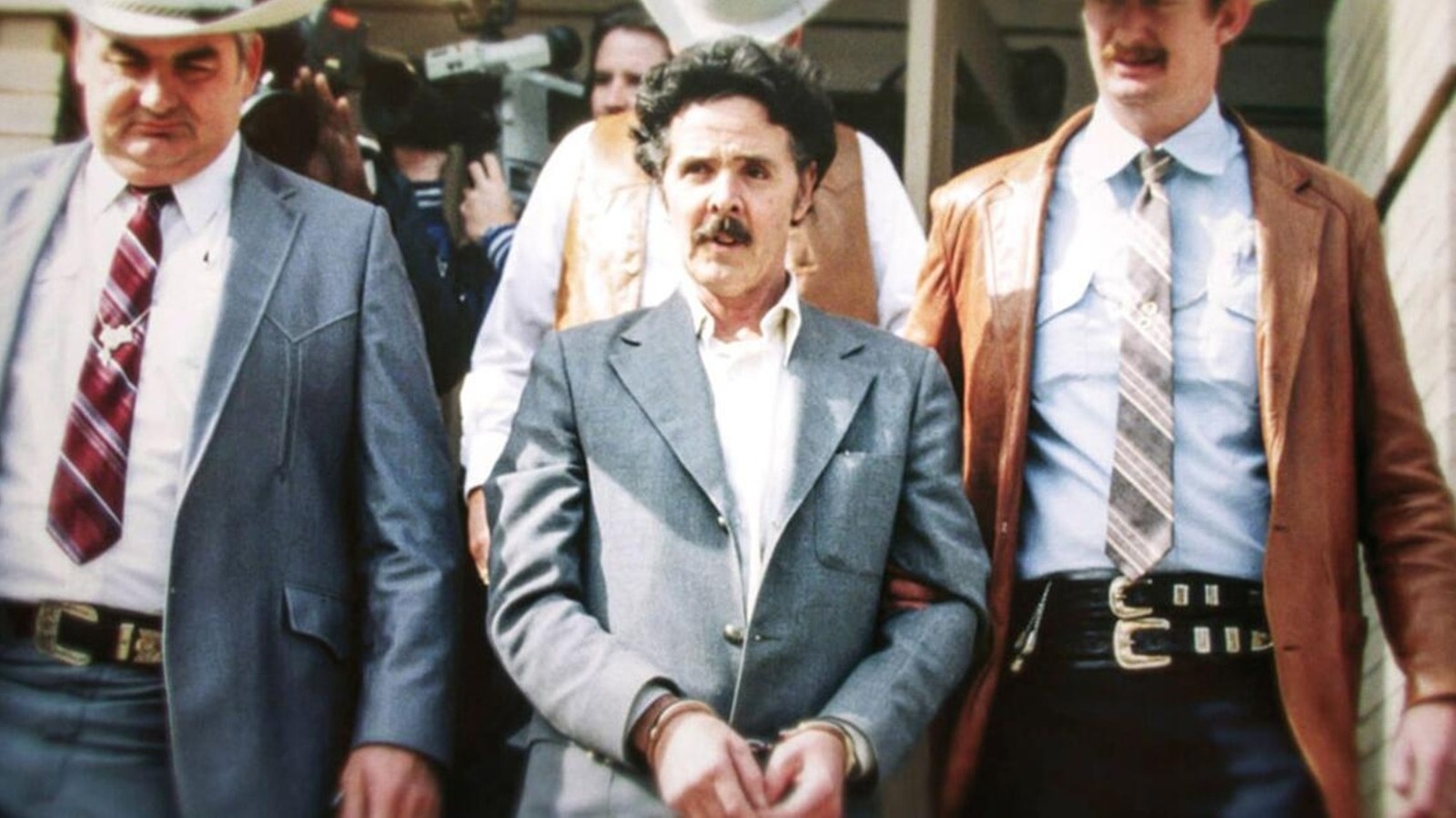
Robert Kenner and Taki Oldham’s 2019 miniseries, “The Confession Killer,” is one of those freakishly twisted serial killer tales that glues your eyes to the screen from beginning to end. The five-episode show tells the wild life story of Henry Lee Lucas, a drifter and convicted murderer from Blacksburg, Virginia, who voluntarily confessed to several hundred killings while incarcerated in the early ’80s, though that turned out to be false. Being held in the Williamson County jail in Texas, Lucas helped the Texas Rangers solve hundreds of murder cases because he realized early on that he could manipulate the officials with his intricate lies and, in exchange, receive preferential treatment.
While Lucas was indeed a serial killer — he killed his own mother and approximately 11 other people between 1960 and 1983 — the show focuses more on dissecting his psyche, the methods he used to convince the police about murders he couldn’t possibly have committed, and how his false confession spree was eventually exposed. Through archive footage that includes several interviews with Lucas, “The Confession Killer” gradually becomes a fascinating study in criminal psychology that not only exposes a cold-blooded assassin and compulsive liar, but also scrutinizes the ineffective methods of law enforcement. Lucas’ case later led to a re-evaluation and eventual change in interrogation techniques. “The Confession Killer” is a dark rabbit hole, no doubt, but if you have the interest, stomach, and a free weekend to dive into it, you won’t regret choosing this doc.