What if the real nightmare was not sudden violence, but the force of habit? This Wednesday, Disney+ subscribers find Gilead less than a year after saying goodbye to the merciless universe imagined by Margaret Atwood. June Osborn leaves her place to a new generation of women living under the yoke of Jacob’s sons, teenagers who have known nothing else. Offred’s rudimentary bedroom is replaced by the colorful world of a school for the regime’s elite.
Agnes Mackenzie is one of those Plums who eagerly await the arrival of her first period to take part in the wedding season. But the arrival of Daisy, a young woman who left Canada to join the dictatorship, will upset the established order and lead Agnes and her cohorts to question their place in the world.
“Wake up”
When this spin-off was announced, some might believe that it was a purely mercantile object, an opportunity for Hulu to take advantage of its golden goose. The Disney subsidiary would not be the first to do so and not the first to fail by repeating or betraying the story it draws inspiration from. But now, Atwood herself having returned to her dystopian world years after the publication of her first work, Hulu would have been wrong to deprive herself of it.
This new series has many arguments to convince fans of the original series as well as newbies. She promises to take a new look at the merciless Gilead, to come to terms with new distorting mirror of a world that continues to essentialize women and who slips a little more every day towards conservatism. There is also the promise of deepening a narrative arc that the parent series neglected over the seasons: the journey of young Hannah.
On paper, The Testaments to all the keys to sign the return to grace of The Handmaid’s Tale after its slow agony from season 4. Interest is renewed thanks to a change of tone and approach. With teenage girls as an anchor, it is no longer a question of immortalizing the fall of a world and its consequences on women who witnessed the disappearance of their rights. Here, we show the awakening of consciences.
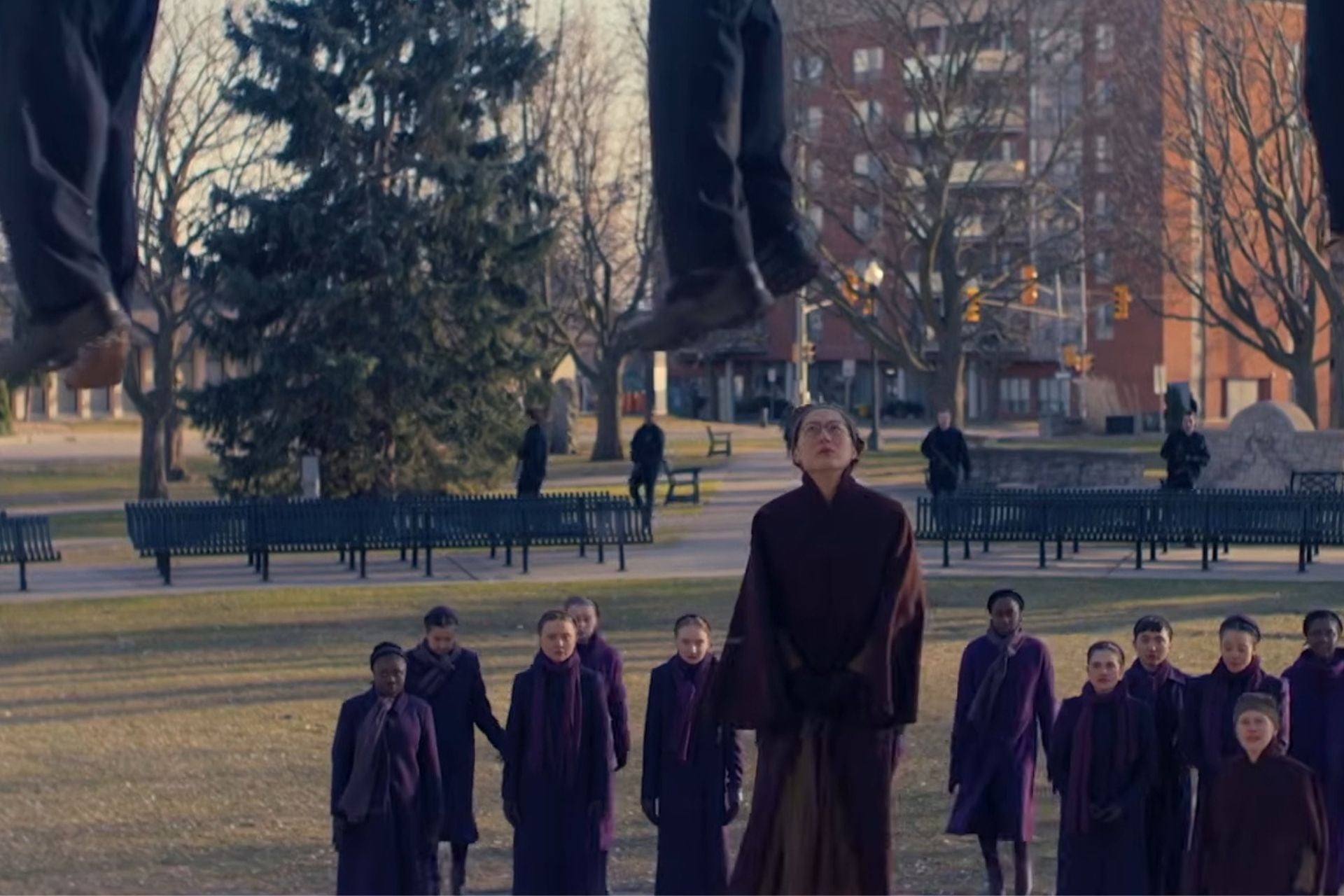
With its softer photography, the pastel colors of its sets and costumes as well as lighter music, The Testaments deliberately deviates from the imagery of its elder in order to exist. Bruce Miller no longer relies on an unbearable atmospherehe dresses his evil in beautiful trappings. The danger is more pernicious and insidious, but still very present. The utopia is constantly crumbling, with bodies swinging on ropes or public torture sessions. The violence with which the heroines have always lived, but which, with the arrival of Daisy, immediately becomes unbearable.

“Teenage Dream”
Reduce The Testaments to one The Handmaid’s Tale in teen mode would be a mistakeas the series has more to offer than a simple change of setting and casting. She makes this illustration of adolescence her greatest strength. The story skillfully oscillates between intimate considerations heroines and the “great story” of Gilead. Agnes, Daisy and their friends bicker to obtain the approval of their guardians, the aunts, but also gradually emancipate themselves from a regime that would like to see them pass from childhood to motherhood. Resistance passes by political machinationsas much as by conversations about male body shape and its mysteries.
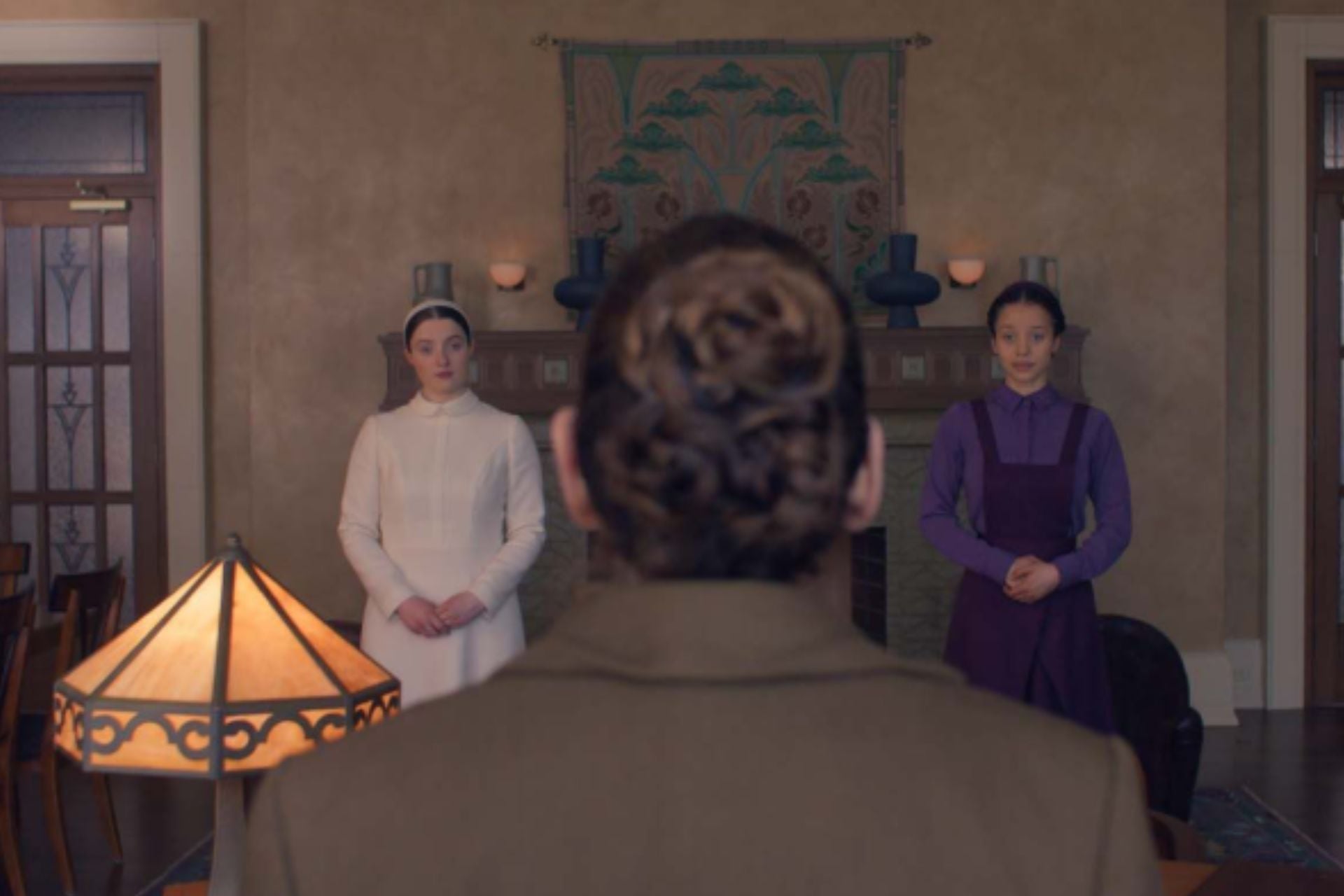
This chronicle of the passage to adulthood easily manages to stand out from the rest, thanks to clever staging. A doll’s house which serves as an entry point into this new world or a bucket of stale water recalls the first menorrhea, The Testaments compares well with its predecessor.
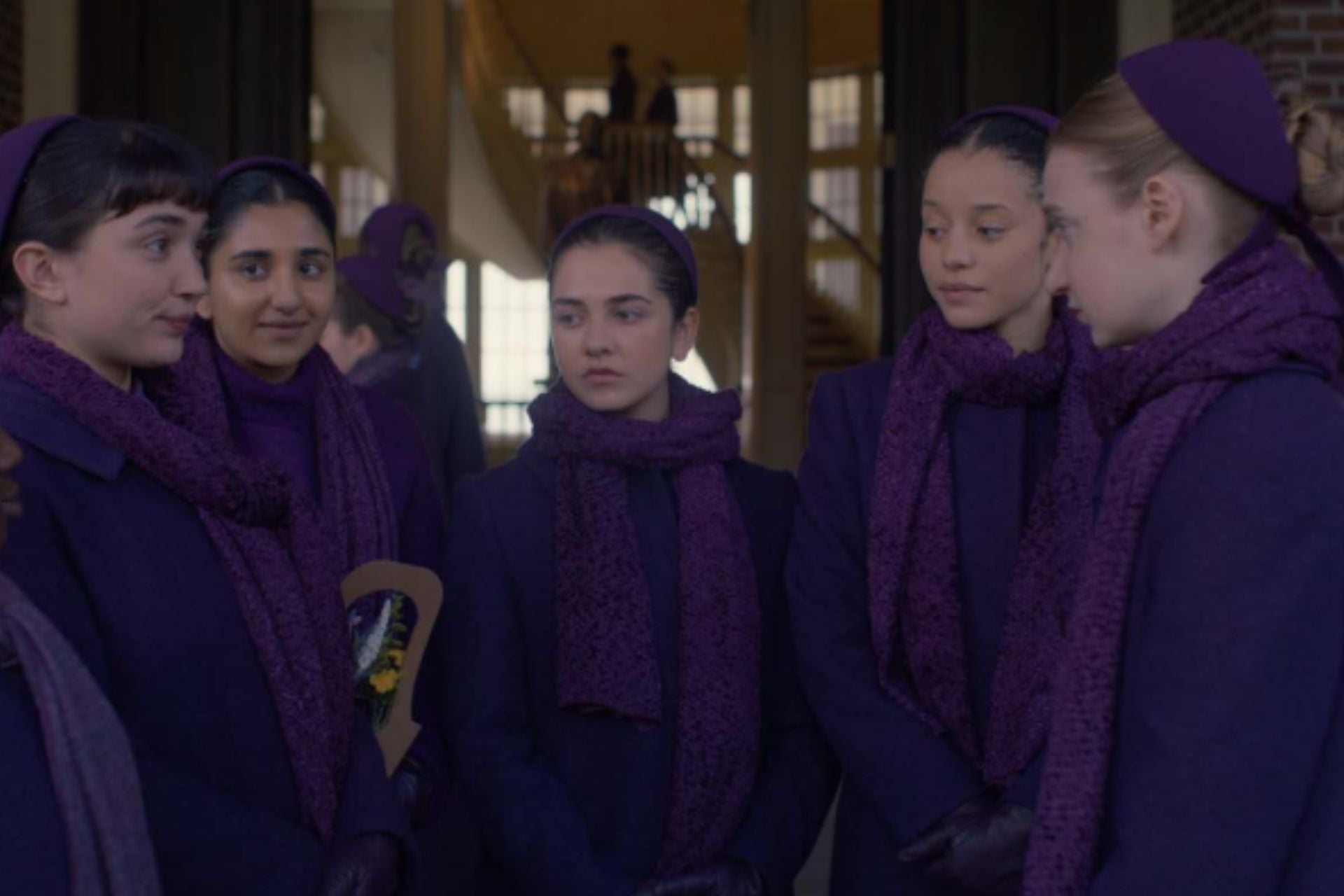
The series also owes a lot to its performers. Chace Infinity, revealed in One Battle after anothershines in the role of the seemingly docile teenager, but who just wants to rebel. The impeccable Lucy Halliday will be that spark that lights the fuse, that disruptive element that will tip Gilead over the edge. The regime had already underestimated the Handmaids, Underestimating your children could be fatal.
“Little sister”
And The Testaments brilliantly manages to show Gilead in a new light and find your uniqueness in your optimismit does not always manage to extricate itself from the shadow of its predecessor. Bruce Miller can’t help but echo The Handmaid’s Talesometimes to the detriment of the very identity of this spin-off. As if we had to legitimize this little sister through the eyes of her elder, as if we had to constantly remind ourselves of the impact that The Scarlet Handmaid on the small screen in the early 2010s.
Some bows sometimes taste reheated. Garth calls Nick backwhile the Agnes’ mother-in-law brings back the image of an implacable Serena. And then there is also this feeling that, like The Handmaid’s Tale, The Testaments will drag on for a long time. After ten episodes, we think we see a rise in power, a change of scale which could taint the charm of these first episodes.
We can hope that Bruce Miller does not give in again to the sirens of the spectacular for the spectacularthat the great ideas of this first season will not be abandoned to return to a more classic formula of an underground fight against Gilead and its agents.

Subscribe to WorldOfSoftware
We keep the faith, the faith in a series that could awaken the consciences of many spectatorsas had done The Handmaid’s Tale in the middle of Donald Trump’s first term. This sequel comes at the right time, when abortion is now banned in several American states and all 29-year-old French people are about to receive a letter inviting them to participate in demographic rearmament.
🟣 To not miss any news on the WorldOfSoftware, follow us on Google and on our WhatsApp channel. And if you love us, .