




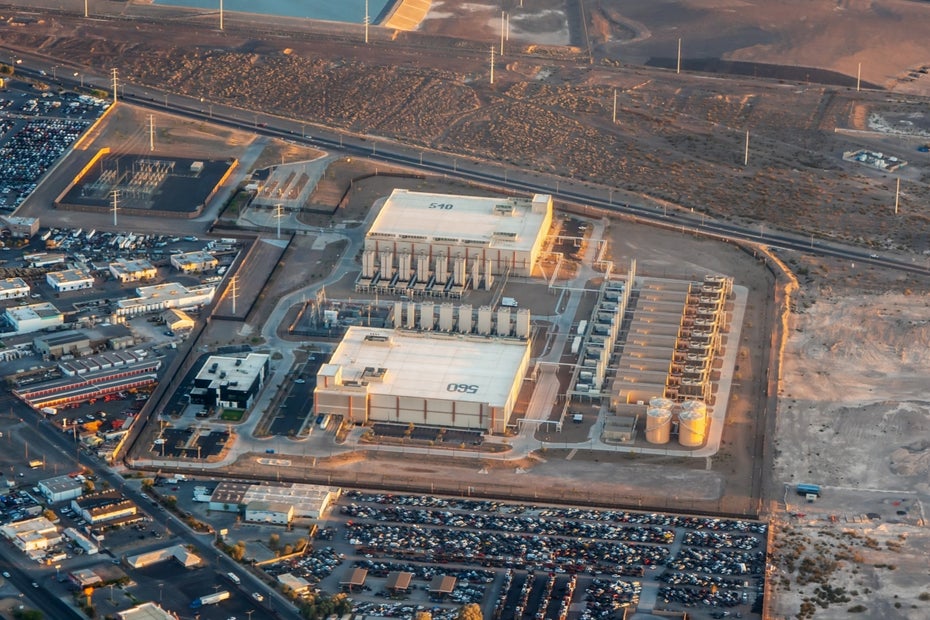
Several US states are currently considering suspending the construction of large data centers. They not only use huge amounts of electricity, but also a lot of water to cool the systems.
Maine passes data center moratorium
Now the first federal state has created facts. Maine prohibits the construction of data centers with a capacity of 20 megawatts of electricity. The bill has passed the northeastern state’s parliament. The signature of Democratic Governor Janet Mills is still missing. She has ten days to sign or veto.
Editorial recommendations
${content}
${custom_anzeige-badge}
${custom_tr-badge}
${section}
${title}
The ban on construction will last for one and a half years. The moratorium is scheduled to end on November 1, 2027. Until then, “a municipality, a quasi-independent government institution or an agency of the state may not accept an application for the issuance of a permit, certificate or other approval for the development, construction or operation of a data center with an output of 20 megawatts or more or issue such a permit, certificate or other approval before November 1, 2027,” the text of the law states.
Council should ensure environmental protection and stability of the power grid
During the construction freeze, a specially set up council will examine how large data centers should be dealt with in the future. It is intended to ensure that the reliability of the power grid is guaranteed. The aim is to reduce harmful effects on the environment. The rights of consumers should also be strengthened and they should be protected from rising electricity prices.
The background to the Council’s work is the State of Maine’s overarching goals for renewable energy and greenhouse gas reduction.
Criticism from the Association of Data Center Operators
The Data Center Coalition, the association of US data center operators, criticized the decision in Maine in a statement to The Hil newspaper. “A statewide moratorium on data centers would deter investors and signal that Maine is not open for business,” a spokesperson told The Hill.
The moratorium, according to the association representative, “would deprive local communities of the ability to compete for investment and jobs, while forcing Maine to forego significant long-term economic investments (particularly in rural and industrial areas seeking growth and revitalization), high-paying jobs, and important tax revenues for the benefit of neighboring states.”
The AI boom of recent years has significantly led to the need for ever larger data centers. According to OpenAI CEO Sam Altman, a single request from his chatbot ChatGPT requires an average of 0.34 watt-hours of power.
From water to wind: This is the future of sustainable energy production


From water to wind: this is the future of energy generation

Top Article
${content}
${custom_anzeige-badge}
${custom_tr-badge}
${section}
${title}


