




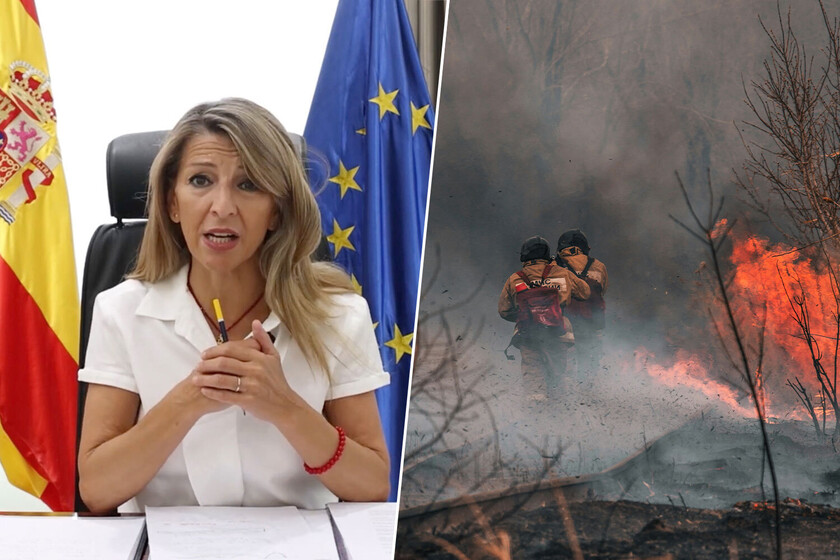
After the devastating fire that has evacuated and confined tens of thousands of people in the provinces of Ávila, Madrid and Toledo, the Minister of Labor recalled that, given the severity of the damage caused to homes and infrastructure, employees should not “choose between their safety and their employment”, inviting companies to take advantage of the social shield that allows them to request temporary ERTEs and give them time to recover their normality.
On the other hand, many workers in the areas affected by the fire will have woken up today, with the fear still in their bodies, wondering what will happen if I can’t get to my workplace because of the closed roads or evacuated areas. The law already has an answer for these force majeure causes: four days of paid leave.
A right born from catastrophe. The so-called climate permit was born as a social shield measure after the DANA that devastated Valencia in 2024, when several workers died going to or returning from their workplace. The Government responded with Royal Decree-Law 8/2024, which established a new case of paid leave in the Workers’ Statute.
This change adds a new section to article 37.3 and recognizes up to four days of absence without losing a single euro of salary due to force majeure. Those days also count as work time. That is, you do not have to recover them later.

What exactly does it cover and who activates it?. Vice President Yolanda Díaz remembered it this weekend from her profile on Bluesky. The objective, he said, is that “working people who, as a result of the loss of their means of transportation or alterations in public or collective transportation, cannot travel to their workplace” are covered by this right until the situation is normalized.
The minister also recalled that housing protection lasts until the family finds a “stable and adequate housing solution,” as Díaz explained. After four days, if the problem continues, the ERTE comes into play due to force majeure, which served as a response during the great blackout this year and during the DANA in Valencia in 2024. The latest reform of this social shield allows those affected to enjoy the permit immediately: “the accreditation of any of these situations may be carried out later and by any means of proof.”
Unions take the floor. For its part, CCOO also recalled on networks the rights of those who suffer serious risk from fire. From paralyzing the activity to justifying the absence without fear of sanctions. Territorial delegations of the union in affected areas insist that now it is time to “protect employment, protect companies and protect the productive fabric.”
UGT has followed the same line, with its own question and answer document for affected people. “No one should choose between their health and their salary,” the union says in its statement. Both warn of something important: accreditation can be done later. A simple screenshot of the official notice is enough to activate this right.
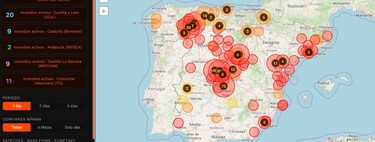
A summer that is putting the law to the test. The July numbers explain why this paid leave is once again a social shield measure. The fires in Madrid, Ávila and Toledo now total more than 77,000 hectares burned. Spain is already close to 170,000 hectares burned so far this year. Only in the Sierra Oeste of Madrid and Ávila, nearly 100,000 people have been affected, including evacuated and confined.
With so many people confined without being able to move from their town, or without a town to return to, the permit is no longer the fine print and for many employees it becomes the difference between getting paid or not that month.
The fire burns some more than others. The permit was designed to protect private sector workers and Administration staff, but it does not reach everyone. The USO union has denounced that more than three million public employees are left out of this coverage.
Likewise, self-employed employees cannot access that umbrella that does protect other employees. They can only access a benefit for cessation of activity if they contribute for that contingency.
In | There is a heat wave, we work less: what exactly does the law say about working hours under extreme temperatures
Imagen | Unsplash (mikhail serdyukov)


