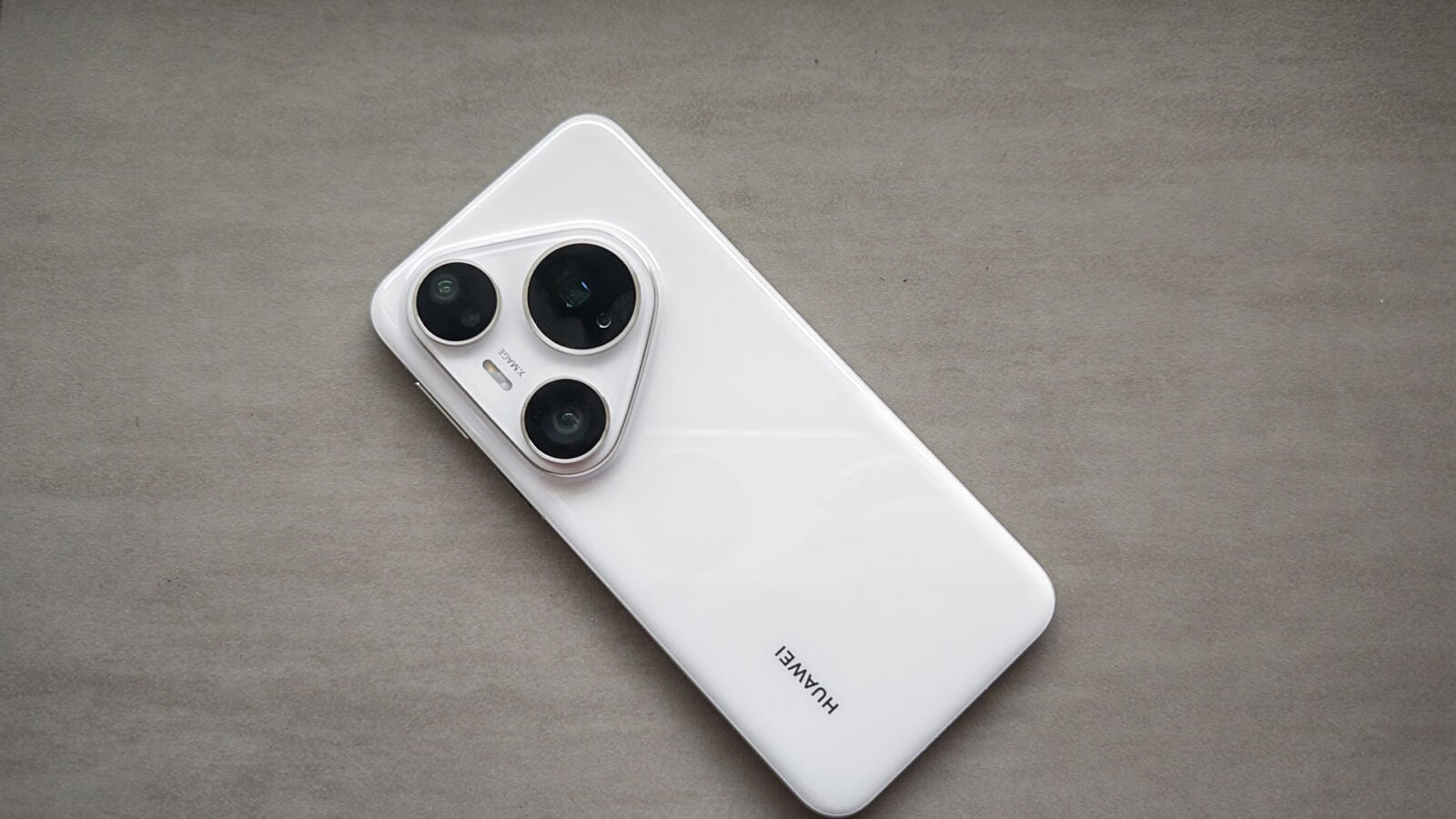
While the smartphone market seems to have frozen in a trench war between Apple’s iPhones and Samsung’s Galaxy, one veteran fighter stubbornly refuses to lay down his arms. The Huawei Pura 80 Pro has been officially available in France for a few months with fascinating technological arrogance, brandishing its one-inch photo sensor like a standard. But at 899 euros, can we still forgive a flagship for ignoring native 5G and requiring software contortions from its user?
We spent a few months with the Pura 80 Ultra’s little brother, and the verdict is as clear as the design of the device: it’s one of the smartphones that we most want to love, but it does everything to make it difficult for us.
An armored object of desire for everyday life
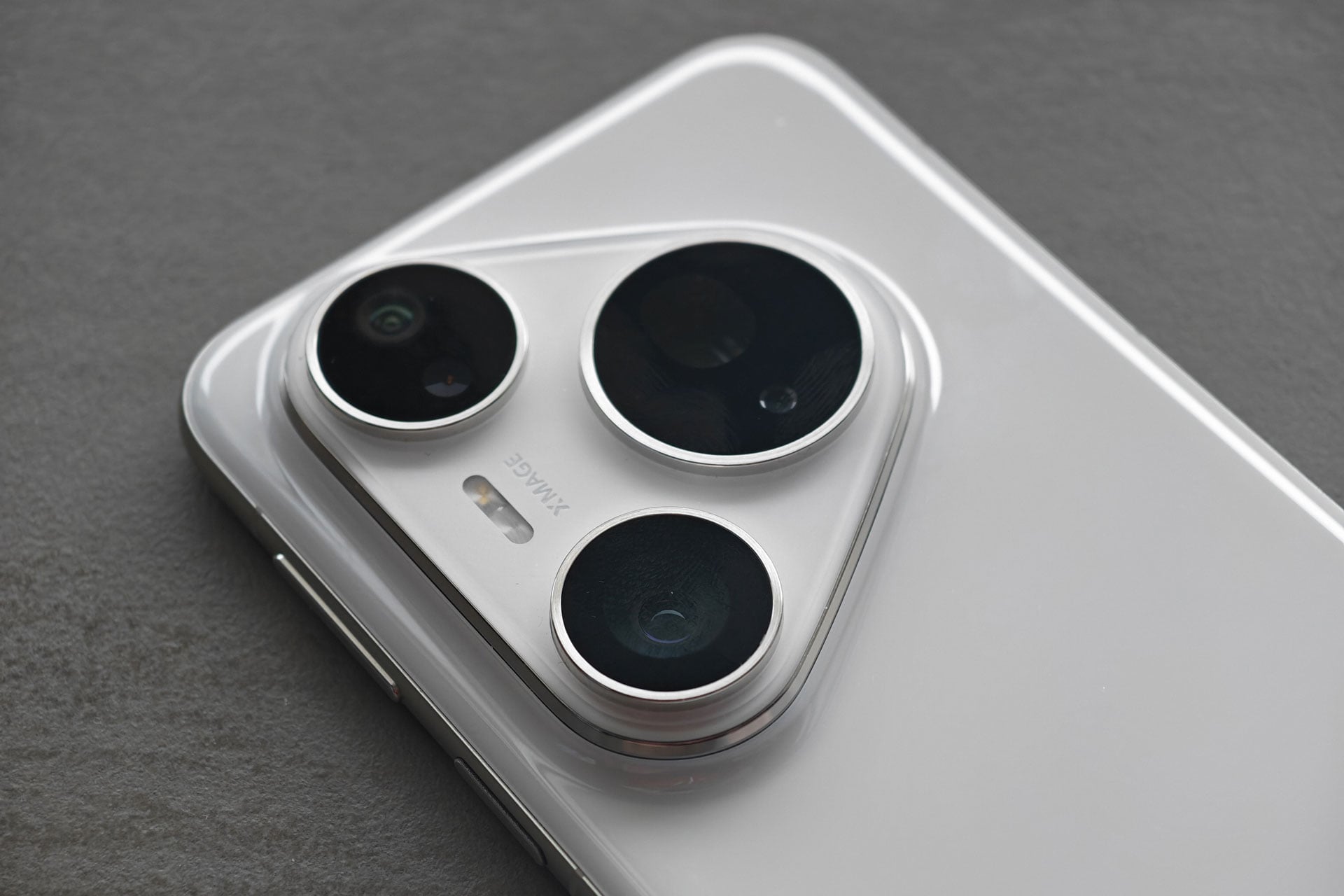
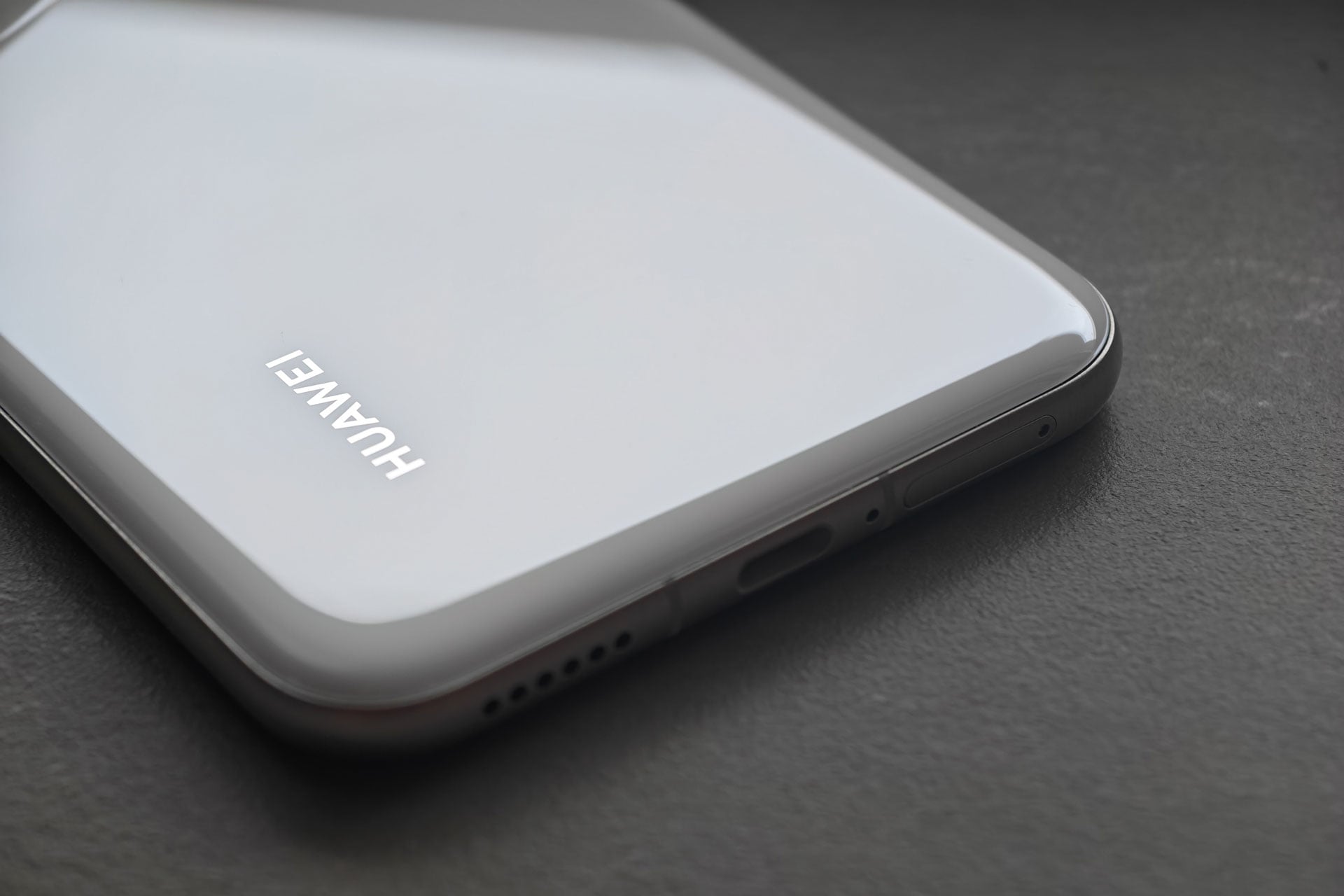
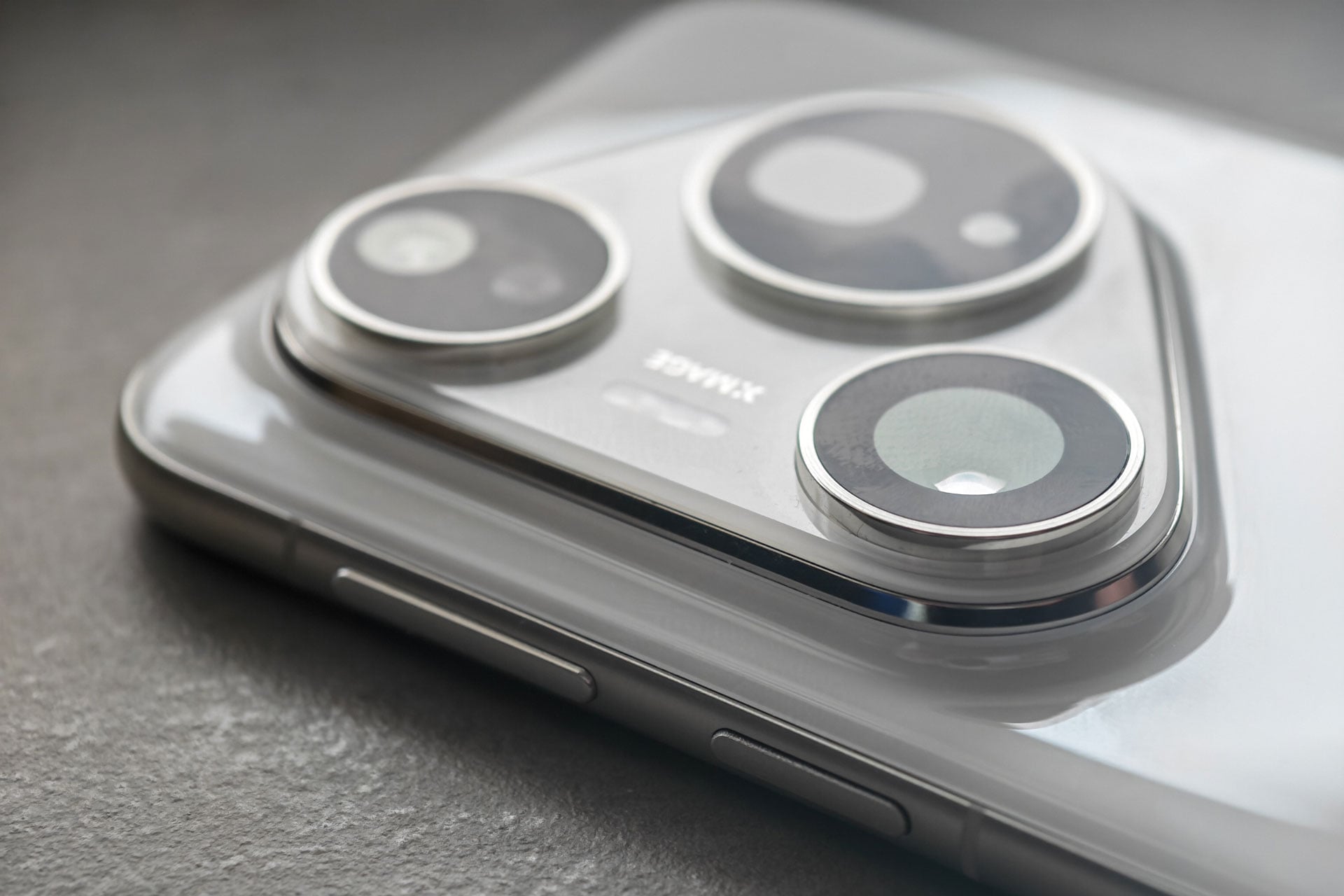
The Huawei Pura 80 Pro sets itself apart right out of the box. Huawei resisted the widespread return of aluminum – which Apple on the iPhone 17 Pro and Samsung on the S26 Ultra both adopted this year to gain finesse – by offering a warmer and more organic approach. The enameled finish of the tempered glass back is a success, offering a soft, almost silky grip that leaves no fingerprints. The triangular photo module, signature of the Pura range, has been refined to emerge from the hull with softer curves, evoking less of a technical addition than a natural outgrowth of the chassis. It is an unapologetic fashion object, divisive perhaps, but which has the rare merit of being immediately identifiable.

This elegance is accompanied by a reassuring robustness. Protected by the second generation of Kunlun Glass, the device has an IP69 certification where some competitors are satisfied with IP68. Once the screen is turned on, the 6.8-inch LTPO OLED panel confirms the brand’s know-how. Huawei announces a theoretical HDR peak at 3,000 nits, and the display turns out to be vibrant, contrasty and perfectly readable in direct sunlight.
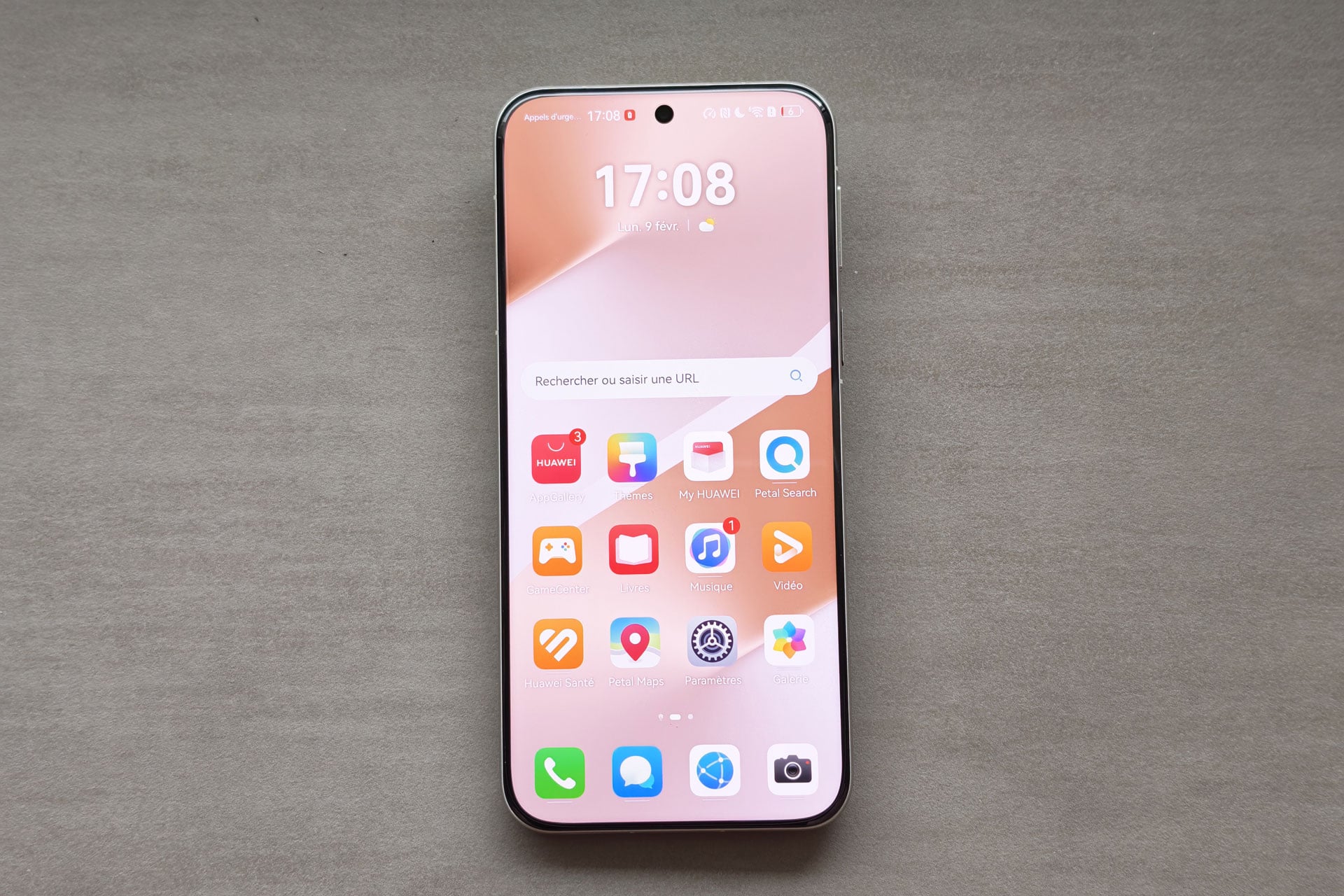
The brand also cares for our retinas with high-frequency flickering (PWM) of 1,440 Hz, making nighttime consultation less tiring. The only ergonomic downside is that the weight of the optical unit slightly unbalances the device forward, requiring some little finger gymnastics to keep it stable with one hand.
The software experience: between fluidity and DIY
This is where the frustration announced in the title takes on its full meaning. The Pura 80 Pro is powered by the Kirin 9020 processor, a chip engraved in 7nm. In 2026, faced with the finesse of 2 nm or 3 nm engraving from American and Korean competitors, this technological delay is a chasm on paper. The benchmarks are clear, displaying raw scores 30 to 40% lower than the market leaders.
| Huawei Pura 80 Pro | iPhone 17 Pro | Samsung Galaxy S26 Ultra | |
| Geekbench 6 Single-Core Score | 1 287 pts | 3 799 pts | 3 730 pts |
| Geekbench 6 Multi-Core Score | 4 626 pts | 9 773 pts | 11 538 pts |
The reality on the ground is more nuanced. The interface is fluid, multitasking is handled without flinching, and no slowdown spoils the daily experience: the Kirin delivers. But beyond this reassuring observation, it is difficult to ignore what EMUI 15 really represents: an interface that is aging, little or not reinvented from one generation to the next, and which is lagging behind more and more visibly compared to what Huawei is capable of doing when it gives itself the means.
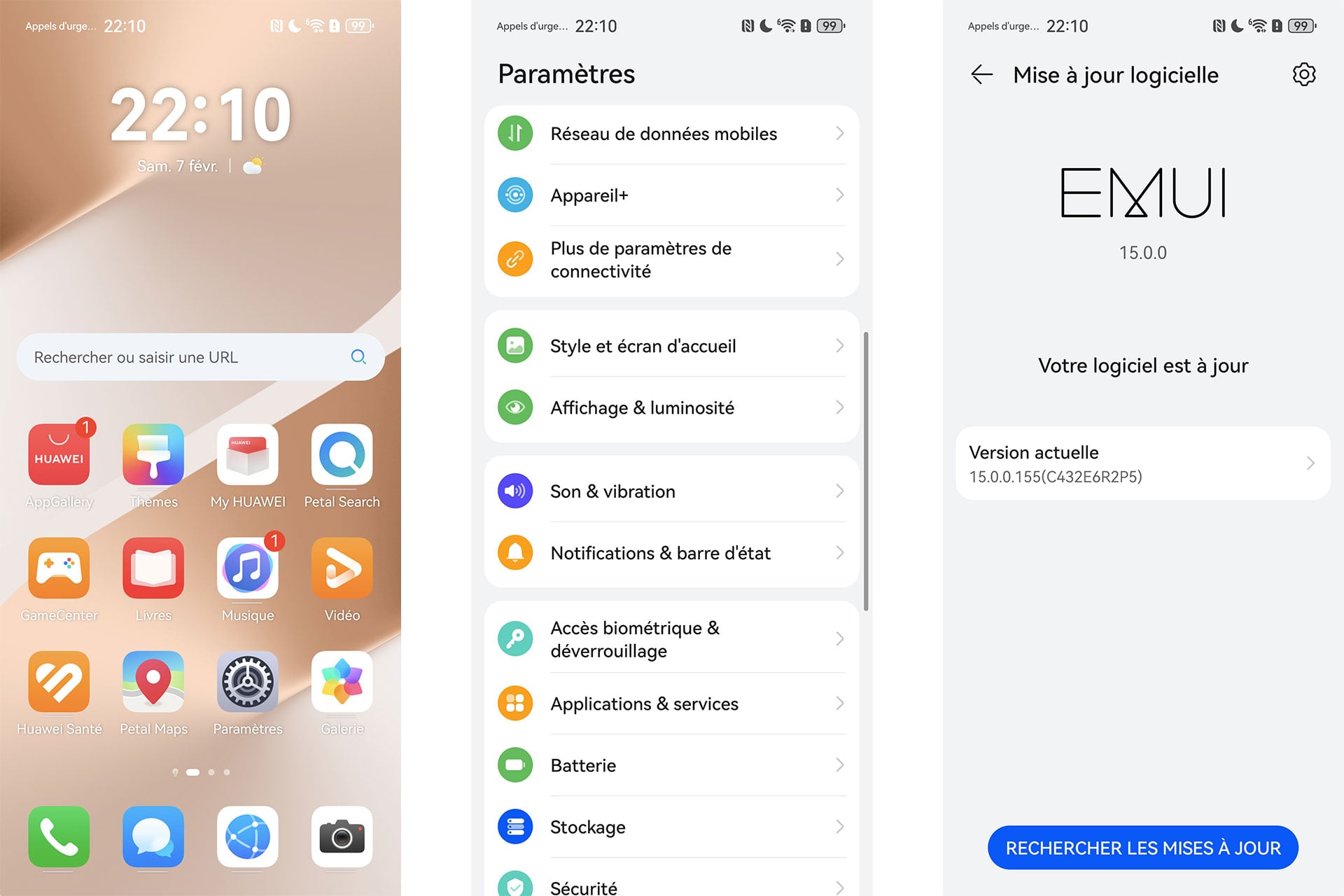
In China, HarmonyOS NEXT is profoundly transforming usage with omnipresent AI, redesigned animations and fluid cross-device integration. In Europe, we inherit an Android AOSP overlay to which Huawei applies cosmetic improvements, without ever tackling the foundations. It’s functional. It’s even comfortable. But at 899 euros, we have the right to expect better than a transitional OS frozen in time.
The real elephant in the room remains, unsurprisingly, the absence of native Google services. In 2026, the situation has improved significantly thanks to the semi-native integration of microG. The user no longer needs to go through heavy virtual machines invaded by advertisements. However, and contrary to what Huawei’s unofficial speech suggests, the situation is far from being resolved.
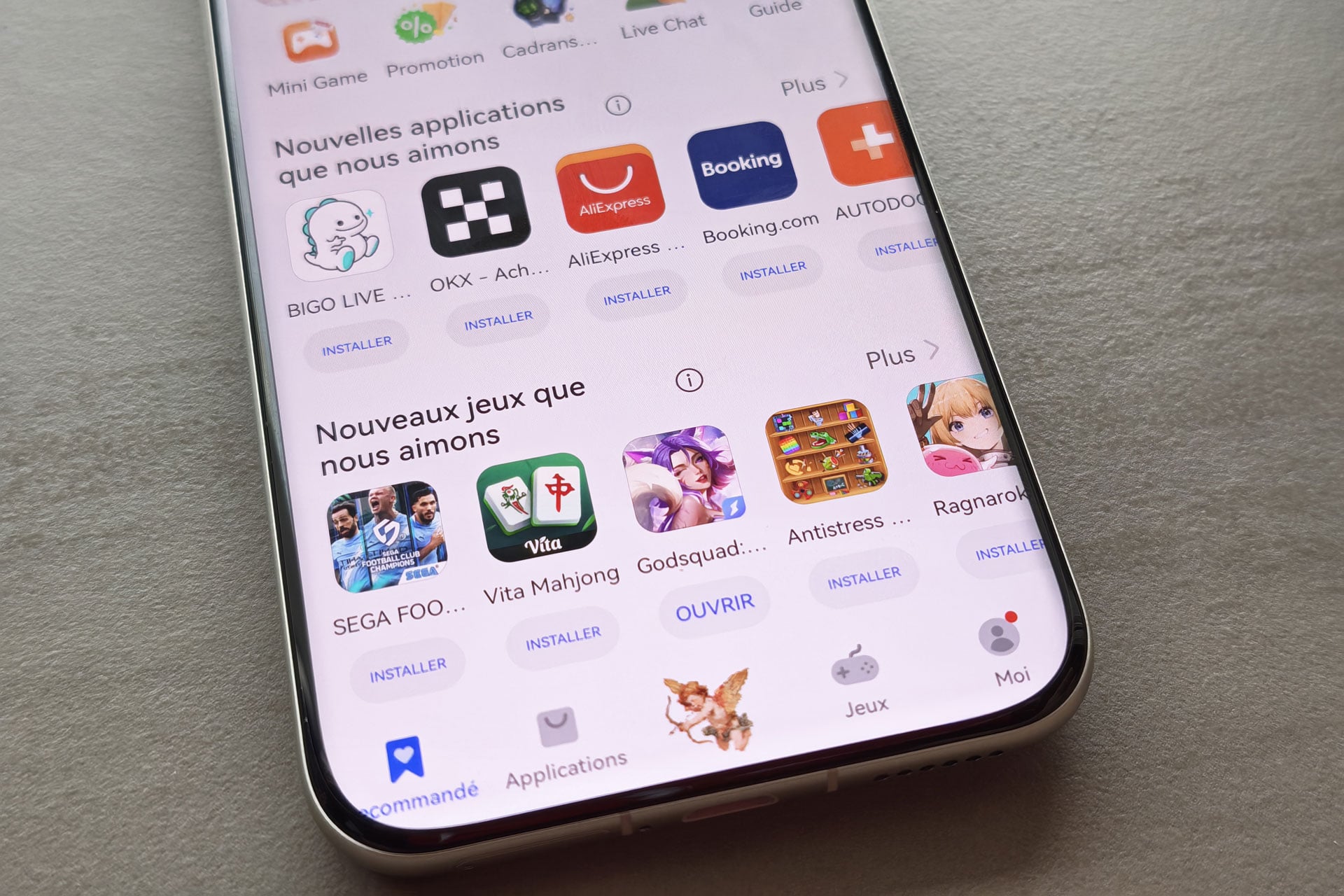
If the AppGallery is full of applications, many essential ones are available there, we find ourselves in the middle of a catalog still too full of promotional content.
The AppGallery and Aurora Store to make you forget the Play Store
To download YouTube, Google Chrome or even Maps, the easiest way is to go through the Aurora Store. This alternative store is popular with the Huawei community, even if it requires manual installation. Aurora Store allows you to download applications from the Play Store by connecting to Google servers via an intermediary account. Huawei does not preinstall it, and for good reason: the application constantly navigates in a legal gray area, mimicking a legitimate connection to the Play Store to circumvent the lack of a license. Note that I had to use a personal account to log in, because the alternative client refused my login through my Google Workspace account.
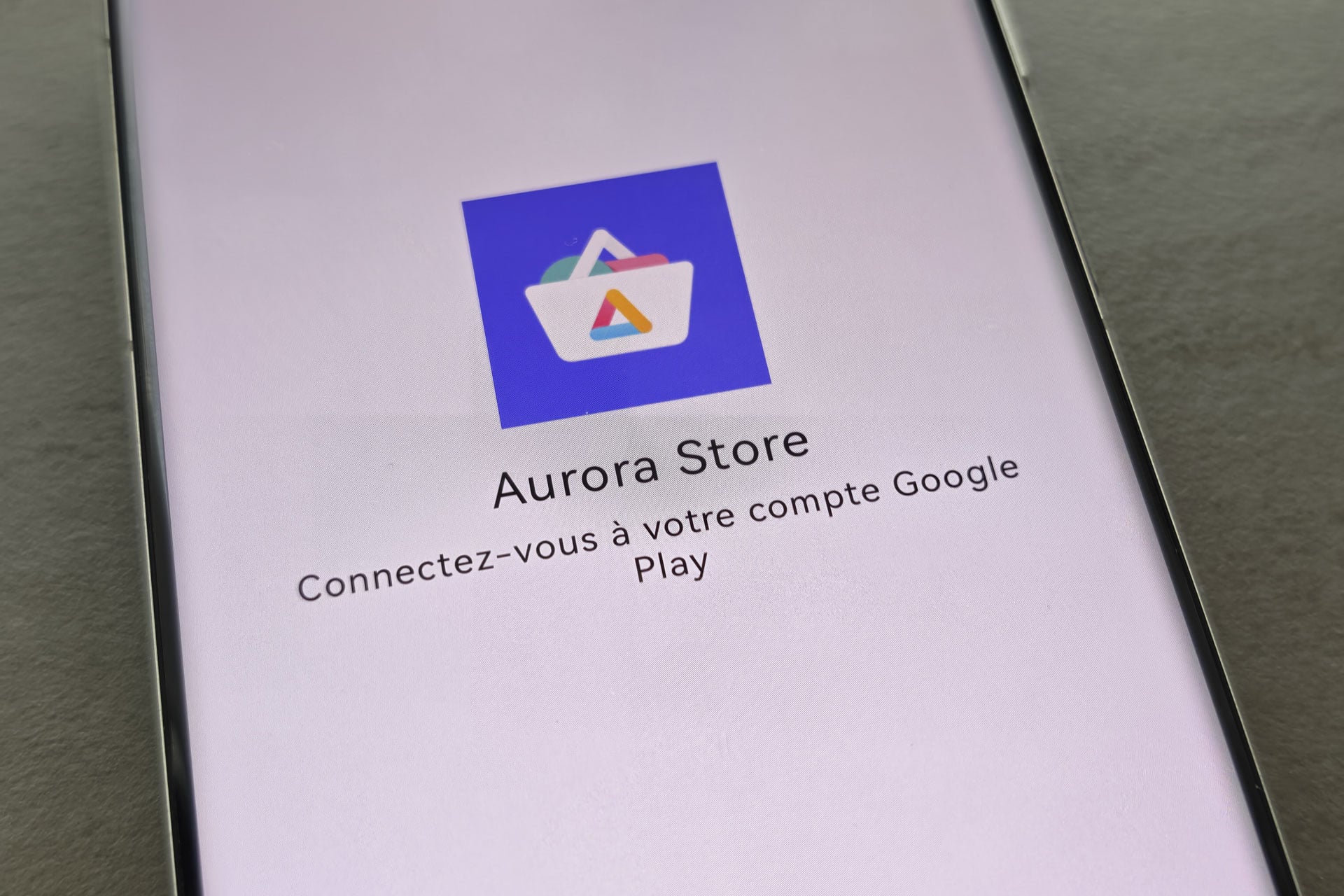
The solution works as is and I have not encountered any problems for several months with Huawei devices, but Google can technically block access overnight, without notice. It’s a sword of Damocles that we tacitly accept with each application update.
To go further: Huawei in France in 2026: do we really need to take the plunge?
Preinstalled on the Pura 80 Pro, microG adopts a similar logic: it pretends to be a Google device authorized by the firm’s servers in order to simulate the missing services. The result is functional for push notifications and basic geolocation, but the trickery has its limits. Google Maps constantly requests an update of Google services, which is impossible to carry out, creating an error loop with no escape. Even more penalizing: the management of access keys (passkeys) is very complicated and it was impossible for us to connect to certain services using this authentication. Google’s password manager, even via microG, remains inaccessible: prepare to enter your credentials by hand.
The limits don’t stop there. Connectivity suffers from several notable absences: no 5G, a direct consequence of American restrictions on HiSilicon chips; no 6 GHz Wi-Fi band, the Pura 80 Pro making do with dual-band Wi-Fi 7 when its competitors are already paving the way for 6 GHz. Managing eSIMs is capricious and in the absence of an integrated transfer tool, you have to go through your operator’s web portal.
Finally, AI is absent in France. None of the embedded artificial intelligence features deployed in China are available in our markets.
Photography: the purity of XMAGE
If you buy a Pura 80 Pro in 2026, it is above all for its optical unit. Huawei has deployed here a hardware architecture that attempts to bridge the gap between the smartphone and the expert box, by focusing on physics rather than just algorithmic processing.
The heart of the reactor is a 1-inch, 50-megapixel main sensor. Rather than cropping in the image, Huawei uses the entire surface of the sensor, allowing phenomenal light absorption and impressive native dynamics.

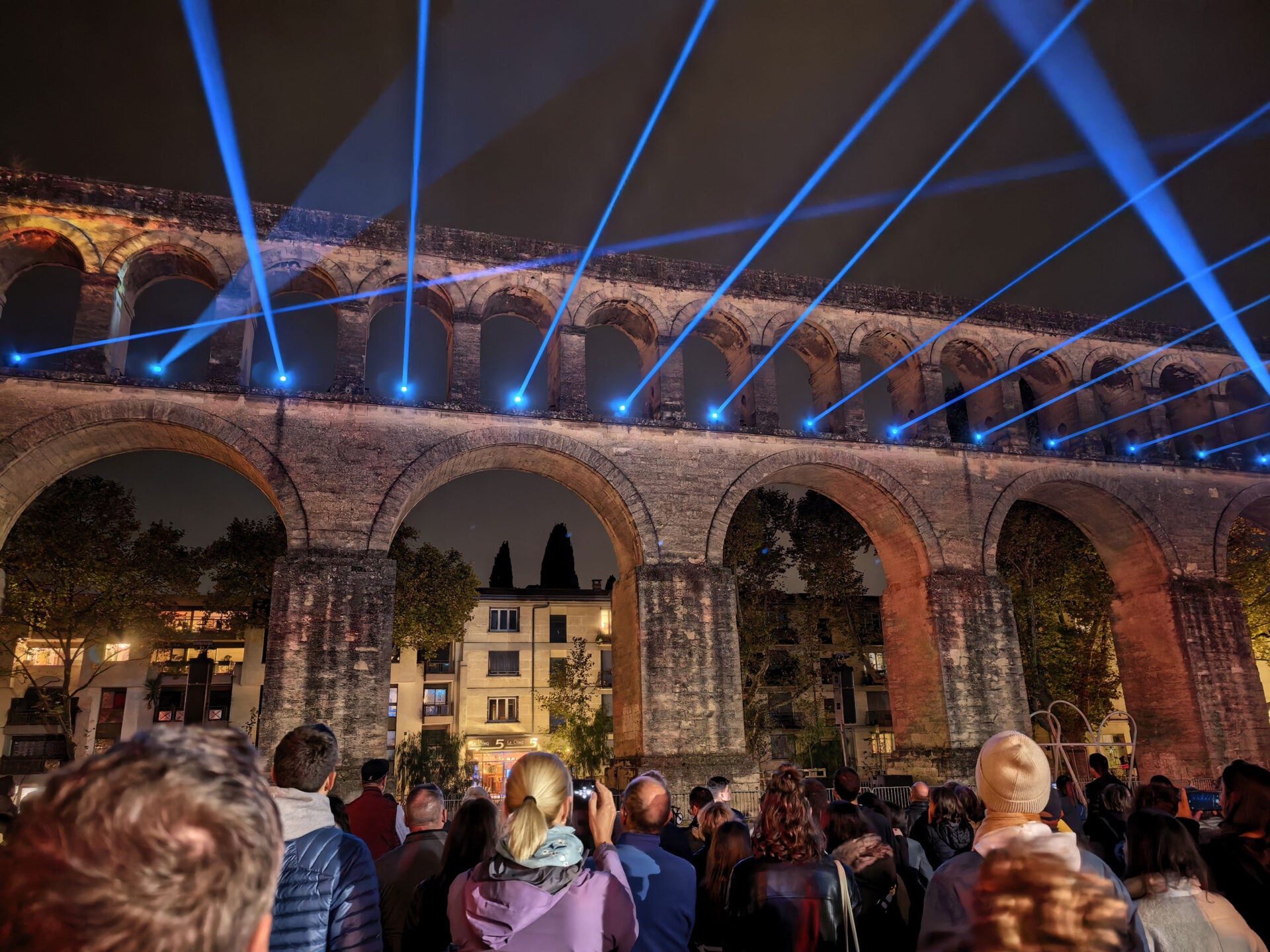
This sensor is topped with mechanical variable aperture optics, capable of actually oscillating between f/1.6 and f/4.0. At f/1.6, the lens swallows light for night shots without digital noise and creamy natural bokeh; at f/4.0, it extends the depth of field to ensure perfect sharpness across an entire landscape, avoiding the edge blur inherent in large fixed-aperture sensors.

The 48-megapixel periscopic telephoto lens completes the device with an aperture of f/2.1 for an equivalent of 93 mm (x4 optical zoom), outperforming most of its competitors at this focal length in terms of brightness. The floating lens design allows focusing across the entire focal range, from infinity to just a few centimeters, providing rare versatility. The 40 megapixel ultra-wide-angle (f/2.2) ensures pleasant colorimetric and textural consistency when switching from one focal length to another, a pitfall on which too many competitors still stumble.
The XD Fusion Pro engine and XMAGE colorimetry unify everything with a rendering that favors texture and sharpness rather than excessive saturation. The files produced are dense, rich in information, and reminiscent of the rendering of certain expert compacts. In low light, the Pura 80 Pro establishes itself as a benchmark in this price category.
Autonomy: endurance as an additional argument
The irony is that the technological delay of the Pura 80 Pro here serves the endurance of the device. Deprived of an energy-intensive 5G modem and powered by a less demanding processor than its rivals, the Pura 80 Pro and its 5,170 mAh battery offer royal autonomy. Staying a day and a half away from an outlet is the norm, not the exception.
And when energy runs out, 100W wired charging allows you to recover 50% of the battery in a quarter of an hour and reach 100% in around 30 minutes. It should still be noted that this ultra-fast charging is carried out via a proprietary protocol. You will therefore have to go through the Huawei block to achieve the best results, because a third-party charger can offer much more sluggish results.
100 W charging, a strong commercial argument, also deserves to be qualified: the protocol is proprietary. As for the wireless charging announced at 80 W, it is technically impressive, even if the imposing photo module can complicate its use.
Technically, we still note that Huawei offers a level of charging that Samsung and Apple have not yet approached. In this specific area, Huawei’s only serious rivals are other Chinese brands.
Our opinion
The Huawei Pura 80 Pro is a deeply paradoxical smartphone. On the hardware side, it plays in the league of the very big ones: a photo unit among the best on the market at this price, reassuring autonomy, a high-end OLED screen. On the software side, it requires from its user a level of commitment that nothing justifies at 899 euros compared to competitors who work straight out of the box and who do not navigate legal gray areas to access their applications.
Because that is the root of the problem. The question is not whether we can live with a Huawei in France in 2026: we can, at the cost of a laborious initial configuration and constant vigilance. The question is why we would do it, when alternatives offer a photographic experience that is now very close, without any of the software compromises listed in this test. The honest answer: for the love of the brand, or for the optical purity of an XMAGE system which remains, on certain specific shots, difficult to match. It’s an argument. But at 899 euros, it must be yours before you press “order”.
👉🏻 Follow tech news in real time: add 01net to your sources on Google, and subscribe to our WhatsApp channel.