GPT-6 Is Coming: What Enterprise Leaders Need to Know

The rapid evolution of artificial intelligence continues to reshape the enterprise landscape. With OpenAI’s recent announcement of GPT-6 on the horizon, business leaders are positioning themselves to capitalize on the next wave of AI innovation. This article explores critical predictions about GPT-6, the safety evaluations shaping its development, the impending retirement of GPT-5.1, and how organizations can accelerate AI adoption to stay competitive.
Predictions for GPT-6: What to Expect
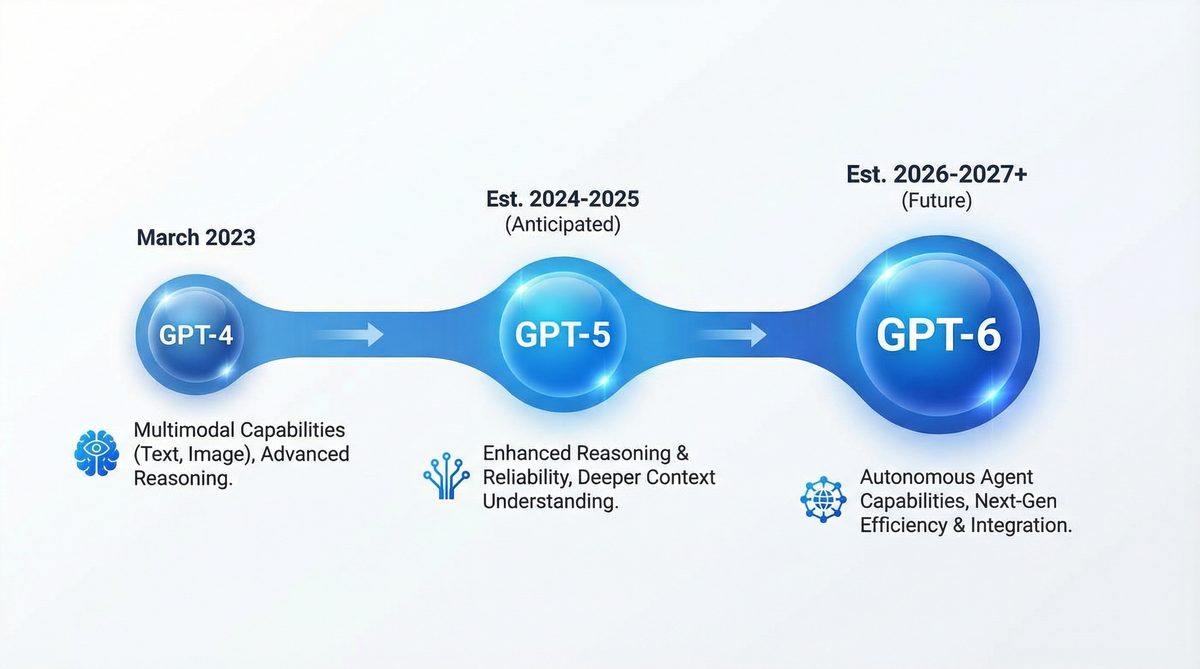
GPT-6 is anticipated to represent a major leap forward in natural language processing capabilities, building on the foundation laid by its predecessors. Industry experts and AI researchers project several key advancements that will define GPT-6’s impact on enterprise applications:
1. Enhanced Multimodal Understanding
While GPT-5.1 introduced basic multimodal capabilities, GPT-6 is expected to deliver seamless integration of text, images, audio, and potentially video inputs. This will enable more sophisticated context comprehension and richer responses, opening new possibilities for customer support, content generation, and interactive AI assistants.
2. Greater Contextual Awareness and Memory
Enterprises often require AI solutions that understand long conversations and complex workflows. GPT-6 is predicted to feature significantly extended context windows and improved memory mechanisms. This means more coherent interactions over extended sessions and better retention of user preferences and business-specific data.
3. Domain-Specific Customization
GPT-6 will likely offer more advanced fine-tuning and customization options, allowing organizations to tailor AI models precisely to their industry jargon, compliance requirements, and operational nuances. This will accelerate adoption by reducing the need for extensive manual adjustments or separate models.
4. Improved Reasoning and Problem-Solving
Building on trends seen in GPT-5.1, GPT-6 is expected to demonstrate stronger logical reasoning, multi-step problem solving, and decision-making capabilities. This will empower enterprises to automate complex tasks such as financial forecasting, legal analysis, and technical troubleshooting with higher confidence.
5. More Efficient and Sustainable Model Architecture
OpenAI is expected to optimize GPT-6 for computational efficiency, reducing the environmental footprint and operational costs associated with AI deployments. This aligns with corporate sustainability goals and enables broader access across organizations of varying sizes.
Safety Evaluation: Ensuring Responsible AI Deployment

With increased model capabilities come amplified risks and ethical considerations. OpenAI has emphasized safety as a cornerstone in GPT-6’s development and release strategy. Enterprise leaders need to understand the rigorous safety evaluations underway to ensure responsible AI adoption:
Comprehensive Risk Assessment
Advanced simulation and adversarial testing are being employed to identify potential misuse scenarios, biases, and vulnerabilities in GPT-6. This includes examining outputs for harmful or misleading content, privacy breaches, and model manipulation risks.
Enhanced Mitigation Strategies
GPT-6 incorporates improved guardrails such as real-time content filtering, context-aware moderation, and ethical alignment protocols. These systems are designed to minimize harmful outputs while preserving model flexibility and utility.
Transparency and Explainability
Enterprises increasingly demand transparency in AI decision-making. GPT-6 aims to provide better explainability features, enabling users to understand why certain responses are generated. This supports compliance with regulatory frameworks and builds user trust.
Collaborative Safety Research
OpenAI is collaborating with independent researchers, policymakers, and industry partners to continuously evaluate GPT-6’s safety profile. This ongoing partnership facilitates rapid identification and resolution of emerging risks.
Implications for Enterprise Governance
Organizations must develop robust AI governance frameworks aligned with GPT-6’s safety features. This includes establishing usage policies, monitoring AI interactions, and training personnel on ethical AI practices to mitigate operational and reputational risks.
Retirement of GPT-5.1: Transitioning Smoothly
As GPT-6 approaches release, OpenAI has announced the planned retirement of GPT-5.1. This transition presents both challenges and opportunities for enterprises currently leveraging GPT-5.1 in their AI infrastructure.
Timeline and Support
OpenAI will begin phasing out GPT-5.1 over the next 6-12 months, with gradual reduction in support and updates. Enterprise users are advised to start planning migration strategies to avoid service disruptions.
Migration Benefits
- Access to Advanced Capabilities: Upgrading to GPT-6 unlocks enhanced features and improved performance.
- Better Safety and Compliance: New safety improvements reduce liability risks.
- Cost and Efficiency Gains: Optimized model architecture lowers operational expenses.
Mitigation of Transition Risks
- Parallel Testing: Running GPT-6 alongside GPT-5.1 during migration to validate outputs.
- Staff Training: Educating teams on new model capabilities and interaction paradigms.
- Data and Integration Review: Ensuring compatibility of existing datasets and APIs with GPT-6.
Future-Proofing AI Strategy
Retiring GPT-5.1 is an opportunity for enterprises to reassess their AI strategies, incorporate GPT-6’s innovations, and align AI deployments with evolving business goals and compliance standards.
Accelerating Enterprise AI Adoption with GPT-6
GPT-6’s anticipated capabilities promise to catalyze broader and deeper AI integration across enterprise sectors. Here are key strategies for leaders to accelerate AI adoption leveraging GPT-6:
1. Align AI Initiatives with Business Objectives
Identify high-impact use cases where GPT-6’s advanced language understanding and reasoning can drive measurable value, such as customer experience enhancement, operational automation, or data-driven decision making.
2. Invest in AI Talent and Training
Equip teams with skills to fine-tune, deploy, and govern GPT-6 applications. Cross-functional collaboration between IT, data science, and business units is critical for successful AI integration.
3. Build Scalable AI Infrastructure
Ensure cloud or on-premises environments can handle GPT-6’s computational requirements efficiently. Leverage containerization, orchestration, and edge computing where appropriate to optimize performance.
4. Prioritize Responsible AI Practices
Implement governance frameworks to monitor GPT-6 usage, manage data privacy, and uphold ethical standards. Transparency and user education enhance trust and mitigate risks.
5. Leverage Integration and Automation
Embed GPT-6 within existing enterprise workflows and software platforms using APIs and custom connectors. Automate routine tasks and decision support to maximize ROI.
6. Monitor and Iterate
Continuously evaluate GPT-6 performance against business KPIs and user feedback. Use insights to refine AI models and adoption strategies over time.
Comparing GPT-5.1 and GPT-6: Key Differences and Enterprise Impact
| Feature | GPT-5.1 | GPT-6 (Predicted) | Enterprise Impact |
|---|---|---|---|
| Multimodal Capabilities | Basic text and image processing | Advanced integration of text, image, audio, and video | Enables richer, more interactive AI applications |
| Context Window | Up to 8,000 tokens | Expected 32,000+ tokens | Better handling of long documents and conversations |
| Customization | Moderate fine-tuning options | Highly flexible domain-specific tuning | Faster deployment tailored to industry needs |
| Reasoning Ability | Improved multi-step reasoning | Advanced logical and problem-solving capabilities | Supports complex decision automation |
| Safety Features | Content filtering and bias mitigation | Enhanced real-time moderation and explainability | Reduces compliance and reputational risks |
| Operational Efficiency | High compute requirements | Optimized for lower energy consumption | Lowers infrastructure costs and environmental impact |
Preparing Your Enterprise for GPT-6
To take full advantage of GPT-6’s capabilities, enterprise leaders should begin preparations now. This includes assessing current AI maturity, auditing existing GPT-5.1 deployments, and updating strategic roadmaps. Early engagement with OpenAI’s developer resources and pilot programs can also facilitate smoother adoption.
Enterprises that proactively embrace GPT-6 stand to drive innovation, improve operational efficiency, and strengthen competitive advantage. In contrast, delaying adoption risks falling behind in the AI-driven marketplace.
For detailed guidance on AI governance and integration strategies, refer to our comprehensive resources on
Teams looking to expand their knowledge in this area will find valuable guidance in How a Fortune 500 Retailer Cut Development Costs by 40% Using OpenAI Codex Plugins and ChatGPT Enterprise, which covers the technical foundations and practical applications relevant to today’s AI-driven workflows.
,
To explore the broader implications of these developments, our in-depth coverage in Scaling AI Across 100+ Teams: CyberAgent’s Success with ChatGPT Enterprise and Codex examines the key considerations and implementation patterns that organizations should evaluate.
, and
For a deeper understanding of how these concepts apply in practice, our comprehensive analysis in OpenAI Launches $100 ChatGPT Pro Tier: 5x Codex Access Takes Aim at Claude Max provides detailed insights and actionable strategies that complement the topics discussed in this article.
.
Access 40,000+ AI Prompts for ChatGPT, Claude & Codex — Free!
Subscribe to get instant access to our complete Notion Prompt Library — the largest curated collection of prompts for ChatGPT, Claude, OpenAI Codex, and other leading AI models. Optimized for real-world workflows across coding, research, content creation, and business.
Access Free Prompt Library