Foundry
SAP used Sapphire 2026 to promote the “Autonomous Enterprise” – a vision in which AI agents execute business processes independently. But the customer keynote on Wednesday painted a more nuanced picture. Lockheed Martin, ExxonMobil, Aeropuertos Argentina and Levi Strauss each presented their own AI strategy, shaped by their respective industry, risk appetite and strategic priorities.
“Customers are at different levels of maturity and have different ideas about what they want to do,” explained Jonathan von Rüeden, Chief AI Officer at SAP. “Some say agents can only do what we tell them to do. Retailers are a little more forward-thinking. Some say agents can only do what we tell them to do. Retailers are a little more forward-thinking.”
The four companies on stage made this range clear: it ranged from a 115-year-old energy company that deliberately “just lets the AI hype continue” to a 170-year-old fashion brand that already has more than 1,000 agents on duty.
ExxonMobil: “Let the AI hype continue.”
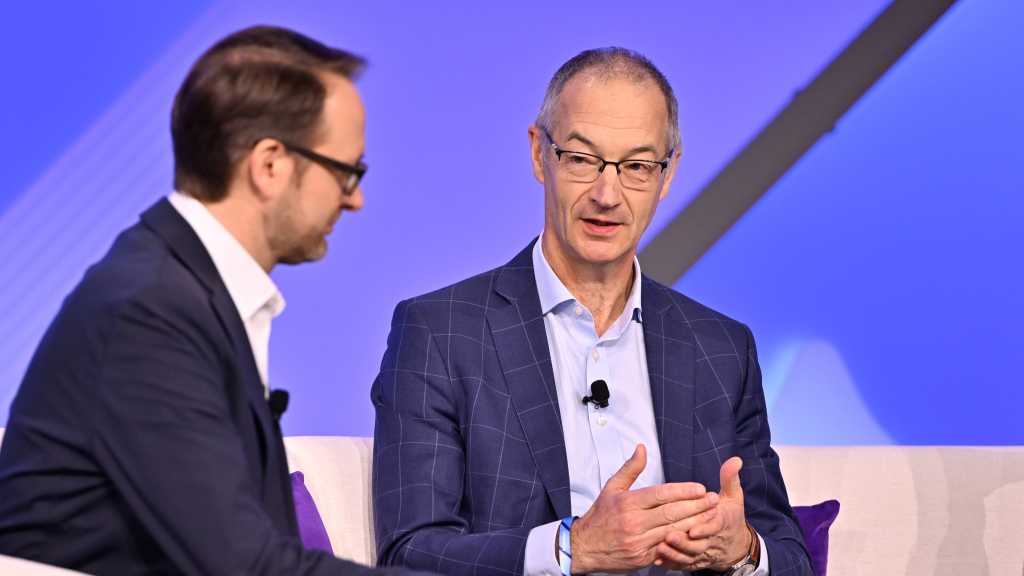
ExxonMobil is currently in the midst of a massive transformation, removing decades of SAP customizations to move to a clean core.
However, the 115-year-old oil and gas giant isn’t rushing headfirst into AI. “I like to let the AI hype continue for now,” said Bill Keillor, vice president of business transformation at ExxonMobil. “First, let’s get our fundamentals absolutely clean.”
In concrete terms, this means treating data as a strategic asset that was previously included. “We really want to unleash that,” Keillor emphasized. “If you don’t get the base right, you’ll pay the price forever.”
His advice to CIOs tackling transformation at scale: “Be clear on the strategic intent, establish strong governance, and select partners who see this not just as a mission, but as a win-win.”

SAP
Lockheed Martin: The goal is operational readiness
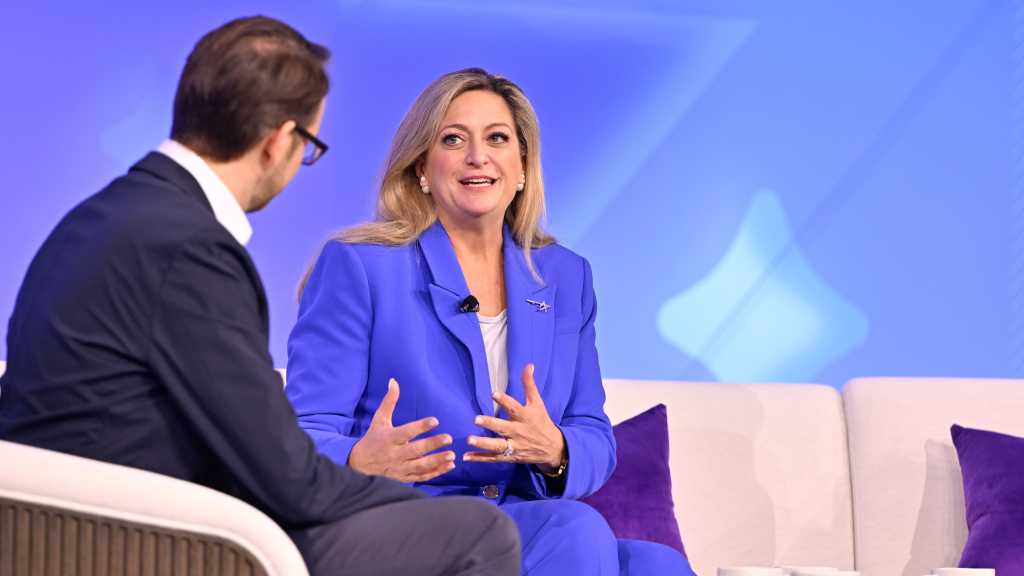
Lockheed Martin CIO Maria Demaree gave the discussion a new direction. “Transformation is not the goal, but rather commitment,” she explained. This choice of words is deliberate. For the defense and aerospace company, operational readiness means systems that work when lives depend on it. “The risks are high – and they affect people,” she said.
According to Demaree, Lockheed Martin is currently in the midst of the largest modernization investment in company history: an effort to eliminate decades of fragmentation. “The challenge is not the effort, but the complexity: separate systems and fragmented processes,” she sums up.
In order to create real added value, AI must be integrated directly into Lockheed’s processes and should not simply be “added on,” added Demaree. “Transformation doesn’t start with technology. You first have to fundamentally rethink processes.”
SAP
Aeropuertos Argentina: From the idea to productive use in twelve weeks
At the other end of the spectrum, Aeropuertos Argentina shows what is possible when the fundamentals are already in place.
The company operates 35 airports and handles 90 percent of Argentina’s commercial air traffic. Winter weather poses a constant operational threat to the eight airports in Patagonia. Weather forecasting and ice and snow management require precise coordination between meteorology, operations, maintenance and supply chain teams. In the past, this coordination was manual, fragmented and slow.
After moving from ECC to S/4HANA, Aeropuertos Argentina had the foundation to move forward quickly. Gustavo Sábato, CIO of the company, described the development of an agent called SNOW (Smart Network for Operative Winter) in just twelve weeks. The agent integrates weather data, runway sensor measurements, and maintenance processes to automate decisions and coordinate workflows in real time.
The results, according to Sábato: 16 percent fewer direct costs, 90 percent less administrative effort and a saving of 45 tons of CO₂. The solution won the “SAP LATAM Customer Innovation Contest 2025” and now runs all year round. The agent will be rolled out at two additional airports in the coming weeks; Six more are planned for next winter.
SAP
Levi Strauss: Over 1,000 agents – and counting
The most aggressive story introducing agentic AI came from Levi Strauss. The company got an early lead and started using generative AI two and a half years ago – at a time when most enterprise software providers barely had any corresponding tools on offer.
Today, the 170-year-old clothing company has more than 1,000 AI agents in use and over 4,000 employees trained in using AI. It has innovated with SAP, building on S/4HANA Fashion and Microsoft Azure, while consolidating nearly a dozen legacy ERP systems onto a single global platform.
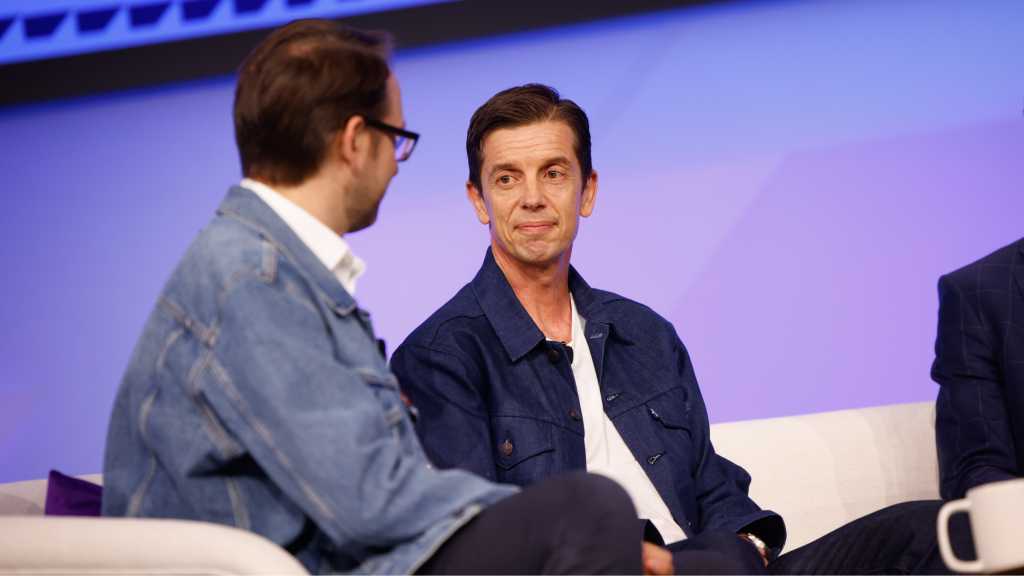
This consolidation required difficult conversations to change the way the company has always done business, reported Jason Gowans, chief digital and technology officer. However, this is exactly what created the basis for using AI successfully. “Standardization and agility are not in contradiction to each other. Standardization enables us to act agilely.”
As an example, he pointed to processing wholesale orders from smaller retailers, which were often submitted via PDF, email or spreadsheet. Previously the process would have taken two to five days, but with the help of AI agents based on Microsoft Azure and SAP, it now takes just 20 to 30 minutes.
Gowans acknowledged the work behind these results. “It’s hard,” he admitted. “But not so difficult. You don’t live to be 170 years old if you stand still.” (mb)
SAP