In 24 hours, Washington and Paris put 3 billion on the table for quantum computing. The message is the same on both sides of the Atlantic: this technology will not be a subject of research, but a strategic industry.
On Thursday, May 21, the US Department of Commerce announced 2 billion dollars in equity investments in nine quantum computing companies, including a billion for IBM. The next day, Friday May 22, Emmanuel Macron went to the CEA Very Large Computing Center in Bruyères-le-Châtel (Essonne) to announce an additional billion euros from the France 2030 program. Two announcements 24 hours apart, each calibrated so as not to leave the other unanswered.
On the American side, IBM wins
Of the $2 billion committed by the Trump administration, half went to IBM to create “Anderon”, a wafer foundry dedicated to quantum chips. D-Wave Quantum and Rigetti Computing will each receive up to $100 million. GlobalFoundries is also among the beneficiaries. The American approach is direct participation: Washington becomes a shareholder in the companies it finances, a more aggressive model than the classic subsidy. The stated objective is to secure the domestic supply chain facing China, in a sector where applications range from decryption to financial modeling to drug discovery.
On the French side, the quantum plan increases to 3 billion euros
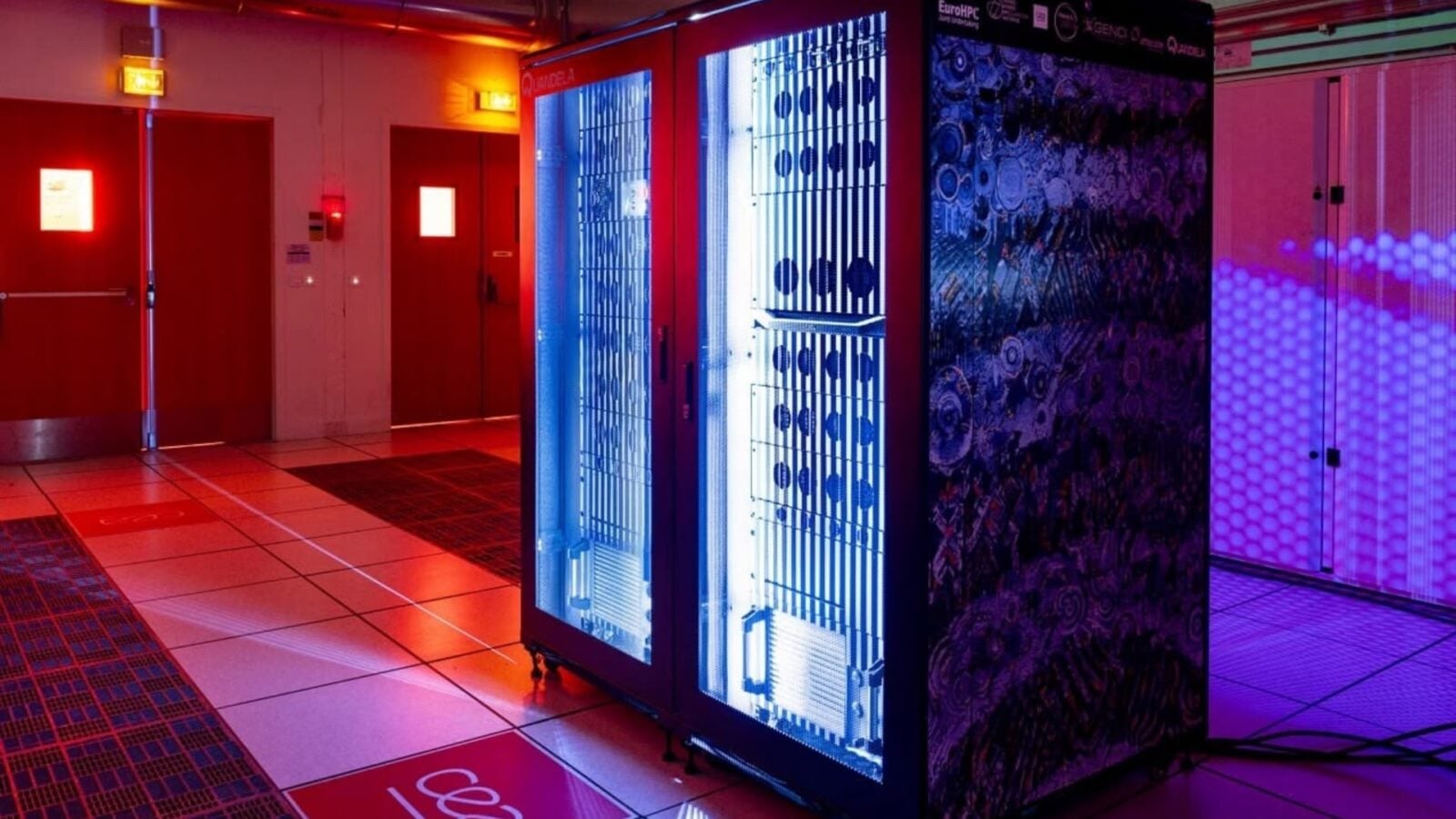
The envelope announced by Emmanuel Macron brings the total of French public investments in quantum to approximately 3.3 billion euros since 2021 (1.8 billion for the initial plan, 500 million for the PROQCIMA public purchasing program in 2024, and this new billion). The money must accelerate PROQCIMA over the period 2026-2032, finance supercomputers and invest in sensors and quantum communications. The President visited Lucy, the Quandela photonic quantum computer installed at TGCC. He then called for a European “Quantum Act” and a coalition with Germany, Austria, the Netherlands and Poland for massive public purchases of European supercomputers.
France today has five startups considered to be its industrial champions in the sector: Pasqal (neutral atoms, IPO on the Nasdaq planned for the second half of 2026 for 2 billion dollars), Quellela (photonics), Alice & Bob (cat qubits), Quobly (silicon) and C12 (carbon nanotubes). Five years after the launch of the quantum plan, these companies have moved from the laboratory to industrialization. Pasqal raised €340 million in March and plans to double its production capacity within 24 months.
The difference between the two approaches speaks volumes. Washington is taking shares in its quantum companies. Paris finances public purchases and relies on European preference. The amounts do not play in the same league (2 billion dollars versus 1 billion euros). But France has an advantage that Washington does not have: a regulatory framework under construction in Brussels, which could reserve the market for sovereign technologies.
👉🏻 Follow tech news in real time: add 01net to your sources on Google, and subscribe to our WhatsApp channel.
Source :
AFP/Le Monde