The ax has not yet fallen but the idea, once an absolute taboo in the world of home consoles, is now put on the table by the very management of Xbox.
Faced with an economic equation that has become almost insoluble, Microsoftthrough its new Chief Strategy Officer Matthew Ball, is considering solutions inspired by video streamingnotably at Netflix, whose advertising formula is very successful.
The goal is to find a way out of this “two-sided problem”: exploding development budgets, often beyond $100 million per title, and players increasingly reluctant to pay more for their games or consoles.
Why is Microsoft considering integrating ads on Xbox?
The main reason is purely economic: development costs modern games have become astronomical. To maintain profitability and continue to finance ambitious projects, Microsoft is looking for models of alternative income.
Matthew Ball was very clear: it’s about finding ways to keep the products ” affordable » while ensuring funding for the studios. The inspiration is direct and assumed: the success of subscriptions with advertising in the world of video streaming, such as at Netflix.
The model targeted is that of theAVOD (Advertising Video on Demand) where the consumer accesses a service at a reduced rateor even free of charge, in return for viewing advertisements.
This is a proven strategy that would massively expand the active player base in the ecosystem. Xbox by attracting those who cannot or do not want to pay a full price subscription.
What would an ad-enabled Xbox look like?
Far from the nightmarish image of an interruption in the middle of a game, the project focuses on access landings financed by advertising. The most concrete option, already being tested in certain regions, is a free version of the Xbox Cloud Gaming.
The principle: you watch a few advertising spots and in exchange unlock several hours of game streaming. This approach preserves the experience of securities purchased at full price which would remain protected and without intrusive advertising.
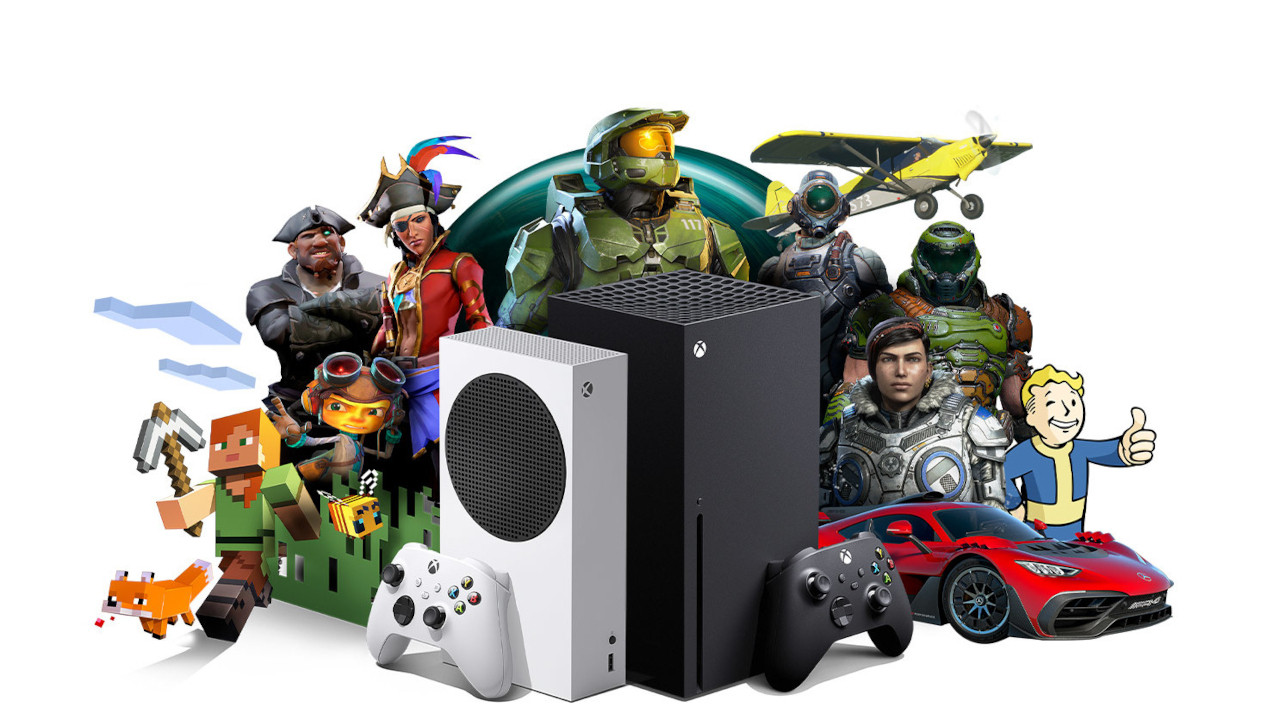

Matthew Ball emphasized this point: “ The question is not “can we stuff ads everywhere?”more “Are there opportunities to offer cheaper products?” ».
The target is therefore not the premium player but the one who hesitates to take the plunge. This approach to advertisement is intended to be a gateway, not a forced toll, and it is part of a broader vision of the future of video games as a service.
Is this idea of advertising in games new?
The sector has already tried the experiment in the past…with disastrous results. We remember the massive outcry against Electronic Arts when the publisher inserted full-screen ads into the loading times of EA Sports UFC 4.
Faced with the outcry, EA had to urgently backtrack. Likewise, the Core Online platform of Square Enixwhich offered free games in exchange for viewing ads, failed more than ten years ago.
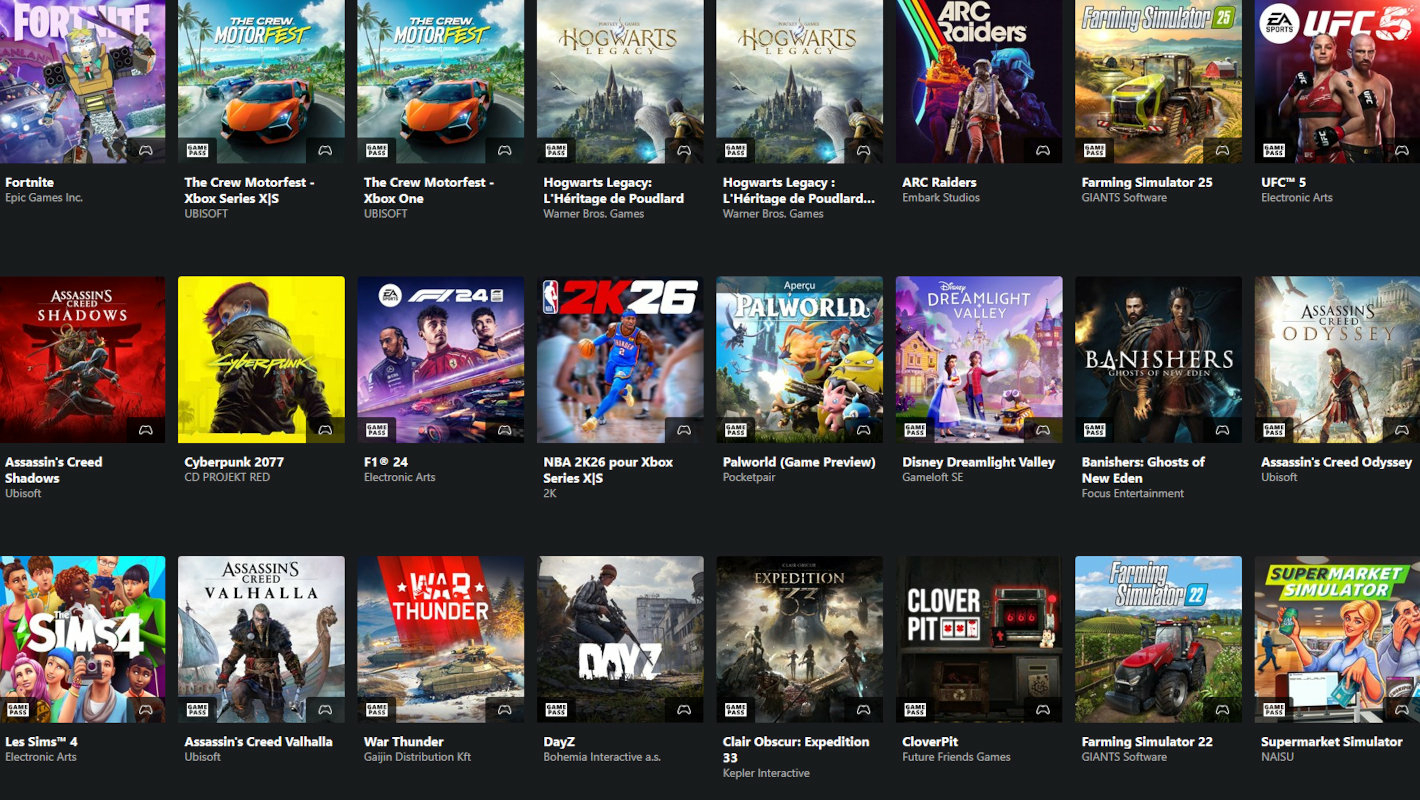

The major difference today lies in technological maturity and changing mentalities, particularly thanks to video streaming. However, the player sensitivity remains a red line that must not be crossed, especially concerning securities paid for at full price.
Take-Two CEO Strauss Zelnick described the idea as “ unfair » for games sold at full price, an opinion widely shared by the community. The challenge for Microsoft will be to prove that its model is different, more respectful and truly optional.
What is the real objective behind this advertising strategy?
The final objective is twofold: growth and sustainability. By lowering the financial barrier, Microsoft hopes to attract millions of new players into its ecosystem, particularly in emerging markets.
This is a way to significantly expand the reach of Game Pass and its cloud services. This new approach to monetization is designed to stabilize revenues in an increasingly volatile industry.
By diversifying its sources of revenue, Xbox becomes less dependent on console and game sales, a model subject to strong fluctuations. It is a strategic maneuver that aims to build a more resilient ecosystem capable of sustainably financing its studios and innovations.
For the player, Microsoft’s bet is simple: accept a new compromise to continue to see the birth of ambitious games without prices reaching new heights.
It’s a pill that gamers may not be ready to swallow yet, but one that the industry seems determined to deliver to them.