Two Dolby Atmos-capable stereo speakers ensure a well-rounded sound. The quality is good, although a bit too high-pitched and shrill at higher volumes. The speakers are solid, but can’t compete with Apple’s iPhone 17 Pro.
Equipment & computing power
- Older Qualcomm Snapdragon 8 Gen 5 chip
- 16 GB LPDDR5X-RAM
- Only a 512GB storage option
Motorola uses exactly the same components in the Razr Fold as in the flagship model “Signature”. Here too, the Qualcomm Snapdragon 8 Gen 5 chip works with 16 gigabytes of RAM and there is only one storage option with 512 gigabytes.
The Snapdragon 8 Gen 5 is now a slightly older chip that was replaced at the turn of the year. With a smartphone costing 1,399 euros like the Motorola Signature, this might just be an interesting observation. However, this is a point of criticism with the Fold, which costs just under 2,000 euros. Especially when the Galaxy Z Fold 7 is offered with a newer processor at a similar price.
Jon Mundy / Foundry
In everyday use, however, the Razr Fold appears no less powerful than its foldable competitors. In benchmark tests, it even outperforms the Google Pixel 10 Pro Fold. Even if you don’t often use the 165 Hertz function, the smooth display is very noticeable when playing “Destiny Rising”. The operation is always smooth, with smooth animations, seamless transitions and lag-free multitasking.
Motorola Razr Fold Benchmarks
Cameras
- 50 MP, f/1.6 main camera on the back
- 50MP, f/2.0 ultra wide angle with 120 degree field of view
- 50MP, f/2.4, 3x telephoto lens
- 20MP and 32MP selfie cameras
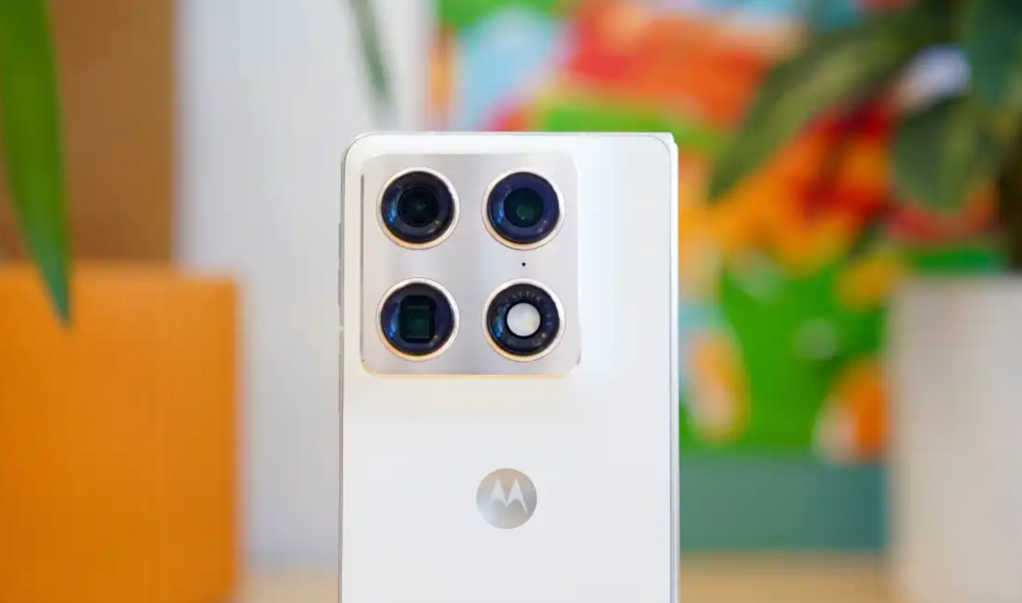
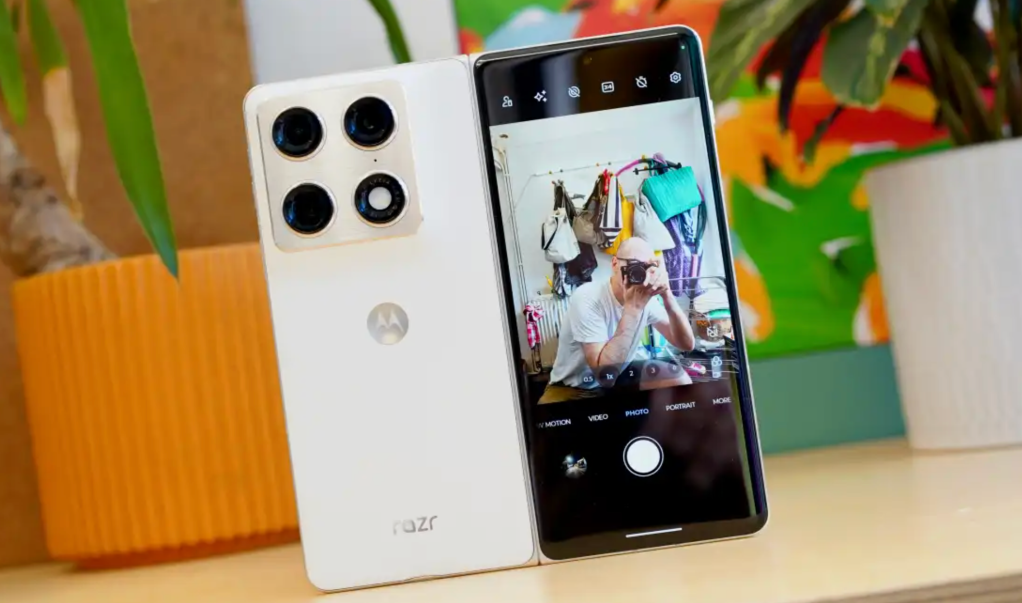
The Razr Fold uses the well-known Motorola triple camera system with three 50-megapixel sensors. This is particularly worthwhile here, as foldable smartphones often have worse camera features than their non-foldable counterparts. The Razr Fold takes very good photos in almost all situations.

Jon Mundy / Foundry
The relatively large 1/1.28-inch main sensor combined with the large open aperture of f/1.6 ensures that shots in daylight are sharp and bright. Motorola’s image processing also seems to have improved significantly. The images appear more vibrant and offer more contrast. This benefits, among other things, portraits in which natural bokeh provides depth.
Night shots are also very detailed. However, they are not quite at the level of the currently best camera smartphones, Google Pixel 10 Pro and Xiaomi 17 Ultra.
The 50-megapixel ultra-wide-angle camera delivers good results when shooting landscapes, producing detailed images without excessive edge distortion and with an even color tone build-up. This camera is also suitable for macro photography because it offers a very short focusing distance.
The 50-megapixel telephoto camera enables recordings with native 3x zoom. However, you should not go too far beyond the 6x zoom (maximum 10x zoom) because the level of detail decreases significantly here. In particular, the 50x and 100x zoom are almost unusable.
Jon Mundy / Foundry
Another point of criticism: After an hour-long photo and video session with 4K recordings, the Razr Fold became uncomfortably hot in my test.
There are two mediocre front cameras, a 20-megapixel camera on the front and a 32-megapixel camera on the inside, which deliver passable selfies. However, it is better to use the viewfinder function of the external display and take your self-portraits with the main camera. Here you will achieve significantly better results.
Battery life & charging
- 6,000mAh silicon carbon battery
- 80W wired charging
- 50W wireless charging
With the generous 6,000 milliamp hour battery, Motorola is targeting another weakness of folding smartphones. It is even larger than the power storage in the Motorola Signature, not to mention the Samsung Galaxy Z Fold 7 (4,400 milliamp hours) and the Google Pixel 10 Pro Fold (5,050 milliamp hours).
Interestingly, it continues to lag well behind Google’s Foldable in the PCMark 3.0 Work battery test, which was run on the large internal display and simulates a mixed productivity load. However, at just under eleven hours, it clearly outperforms Samsung’s current top foldable model. You should be able to get through the day without any problems with one battery charge.
Jon Mundy / Foundry
If the battery is empty, you can recharge it with an impressive 80 watts via cable. Unfortunately, no power supply is included in the scope of delivery. Using a 120-watt Vivo charger, I still managed to activate the signature TurboPower indicator.
The smartphone reached 31 percent after 15 minutes of charging with an empty battery. After 30 minutes it was already 54 percent. A full charge took just over an hour. The Razr Fold can charge wirelessly with 50 watts.
User Interface & Apps
- Android 16
- 7 years of software updates
- Too much bloatware
- Confusing AI features
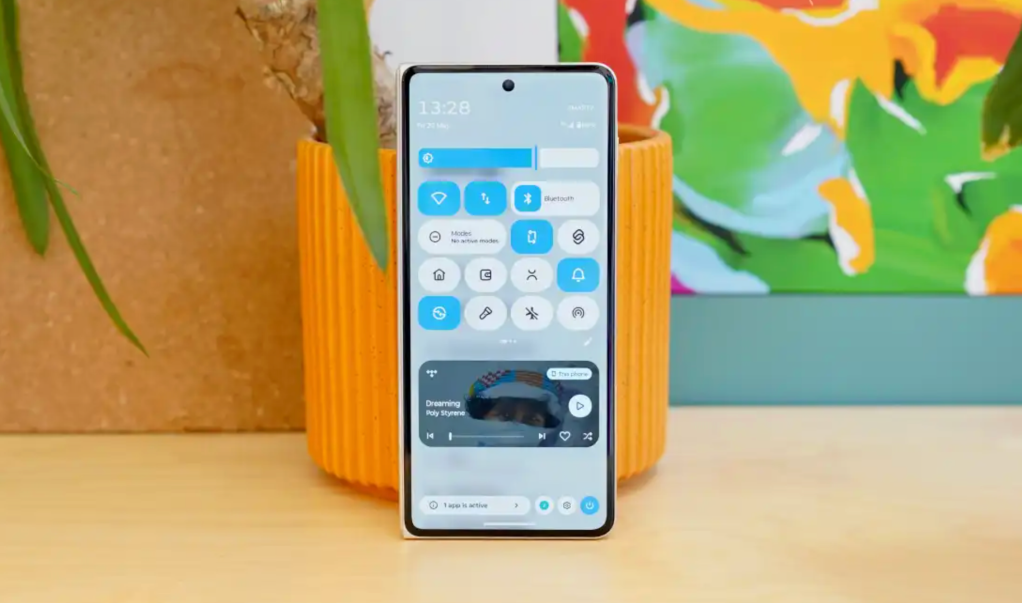
In recent years, Motorola has increasingly distanced itself from its once good reputation for a sleek user interface and instead integrated more of its own customizations and additional third-party apps. Nevertheless, Android 16 on the Razr Fold still offers a relatively clear user interface.
I like Motorola’s Moto app, which serves as a handy introduction to the smartphone’s features. This also includes Motorola’s gestures, which offer practical shortcuts if you shake the smartphone twice, for example. But I could do without the pre-installed apps from Amazon Music, LinkedIn, Opera, Facebook and Instagram.
Jon Mundy / Foundry
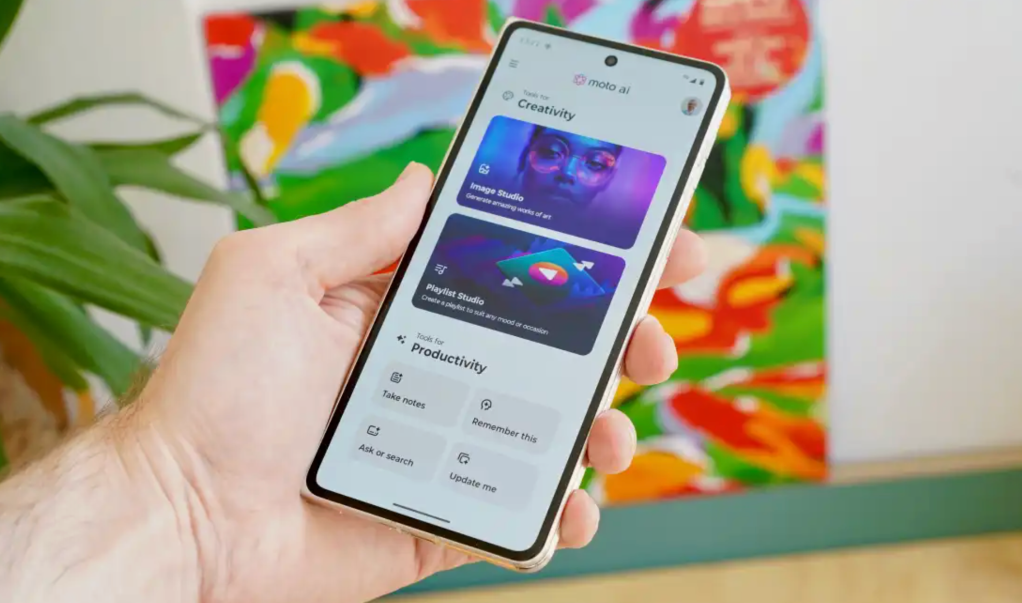
Motorola is one of the manufacturers that tends to spread AI functions broadly instead of pursuing a clearly focused approach. Google’s Gemini takes pride of place on the first home screen, not far from Motorola’s own Moto AI app.
The latter is an attractively designed collection of basic tools. Here you will find tools for creating AI artwork, transcribing notes or saving screenshot memories.
Jon Mundy / Foundry
In my opinion, these functions would have been enough. However, Motorola still has the third-party assistants “Perplexity” and “Copilot” preinstalled. You quickly lose track of things.
Motorola promises seven years of Android updates, putting the Razr Fold on par with the Samsung Galaxy Z Fold 7 and the Google Pixel 10 Pro Fold in terms of software support.
Price & Availability
The Motorola Razr Fold is currently available on Amazon from 1,789 euros. This makes it almost 300 euros more expensive than the Google PIxel 10 Pro Fold for 1,444 euros. The Samsung Galaxy Z Fold 7 costs 1,744 euros with the same storage configuration.
Conclusion
The Motorola Razr Fold is a very elegant, surprisingly coherent foldable smartphone with two excellent displays, powerful cameras and good battery life. It may not be as slim and light as the Samsung Galaxy Z Fold 7, but its thoughtful design makes everyday use surprisingly easy.
Weaknesses include the no longer state-of-the-art processor equipment and the relatively high price. Nevertheless, the Razr is a strong competitor for Google and Samsung thanks, among other things, to its great camera equipment and comprehensive software support.
Technical data
- Android 16
- Exterior: 6.56 inches, FHD, pOLED, 165 Hz, 2.5D display
- Inside: 8.09 inches, 2K, pOLED, 120 Hz, flat display
- Side-mounted fingerprint sensor
- Qualcomm Snapdragon 8 Gen 5
- 16 GB LPDDR5X-RAM
- 512GB storage
- 50 MP, f/1.6 main camera
- 50MP ultra-wide angle macro camera with f/2.0
- 50MP telephoto macro camera with f/2.4
- Video recording up to 8K at 30 fps (rear)
- 20MP and 32MP front cameras
- Dolby Atmos-Stereolautsprecher
- eSIM and physical SIM card
- WLAN 802.11 a/b/g/n/ac/6e/7
- Bluetooth 6
- 6.000-mAh-Battery
- 80W kabelgebundenes Laden
- 50W wireless charging
- 160.05 × 73.6 × 9.89 mm (folded)
- 243 g
- Available Colors: Lily White, Blackened Blue
(PC-Welt)