Read our Honor Magic V5 review
Google Pixel 10 Pro Fold: Beste Software
Thomas Deehan / Foundry
Why we like the Google Pixel 10 Pro Fold
The Google Pixel 10 Pro Fold brings some useful improvements. It is the first foldable smartphone ever to receive IP68 certification against dust and water, which makes it particularly robust for outdoor use. The already strong hinge has been further improved and is one of the best on the market. New integrated Pixelsnap magnets allow you to use Qi2, Magsafe or Pixelsnap accessories even without a case. Both OLED displays shine brighter and now reach 3,000 nits; The interior display measures 8 inches and is one of the largest in its class. The Tensor G5 works inside, which has noticeably improved compared to its predecessor and delivers enough power for everyday use. The 5,015 mAh battery lasted a good 13 hours in the PCMark test and charges with 30 watts via cable and 15 watts wirelessly. There is also pure Android 16, many Gemini functions and seven years of updates.
Further considerations
Compared to the competition, the Pixel looks old-fashioned: the design is rather clunky and heavy, and the edges are among the thickest among the current flagship foldables. The fold is more noticeable than on Samsung and Honor. When it comes to speed, the Tensor G5 lags behind Snapdragon devices and demanding games run less consistently. The cameras still rely on old 10 megapixel sensors.
Read our Google Pixel 10 Pro Fold review
Motorola Razr 60: Best value for money

Thomas Deehan / Foundry
Why we like the Motorola Razr 60
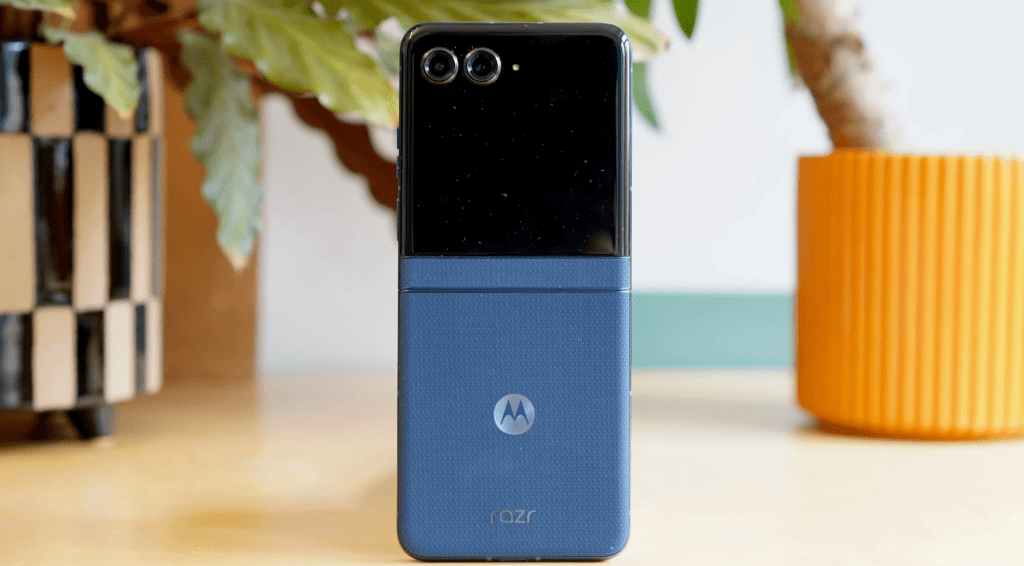
The Motorola Razr 60 is a solid compact flip phone at a fair price. With its rounded edges and vegan leather back, the design looks warmer and more grippy than Samsung’s competitor, and it’s also easier to open. New is the improved IP48 certification, which provides additional dust protection; the water protection extends to a depth of 1.5 meters. Both displays are larger than the Galaxy Z Flip 7 FE: The 6.9-inch main display offers 120 Hertz and, according to the manufacturer, up to 3,000 nits, the 3.6-inch outer display includes the camera. The well-thought-out cover display surface, on which many apps can be used, is particularly successful. The larger 4,500 mAh battery gets you through the day and charges with 30 watts via cable and 15 watts wirelessly. The side fingerprint sensor reacts reliably and the memory is generous at 256 GB.
Further considerations
The Razr 60 lags behind when it comes to speed: The Mediatek Dimensity 7400X is almost the same as the previous chip, and with only 8 GB of RAM there are always small delays. The cameras are not convincing; photos appear cloudy and lacking in detail, especially in low light. There is hardly any progress compared to the Razr 50. With just three Android updates and four years of security patches, support remains short. The list price of 699 euros is fair.
Read our Motorola Razr 60 review
Samsung Galaxy Z Flip 7 FE: Preis-Tipp
Thomas Deehan / Foundry
Why we like the Samsung Galaxy Z Flip 7 FE
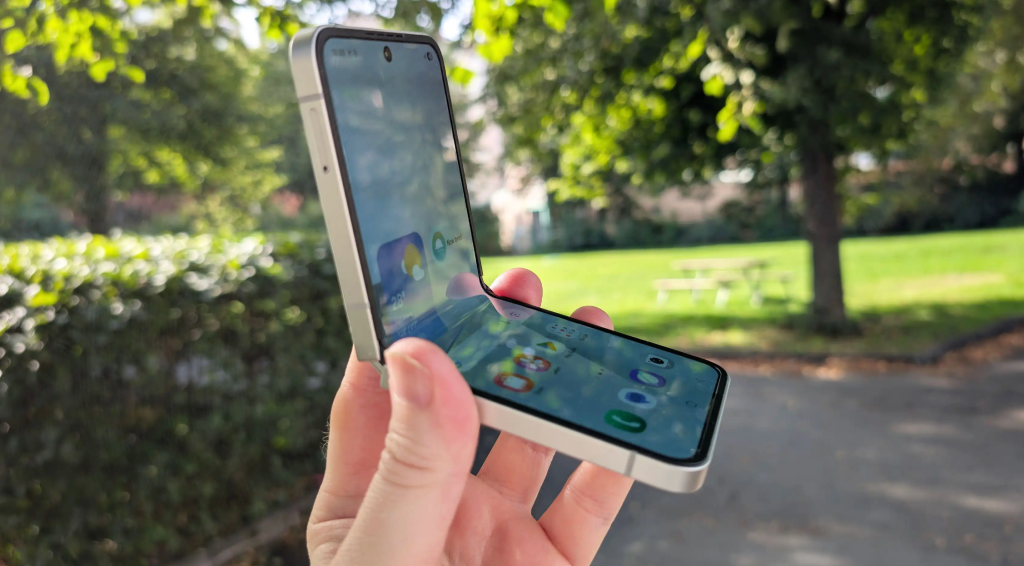
The Samsung Galaxy Z Flip 7 FE is a solid folding smartphone with nostalgic charm at a lower price. The design corresponds to the Galaxy Z Flip 6 and looks high-quality with the flat aluminum edges and Gorilla Glass Victus 2; the IP48 certification keeps water and dust away. The 6.7-inch AMOLED main display adjusts the refresh rate between 1 and 120 Hertz and impresses with strong colors and deep black tones. When it comes to the camera, the FE makes no compromises compared to the flagship: the 50-megapixel main sensor delivers very good photos in many situations, and selfies are particularly easy to take using the cover display. In everyday life, the Exynos 2400 works smoothly with 8 GB of RAM and apps start quickly. There is also One UI 8 on Android 16, a wide Galaxy AI offering and seven years of updates. When opened, the device lies flat on the table thanks to the sturdy hinge.
Further considerations
When it comes to the battery, the FE remains at the lower end of the flip class with 4,000 mAh; The running time usually only lasts through the day. Charging with just 25 watts via cable is slow; a full charge takes over an hour and a half. At 3.4 inches, the cover display is smaller and more old-fashioned than the competition, and unlocking apps on it is cumbersome. The memory starts at just under 128 GB. The RRP of around 939 euros is ambitious.
Read our Samsung Galaxy Z Flip 7 FE review
Nubia Flip 5G: Spar-Tipp
Thomas Deehan / Foundry
Why we like the Nubia Flip 5G
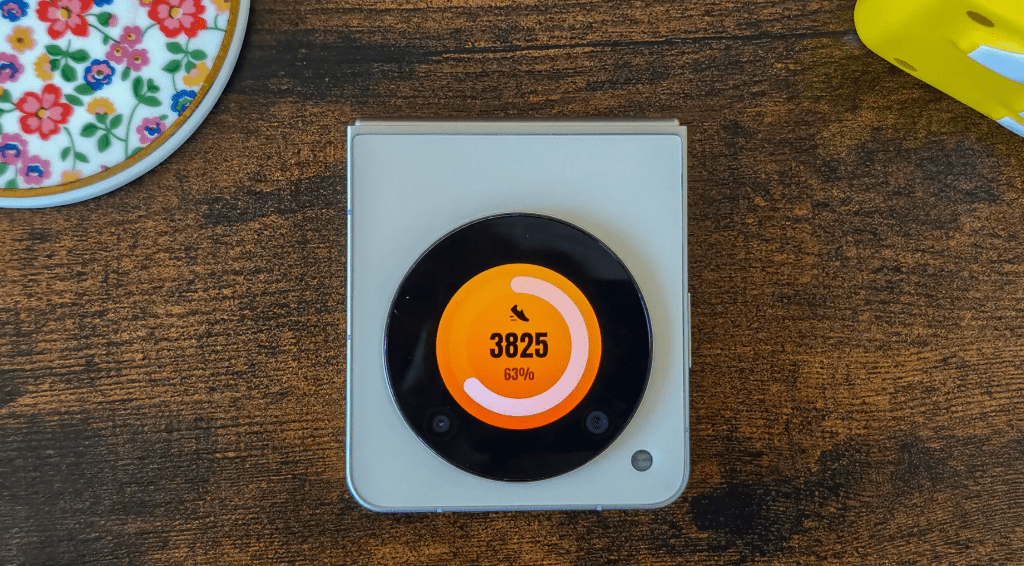
The Nubia Flip 5G is one of the cheapest folding smartphones ever and costs significantly less than a Razr or a Galaxy Z Flip. Its design clearly stands out from the competition thanks to the round external display inspired by a record. The device is made of etched glass with an aluminum frame, sits comfortably in the hand and withstood several drops in the test without any scratches. The 6.9-inch AMOLED main display has a Full HD+ resolution and offers up to 120 Hertz. Inside, the Snapdragon 7 Gen 1 works with up to 12 GB of RAM, which is enough for everyday tasks and app switching. The stereo speakers sound surprisingly powerful and clear. The 4,310 mAh battery lasts around a day and a half and powers two displays. A suitable 33-watt charger is included and brings the device to 76 percent in half an hour. There is also dual SIM, Wi-Fi 6E and 5G.
Further considerations
There is a problem with the software: MyOS 13 is still based on Android 13 and comes with a lot of bloatware, not all of which can be removed. Guaranteed update promises are missing, making long-term use uncertain. The cameras only deliver mixed results, especially in low light and without optical zoom. The main display is only protected by plastic, and it quickly gets too dark in the sun. There is no IP certification at all.
Read our Nubia Flip 5G review
Which foldable is right for you?
When buying a foldable, it’s not just the processor, camera and battery life that matters. The design is particularly important because it determines how the device feels in everyday life. Basically, several concepts have been established. Flip phones can be folded up like a classic flip cell phone and fit particularly well in your pocket. They are suitable for anyone who is looking for a compact smartphone but still wants to use modern technology, good cameras and a flexible display. The folding mechanism is particularly practical for selfies, group photos and videos because the half-open device works like a small stand.
Foldables in book format take a different approach. When closed, they can be used almost like a normal smartphone, but open to a significantly larger display. This is particularly worthwhile for multitasking, office apps, emails, documents, maps, chats and web research. Anyone who frequently uses two apps in parallel or wants to work more productively while on the go will benefit the most here. Wider foldables, on the other hand, are designed more for entertainment: videos, games, photos and websites appear more natural and less narrow on the opened display.
Trifold models with three display segments are even more special. They offer a particularly large amount of screen space, but are currently still expensive, rare and more of a technology preview than a mass solution. For most buyers, the choice remains between a flip phone and a foldable in book format. If you are looking for a device that is as compact as possible, choose the Flip. If you want a smartphone with a tablet feel, you’re better off with the larger Fold. Our buying advice shows which models will be convincing in 2026 – and which foldable suits which type of user.
FAQ: The most important questions about foldables
1. What is the difference between a Fold and a Flip Phone?
A flip phone can be folded vertically, making it particularly compact. It is particularly suitable for users who are looking for a handy smartphone and still want to use modern functions. A Fold, on the other hand, opens sideways like a book and offers a significantly larger display on the inside. This is particularly interesting for multitasking, productive work, reading, videos and games.
2. Who is a foldable worth for?
A foldable is particularly worthwhile for users who want more screen space but don’t want to take a separate tablet with them. Flip phones make sense if you want the smartphone to fit as small as possible in your pocket. Large foldables are worthwhile for anyone who often uses several apps at the same time, works on the go, reads a lot or wants to enjoy media on a larger display.
3. Are foldables robust enough for everyday use today?
Current foldables are significantly more stable than the first generations. Hinges, frames and displays have been improved, and many models also offer protection against water or dust. Nevertheless, foldable displays remain more sensitive than rigid glass surfaces. A good cover, careful handling of sand and dust and a look at the protection class of the respective model are therefore important.
4. What are the disadvantages of foldable smartphones?
Foldables are usually more expensive than classic smartphones with comparable features. In addition, there is a higher weight, visible screen creases and, depending on the model, compromises in terms of the camera, battery life or housing thickness. Repairs can also be more expensive. Before buying, it should therefore be clear whether the larger display area really justifies the extra charge in everyday life.
5. What should you pay attention to when buying a foldable?
The design, display size, external display, hinge quality, battery life, camera, software adjustments and promise of updates are important. What matters most when it comes to large foldables is how well multitasking and app customization work. When it comes to flip phones, the external display is crucial: the larger and more versatile it is, the more often the device can be used without opening it.
How we test
We evaluate foldable smartphones not only based on the data sheet, but above all in everyday life. The decisive factors are display quality, hinge mechanics, workmanship, performance, battery life, camera quality and software adjustments for the large indoor screen.
(PC-Welt)