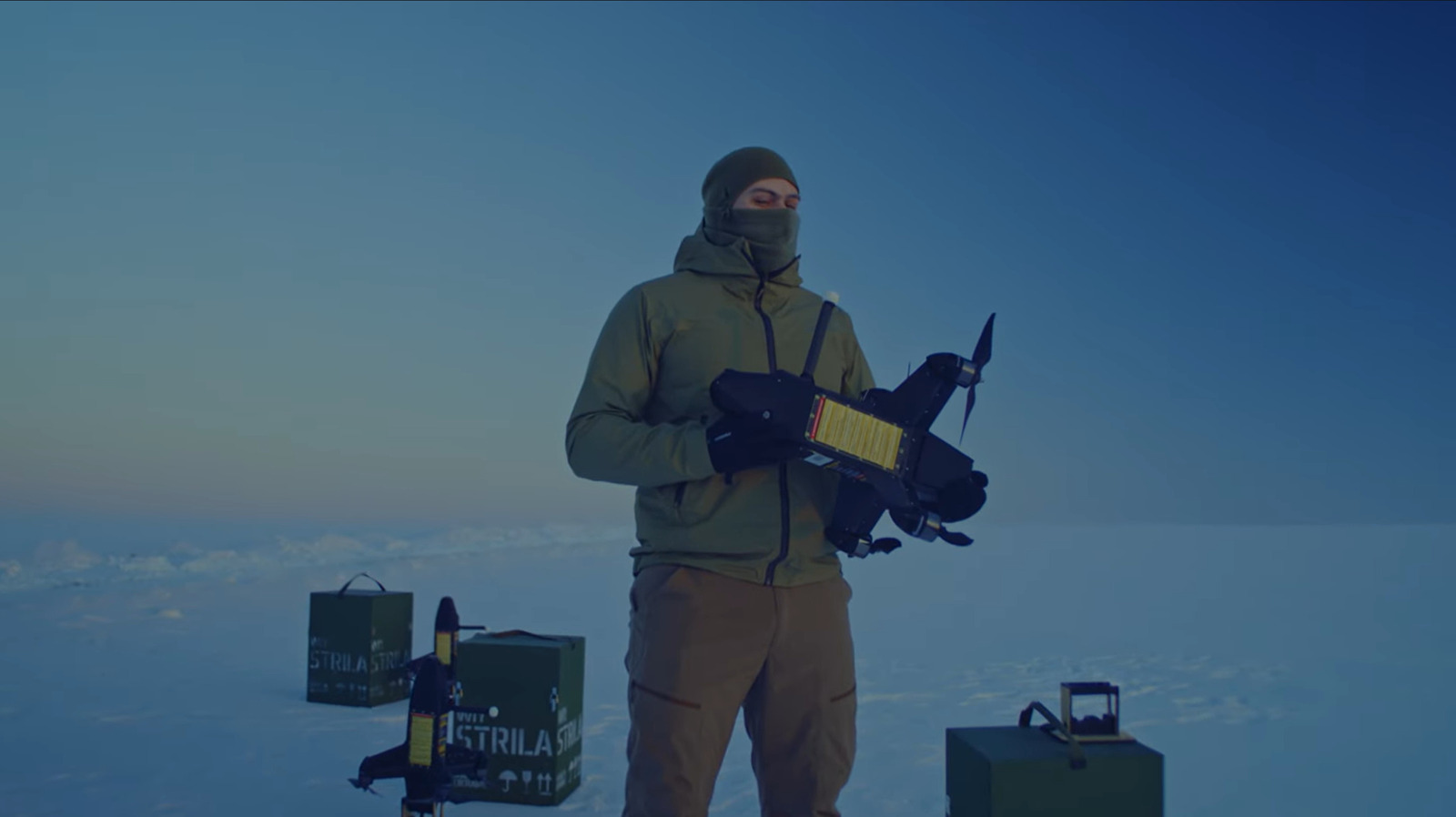
The Russo-Ukrainian war has sparked an influx of aerial innovations, none more transformative, or destructive, than the rapid development of cheap, mass-producible unmanned aerial vehicles (UAVs). Combining innovations in artificial intelligence, robotics, 3D printing, and military procurement logistics has enabled the Ukrainian military to bridge the capabilities gap between itself and its larger, better-funded adversary, both transforming the future of its asymmetric conflict and the scale and scope of aerial warfare in the process.
The world’s militaries have taken note, with several NATO nations moving to invest in and learn from their Eastern partner’s booming drone industry. One such initiative saw Germany delivering 15,000 high-tech drone interceptors to Ukraine’s National Guard, thus providing critical reinforcements to an air defense unit on the cutting edge of drone defenses. To date, Ukraine has deployed everything from high-energy laser cannons to drone-hunting buggies to build its drone defenses. And while these eye-popping examples grab headlines, the more critical technology may be interceptor drones.
Dubbed Strilla interceptors, the 15,000 UAVs recently delivered to Ukraine were the product of a joint project between Ukrainian manufacturer WIY Drones and German company Quantum Systems. The deal scales the joint venture’s production of its latest interceptor drone, allowing the German government to fund Strilla’s production in Ukrainian factories for rapid deployment to Ukraine’s National Guard. Named after the Ukrainian word for arrow, the Strilla is a rocket-boosted quadcopter designed to defend against Russia’s daily attack drones, specifically the Iran-manufactured Shahed-136/131. Equipped with anti-jamming systems, automatic targeting, and thermal imaging, WIY’s rocket-type interceptor is a powerful addition to a Ukrainian air defense that claimed to have intercepted over 90% of Russia’s drone attacks in March 2025.
Inside the Strilla
WIY bills the quadcopter as a “rocket-type air-defense interceptor UAV” that “delivers rapid launch, high closure rate, and precise guidance” to down high-speed, maneuverable drones and reconnaissance aircraft. Capable of reaching almost 220 miles per hour, the Strilla is one of the fastest interceptors on the market. With a 17-mile range, a ten-minute flight time, and a maximum altitude of 16,000 feet, the drone is capable of rapidly deploying and intercepting Russian drones across the front lines, providing valuable flexibility to air defenses that faced over 200 drone attacks per day in March 2026.
What stands out about the Strilla is its targeting, navigation, and communications systems, which received a major update in December 2025. The Strilla uses WIY’s automatic target acquisition system powered by a deadly cocktail of WIY’s own software, a state-of-the-art radar system from Israeli defense firm RADA, and a digital map navigation and planning system known as SkyMap. Using these systems, the interceptor can rapidly race towards an oncoming drone, closing the gap before an operator remotely takes control and hits a target. To better navigate adverse conditions, operators can seamlessly switch between daylight and thermal imaging cameras mid-flight, “ensuring uninterrupted monitoring” and “rapid response” across missions.
According to WIY representatives, the drone is jamming-resistant, deploying a SineLink communication system that allows the interceptor’s targeting and navigation systems to function without the use of its GPS — a critical feature given the proliferation of jamming and anti-drone defense systems. The Strilla was also manufactured with several safety features in mind. For instance, its 700-gram warhead deploys a three-level detonation safety system that protects it from early detonation during transport. Furthermore, in the event of a canceled operation, the drone can return to its launch position.
Bolstering the European-Ukrainian defense nexus
Germany’s Strilla deal is indicative of a Ukrainian drone sector increasingly adept at producing high-end drones at scale. In an interview with Ukrainska Pravda, a WIY representative stated the company can produce 100 Strilla drones a day. “We have built a system that allows us to rapidly scale up output,” said the representative. A major benefit of this swift procurement timeline is its relatively cheap production costs. As of January 2026, the interceptor cost roughly $2,300. Reportedly, the drone is now available through Ukraine’s Brave1 and Dot Chain platforms, Amazon-style marketplaces where Ukrainian battalions can order drones directly. Such advances are typical of a Ukrainian defense industry looking to scale its drone production from between 2.5 and 4 million in 2025 to roughly 7 million in 2026.
The Strilla project’s early success may give NATO a blueprint for bolstering Ukraine’s defensive push while internalizing the strategic lessons from the conflict. Already, Ukrainian President Volodymyr Zelensky announced a second partnership with Germany’s Quantum Systems, this time enlisting Frontline Robotics to deliver the first German-Ukrainian AI-powered attack drone, the Linza 3.0. NATO countries like the United Kingdom and Romania struck similar production partnerships. Meanwhile, Ukraine recently established ten defense export centers across the Baltics and Northern Europe. Additional projects, like the UNITE – Brave NATO, an initiative where NATO countries partner with Ukrainian defense producers and compete for funding, could cement Ukraine’s cooperation with European partners. Such projects come as the European Commission passes its €1.5 billion spending package to boost its homegrown defense production, in which €260 million will be used to rebuild Ukraine’s military industrial base, and another €325 million will be allocated to collaborative defense projects between the EU, Ukraine, and Norway.