Mike Sawh
Ultrahuman stands out from the competition by presenting complex data in an easy-to-understand format, for example when assessing brain age or tracking sleep deficit resulting from cumulative bad nights. It also monitors how well your brain breaks down waste products while you sleep. You can also explore Ultrahuman’s “PowerPlugs,” which are mostly free add-ons that allow for more customized tracking.
I’m currently using the new Parent module, which pays particular attention to cumulative recovery, taking into account that sleep is likely to be more restless and giving you tips on how to get back on track.

Mike Sawh
As already mentioned, most of these PowerPlugs are free. However, there are also those that offer insights into specific diseases like migraines or sync data with a Tesla; This requires a monthly subscription. These are paid functions that most users can do without.
Battery life & charging
- Up to 15 days of battery life
- Offers three battery operation modes
- Charging case ensures another 45 days
Battery life is an important issue with the Pro model – and not just because it lasts longer than the Air. In addition to extending battery life from 4-6 days to 15 days, you have three battery operation modes available to help you get the most out of every charge.
If you choose Turbo mode, with all sensors activated, you can expect a runtime of up to 12 days. This extends to over 15 days if you choose chill battery mode. The focus is on sleep tracking, but important moments in your day are still captured to ensure key insights continue to be useful.
I easily got almost two weeks of battery life from the Pro, which is an impressive feat. This is better than the Oura Ring 5 and is on par with the RingConn Gen 2 in terms of battery performance.
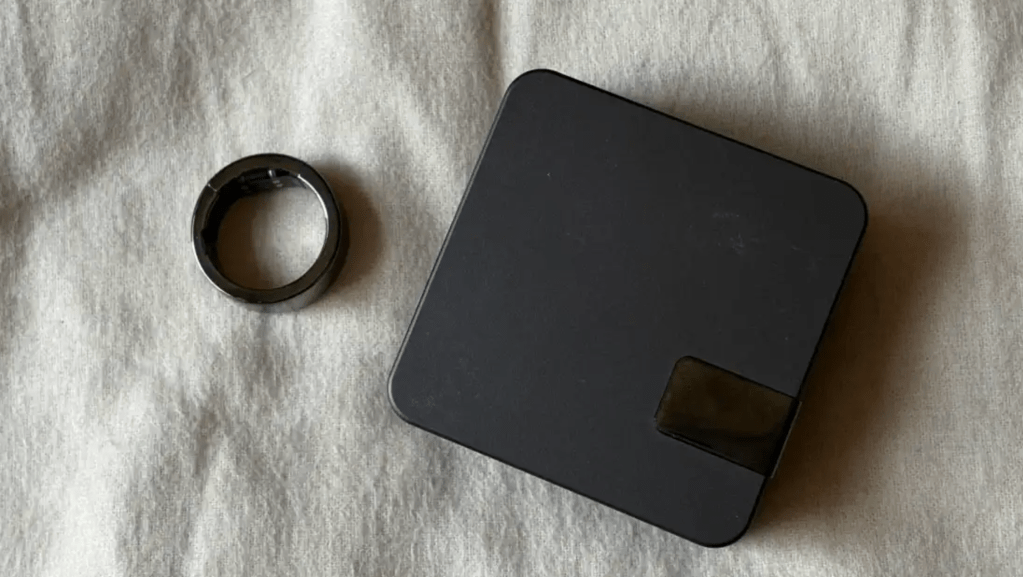
You also now have the charging case, which offers you an additional battery life of 45 days. However, you must place the ring precisely in the charger; An acoustic signal from the integrated speaker confirms that the ring is being recharged. When the battery dropped to 0 percent, the Pro took less than an hour to get back to 100 percent.
Price & Availability
At the time of writing, the Ultrahuman Ring Pro can be pre-ordered from the Ultrahuman Store for 499 euros. This makes it one of the most expensive smart rings on the market.
It’s more expensive than the cheapest available model of the Oura Ring 5 and other smart rings like the Samsung Galaxy Ring. The forthcoming RingConn Gen 3 will be more expensive than the Ring Pro in the US, but should be cheaper in other regions.
Like the Ring Air, the Pro remains a subscription-free smart ring. However, some of the PowerPlug software extensions come with additional costs.
Should you buy the Ultrahuman Ring Pro?
The Ring Pro’s big improvements over the Air are its larger battery and more robust design. I never found the Air’s monitoring performance to be lacking, and if you can still get your hands on one and are a fan of Ultrahuman’s software approach, then it’s still a smart (and cheaper) purchase.
When comparing the Ring Pro to other smart rings, we have to talk about the price. It’s expensive, and there are subscription-free alternatives at a cheaper price. Whether they offer you the same level of care and attention on the software side is questionable. This is exactly where the Ring Pro stands out over much of the competition.
It may not be the smallest or thinnest ring, but what the Ring Pro has to offer is a combination of hardware and software that makes for an excellent overall package.
Technical data
- Up to 15 days of battery life
- Compatible with Android and iOS
- Waterproof up to 100 meters
- 2,65 mm dick
- Weight: 3.3-4.8g
- Records blood oxygen levels, heart rate and body temperature
- Tracks sleep and daily activity
(PC-Welt)