




Up to 100,000 jobs lost and four factories wiped off the map, including Zwickau, the birthplace of its electric cars. Volkswagen’s plan is so brutal that its own supervisory board rejected it.
On July 9, while Volkswagen’s supervisory board met in Wolfsburg, employees demonstrated in front of around twenty group sites throughout Germany. On the agenda for this very tense meeting: a restructuring project presented as the heaviest in the history of the manufacturer, and perhaps in the entire European automobile industry. The continent’s leading manufacturer no longer hides the extent of the damage.
A plan so radical that even the supervisory board says no
On the table, the project defended by boss Oliver Blume would provide up to 100,000 job cuts worldwide by 2030, or more than 15% of the group’s workforce (657,000 people all the same). The break is brutal with the agreement signed at the end of 2024 with the IG Metall union, which already recorded 35,000 departures but ruled out in black and white any factory closure. This red line has just been shattered: four sites would be shut down, Zwickau and Emden from 2031the Hannover commercial vehicle plant in 2032, then the Audi site in Neckarsulm in 2034.
Employee representatives, who weigh heavily in the group’s governance (the Land of Lower Saxony, the second largest shareholder, also sits on the board), blocked the social aspect of the project. However, management did not give in and rolled out its 2030 strategy, which did not require their approval: production capacity reduced from around 12 to 9 million vehicles per year, catalog halved, and up to 75% fewer variants. IG Metall President Christiane Benner vows to fight closures “by all means”. Blume, for his part, assumes in a letter to shareholders: “Our economic model of recent decades no longer works. » The figures unfortunately prove him right, with net profit falling 28% to 1.56 billion euros in the first quarter of 2026.
Electricity devours its own pioneers
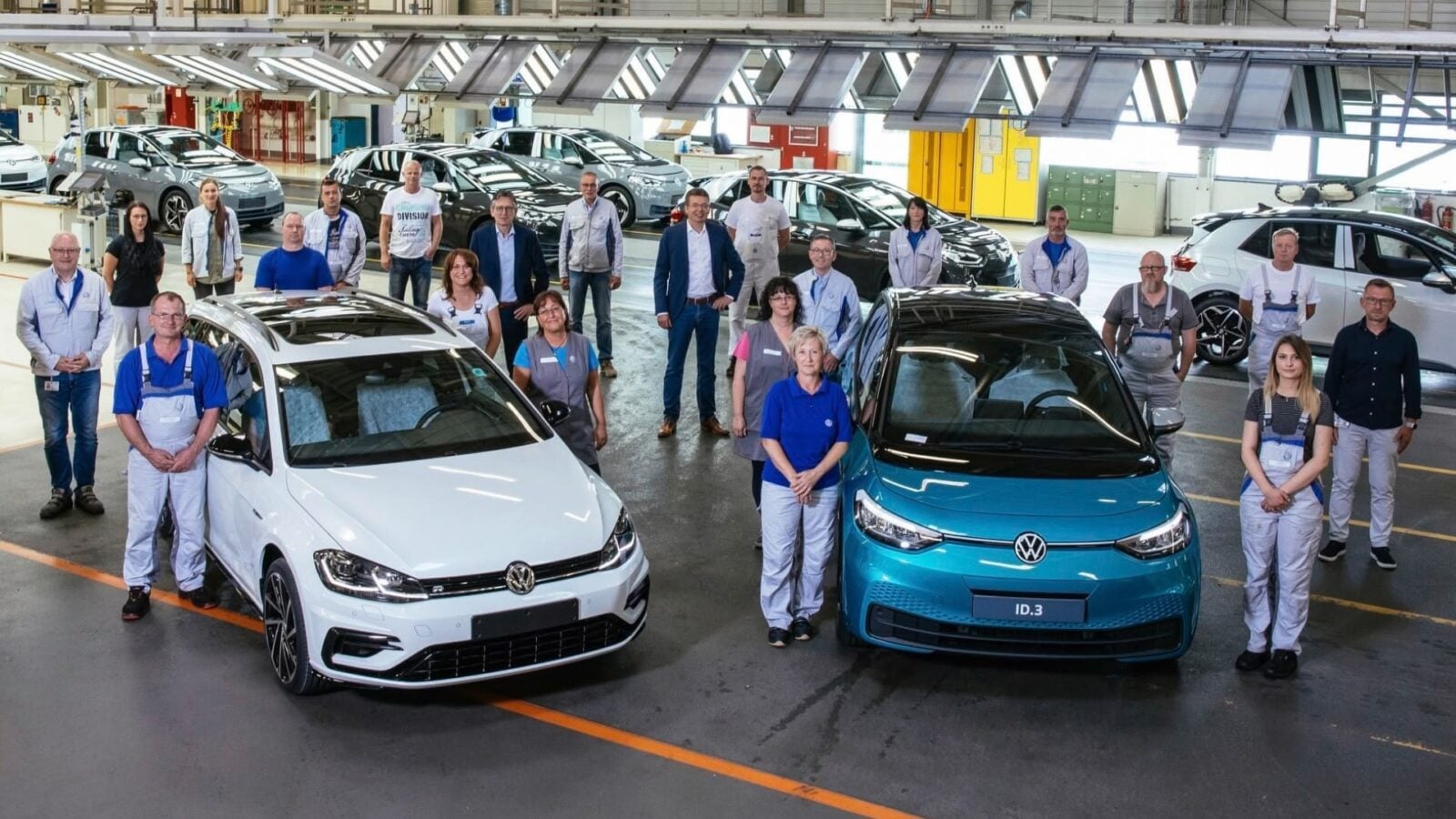
The list of those sentenced tells a crueler story than the financial statements. Zwickau, the group’s first factory entirely converted to electric cars, is the same one which produced the brand’s two millionth electric vehicle at the start of the year (an ID.3, for the record). Emden has sunk billions into its conversion and is now operating well below capacity, the industrial equivalent of a brand new stadium with no team to play in it. Hanover clings to an ID. Buzz which misses its sales targets, and Neckarsulm is still waiting for a high-volume electric model which does not come. The factories punished are precisely those which did what was asked of them.
The rescue plan under study adds a layer of irony: to fill these underutilized sites, the group would study the assembly in Germany of electric models developed with its Chinese partners, such as SAIC or Xpeng. Zwickau is regularly mentioned as a candidate. In other words, the showcase factory for German electrical know-how could owe its survival to cars designed in Shanghai or Hefei. The balance of power of the global electric car lies entirely in this reversal.
For European motorists, the bill for this cure will be read in the catalogue: half as many models by 2030, and a future electric Volkswagen which may have been designed in China. The one made in Germany negotiates its notice period.
👉🏻 Follow tech news in real time: add 01net to your sources on Google, and subscribe to our WhatsApp channel.
Source :
Automotive News


