




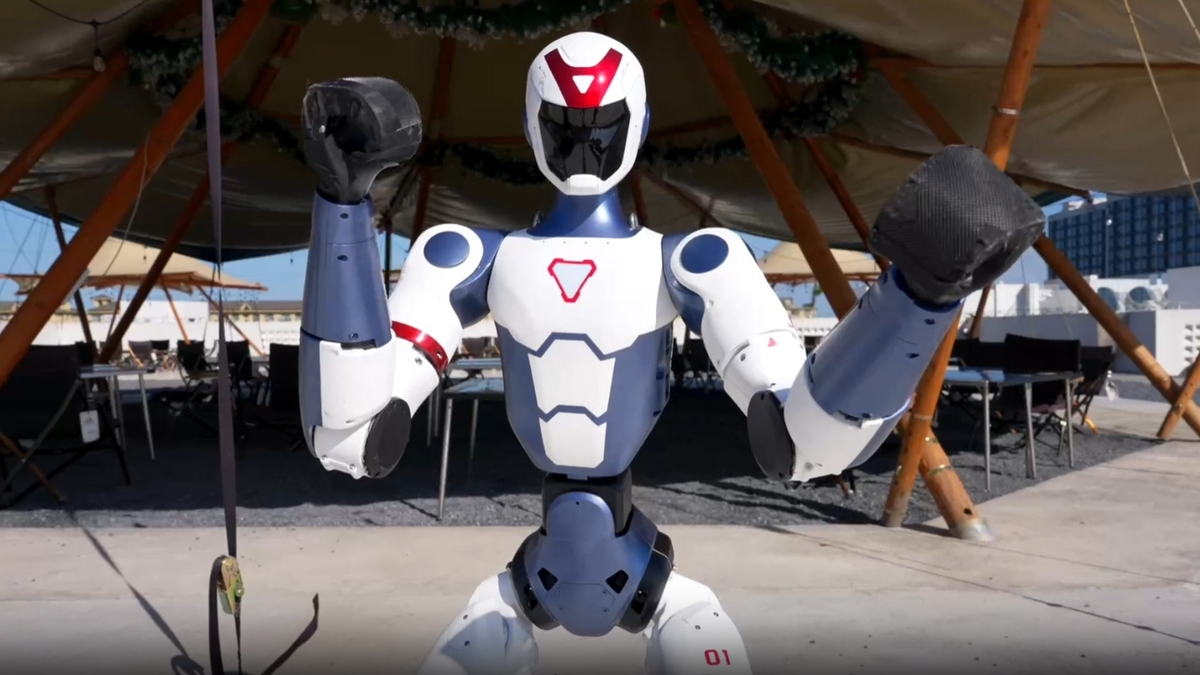
The US government has decided to block the importation of new models of mobile robots and power inverters. The action is part of a broader Trump administration policy to counter Chinese technological influence and secure the country’s critical supply chains.
The Federal Communications Commission (FCC) has updated its list of products deemed dangerousclaiming to act in perfect consultation with national security agencies.
What devices are covered by this ban?
The definition of an “advanced robotic device” provided by the FCC is intentionally broad. It includes any machine capable of locomotion, obstacle avoidance or navigation, equipped with environmental sensors and network connectivity, and weighing more than 2 kg.
This not only covers humanoid and quadruped robots popularized in viral videos, but potentially also future sophisticated robot vacuum cleaners.
The ban also extends to power inverters, essential components for renewable energy systems like solar panels. China is home to world leaders in the sector, some of whom are already on the American blacklist.
These devices are considered particularly sensitive due to their direct connection to the national electricity grid.
A national security measure?
American authorities cite major cybersecurity risks. According to an official document, these devices ” collect data that could be exploited by malicious actors to surveil Americans, enhance the capabilities of intelligence services foreigners or to remotely control robots. “
An example is the UniPwn flaw, which demonstrated the vulnerability of robots from the Chinese company Unitree.
Beyond espionage, supply chain dependency is a central concern. The stated objective is to build ” an independent and resilient robotics supply chain and industrial base. “
Concerning inverters, the fear is that remote manipulation could compromise electricity supply of the United States and, by extension, ” threaten economic prosperity and national security. “
Please note that the ban does not apply retroactively. Existing products already authorized or in service in the United States are not affected. Still, the decision obviously favors national manufacturers.


