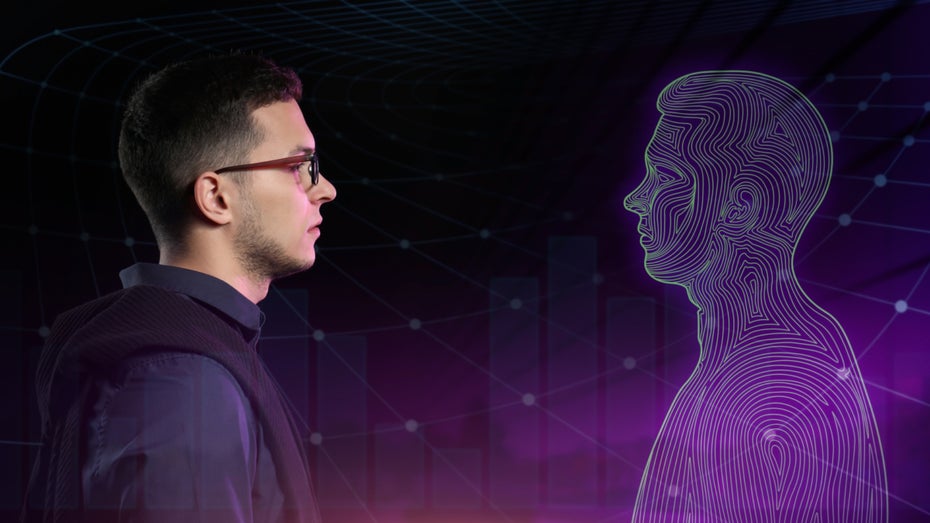
AI avatars: How advanced is the technology today? (Image: Pixel Shot / Shutterstock)
Good idea or pointless gimmick? It is still unclear whether and how AI avatars will become mainstream. The fact that many players are currently trying out this area cannot be dismissed. Whether it’s a copy of weather expert Jörg Kachelmann, a virtual university professor or the managing directors of large companies: the business with your own digital twins is already underway.
The companies that offer the creation of such avatars also benefit from this. Heygen, for example, makes triple-digit million sales with his avatar tool, according to Forbes reporting. And the British startup Synthesia is raising around $200 million in January 2026 at a valuation of $4 billion, including from the venture capital arms of Google and Nvidia.
Are AI avatars ready for mass production?
In theory, the uses for such avatars are diverse. Managing directors may initially only use them to avoid sitting in investor calls when the current quarterly figures are announced. But it is also conceivable to use these tools for personalization and better knowledge gathering in areas such as internal and external training programs, teaching or medicine.
At Tool Time we check whether the technology already works as marketing and PR promise and subject Heygen’s avatar generator to a practical test. In our current episode you will find out what hurdles arise, where the tool can still be expanded and why the aspect of storing biometric data is problematic.
You don’t want to miss an episode of Tool Time in the future? Then subscribe to our YouTube channel now and activate notifications.

Top Article
${content}
${custom_anzeige-badge}
${custom_tr-badge}
${section}
${title}