
While the Tour de France is in full swing like every summer, cybercriminals are taking advantage of popular fervor to set up formidable traps. According to cybersecurity experts at Check Point Research, dozens of fraudulent websites have been created since the beginning of the year. These illegitimate platforms target cycling enthusiasts looking to purchase a jersey or souvenir, exposing them to financial risks and theft of their personal information.
What are the mechanisms of these sophisticated scams?
Scammers deploy a methodical strategy to lure their victims. They register domain names that closely imitate the official one, such as “tourdefrancelife.com” or “tourdefrance.pro”, to deceive the vigilance of Internet users. These sites resume the official visual identity of the Tour de France, with its logos, colors and product photos that appear authentic. They offer highly sought-after items, such as team jerseys professional, with discounts sometimes up to 70%.
These fake stores are then promoted via social media advertisements or appear directly in search engine results. The objective is twofold: either to sell counterfeits of poor quality, or, even more serious, never delivering the goods and simply collecting payment information. A preparation that seems coordinated and methodicalbetraying a structured organization behind these frauds.
How do these fake sites manage to deceive Internet users?
The credibility of these platforms is based on an almost perfect imitation of the codes of legitimate e-commerce. The site “tourdefranceevent.shop”, for example, is a textbook case: it displays slashed prices designed to trigger an impulse purchase. To reassure visitors, it displays fake trust badges like “Certified Secure” or “Data Protection” which have no real value. These techniques aim to put to rest the consumer’s distrust in order to better steal their banking data.
In addition to these visual elements, scammers use aggressive pop-ups to create a sense of urgency and social media icons that lead nowhere. The absence of full legal noticeslike a postal address or a company registration number, is often an unmistakable sign. Unfortunately, caught up in the enthusiasm, many fans don’t take the time to carry out these simple checks before finalizing their order.
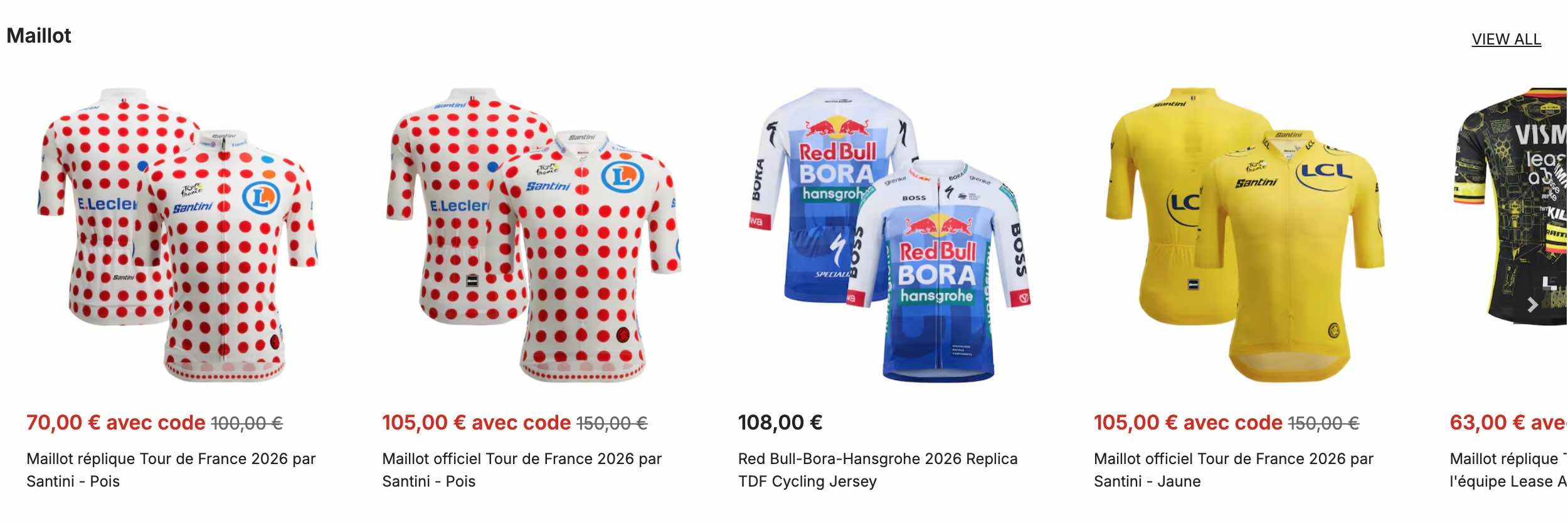

Official Tour de France store
What are the best practices to protect yourself effectively?
Faced with the resurgence of cyberattackswhich increased by 21% in one month in France according to CheckPoint, caution is the best defense. The first reflex should be to check the site address: the one and only official store is accessible via the URL letour.fr. You must always be wary of overly attractive promotional offers, which are a classic symptom of fraudulent stores.
Before any purchase, it is advisable to search for customer reviews on third-party platforms and ensure the presence of real contact details (phone, email). Using a browser security extension or up-to-date antivirus software can also help detect malicious pages. When in doubt, it is always better to forgo an apparent “good deal” than risk having your financial information compromised.