




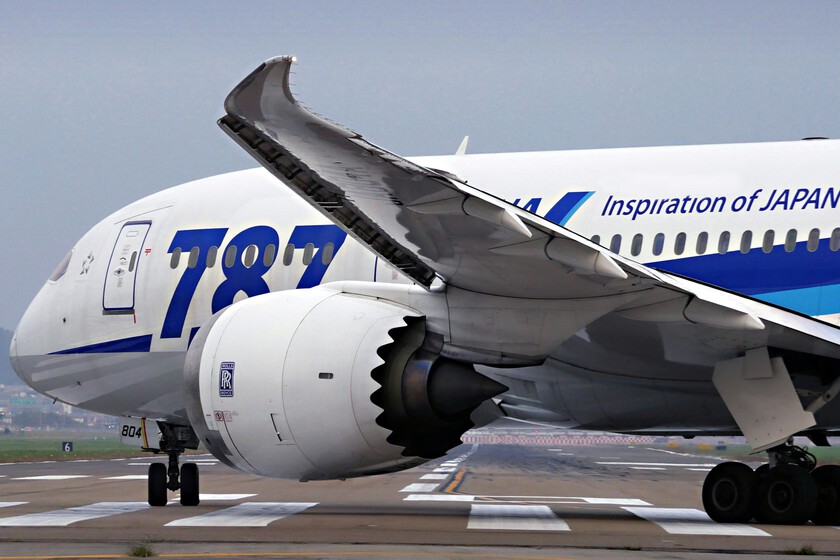
There are times when an industrial program is no longer measured only by the number of units it can manufacture. At Boeing, that role is now occupied by 787 Dreamlinera family of wide-body aircraft characterized by its efficiency and long-haul versatility. We are not talking about a plane awaiting release: Boeing completed the first delivery of the 787 to All Nippon Airways in September 2011, and the Japanese airline operated the model’s first passenger flight a month later, between Tokyo Narita and Hong Kong. What is at stake now is not to prove that the Dreamliner can fly, because we already know that, but that Boeing can manufacture it and deliver it regularly.
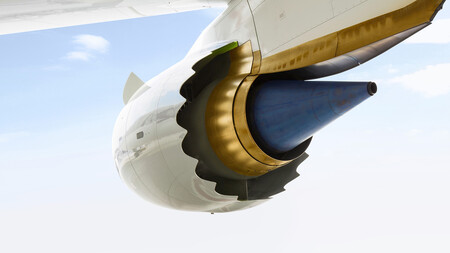
The objective that Boeing has set for this year is clear: to bring production of the 787 from eight to ten aircraft per month at its North Charleston plant, as explained by its CEO, Kelly Ortberg, on May 27 at an investors conference. The problem is that this leap depends on two fronts that still do not advance at the pace the company needs. FlightGlobal points out, on the one hand, delays in deliveries of GE Aerospace’s GEnx engines, one of the two engine families available for the 787 along with the Rolls-Royce Trent 1000, and, on the other, delays in the certification of business class seats with doors, which are blocking some deliveries.
A plane that Boeing needs to deliver, not just manufacture
That nuance is important because Boeing does not arrive at this phase in a vacuum. The company continues to drag the shadow of the 737 MAX, a program marked first by a global safety crisis and then by the Alaska Airlines 737 MAX 9 door plug incident, which once again brought to the table a very damaging conversation about quality controls, documentation, supervision and industrial culture. The NTSB investigation into this latest episode pointed to internal failures at Boeing and noted deficiencies in “adequate training, guidance and supervision.” The FAA, for its part, toughened pressure on the manufacturer after detecting systemic safety and quality control problems. That history does not directly affect the Dreamliner, but it does change the reading of any new instability: Boeing needs the 787 to be a test of order.
To understand why this increase in pace matters so much, you have to look at the recent history of the Dreamliner itself. The inspector general of the US Department of Transportation recalls that Boeing paused deliveries of the 787 in 2020 due to quality problems in manufacturing, with delays that ended up accumulating almost two years. In addition, those problems led to rework valued at more than $5.8 billion for Boeing and its suppliers.

Jammed seats are easier to overlook, although they have a very concrete effect. Some business suites with doors require more complex certifications, and Boeing and its suppliers miscalculated approval times. According to FlightGlobal, there are 787 already built and with those seats installed that still cannot be delivered because the documentary authorization is missing.
Adding to that pressure is another element: the 777X, Boeing’s next big wide-body plane, has not yet entered commercial service. The 777X family is set to occupy the top of the company’s long-haul catalog, but its schedule has been shifting due to certification delays. AP reported in October 2025 that Boeing had delayed the first delivery until 2027 and that postponement involved a $4.9 billion charge in the third quarter.
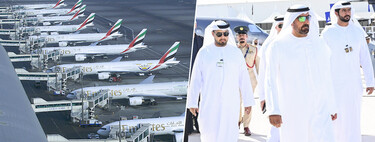

And the pressure is not just internal. Boeing has improved its deliveries, to the point of reaching 600 aircraft in 2025, its best record since 2018. But Airbus remains ahead in deliveries: the European manufacturer reported 793 commercial aircraft that same year and a record total portfolio of 8,754 orders, with a specific maximum in wide-body aircraft. For Boeing, the 787 has to be one of the pieces that helps reduce that competitive pressure. If the Dreamliner has demand and orders, the challenge is no longer in convincing the market, but in transforming that traction into constant deliveries.
Images | Tienko Dima
In | Brazil has achieved something more historic than its sixth World Cup: being the first in Latin America to have its own supersonic combat aircraft


