




The sector of brain-computer interfaces (BCI) has just experienced a spectacular acceleration. While Western companies like Neuralink are still in the clinical trial phases, Beijing has given the green light for the commercial deployment of similar technology. The Neo implant, designed by the startup Neuracle Technology, is now accessible to certain patients, a world premiere which underlines the country’s ambitions in this strategic area.
How has this implant changed a patient’s life?
The story of Dong Hui is at the heart of this progress. Paralyzed for six years following a car accident, he could only move his arms slightly, but his hands remained inert. He received a brain implant called Neo, a coin-sized device. After eleven months of rehabilitation, he was able to perform gestures that had become totally impossible.
The patient picks up a bottle using the NEO system and a robotic hand. Electrodes implanted on the surface of the brain record signals related to movement when it tries to take the bottle.
Credits: Tsinghua University
He managed to write his name and even catch a ball. The device works by capturing brain signals on the surface of the brain, without directly penetrating the cortical tissue, and transmits them to a computer. The latter translates them into orders for a robotic glove that the patient wears during his training sessions.
Why is China moving so quickly in this area?
The rapid approval of the Neo implant is not a coincidence, it is part of a ambitious national strategy. The Chinese government massively supports the sector, considering it a key industry for its future competitiveness. There Chine thus set up a accelerated validation procedure for this brain-machine interfaceahead of its global competitors.
This speed is also explained by a less invasive approach than that of Neuralink. The Neo sensors are placed on the dura mater (the protective membrane of the brain), which considerably reduces the risk of complications compared to direct penetration of the cortex. This technical choice certainly facilitated its regulatory approval.
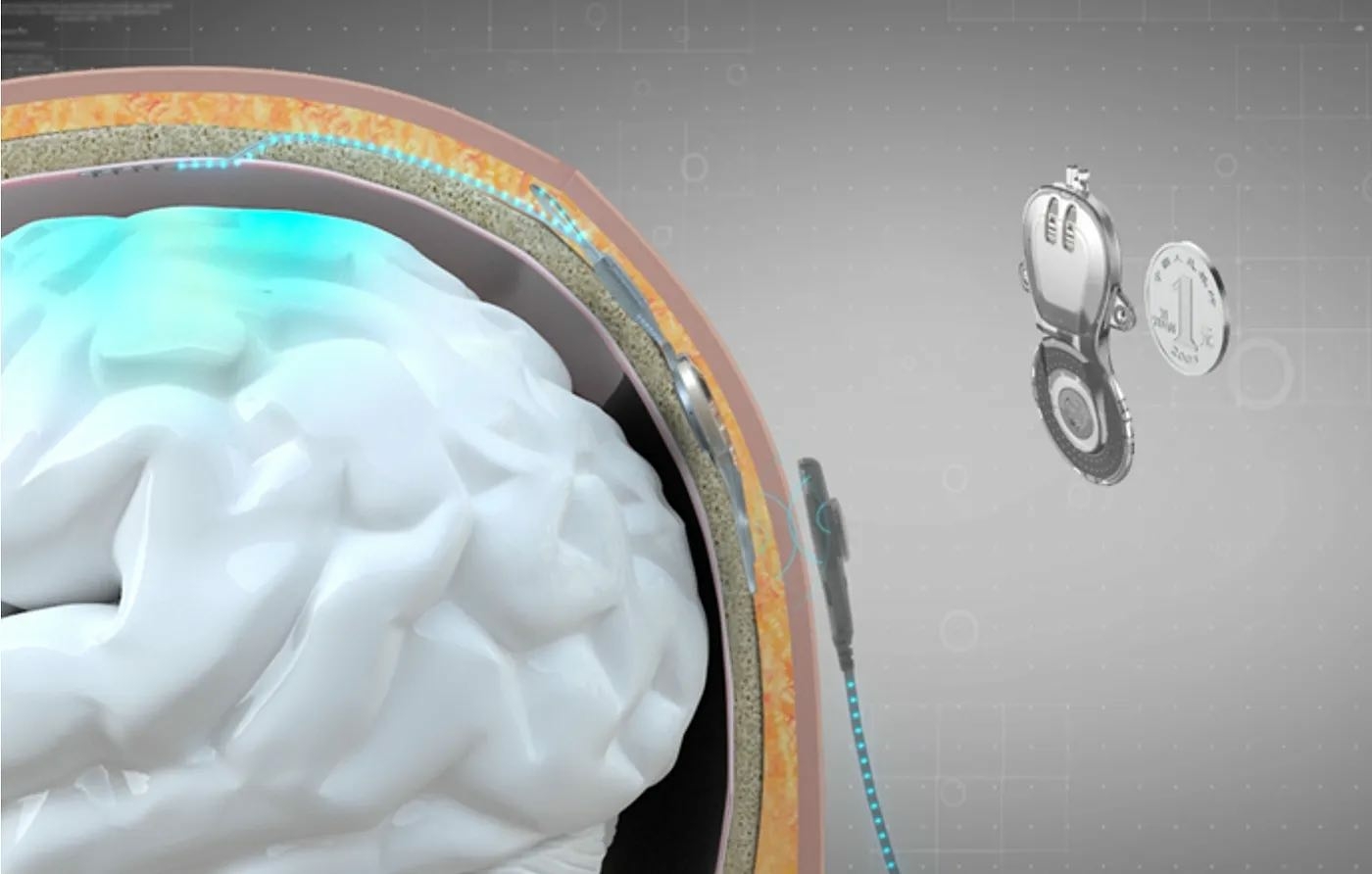

Neo system: a wireless and minimally invasive brain-machine interface. Electrodes placed over the targeted brain area record neuronal activity without penetrating the brain. Chips integrated into the skull provide power and wireless data transmission, without requiring an implanted battery.
Credits: Tsinghua University
What are the next steps for this technology in China?
Dong Hui’s case was not just an isolated clinical trial. The Neo implant is now officially available for patients suffering from paralysis of members following a spinal cord injury. The government is going even further by starting to integrate this technology into its health insurance systemassigning it a unique code.
This approach indicates a clear desire to democratize access to these devices on a large scale. According to experts, no other nation is currently deploying a plan also coordinated. Mass production is now underway, paving the way for widespread clinical use throughout the country in the very near future.


