
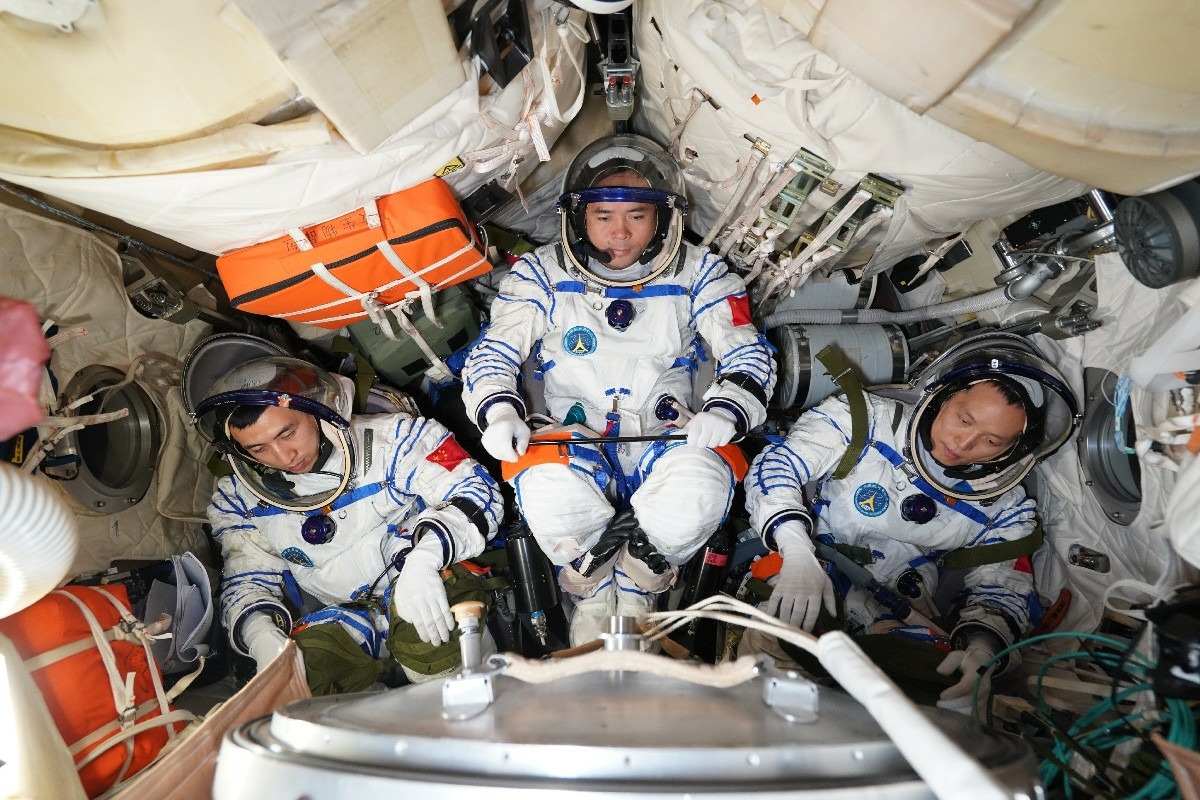
The crew of Shenzhou-21, composed of Commander Zhang Lu, Wu Fei and Zhang Hongzhang, will eventually pass near seven months in orbit instead of the six initially planned. Departing on October 31, the three astronauts (or taikonauts) were to complete their guard tour aboard the Tiangong station in April. You will have to wait. The China Manned Space Engineering Office officially justified this extension by the desire to push further tests on the human and material capacity to withstand extended stays in spacea crucial issue for the country’s future ambitions.
Why was this mission extension decided?
Officially, the goal is to “further verify technologies related to long-term stays of astronauts in orbit.” An ambition displayed by the Chinewho clearly seeks to perfectly master human and material endurance in the hostile environment of space. It’s a strategic calculation for Beijing’s space ambitions in the medium term. Each additional day in orbit is a wealth of data on the physiology, psychology and reliability of systems.
This extension also makes it possible to maximize the benefits of the next resupply mission, Shenzhou-22. Rather than being satisfied with the minimum, the Chinese authorities prefer to make the most of the presence of their experienced crew to carry out additional scientific and technical experiments. It is therefore a question of optimizing every second of this space missionwhich turns into a real laboratory on resilience in microgravity.
What are the crew’s achievements so far?
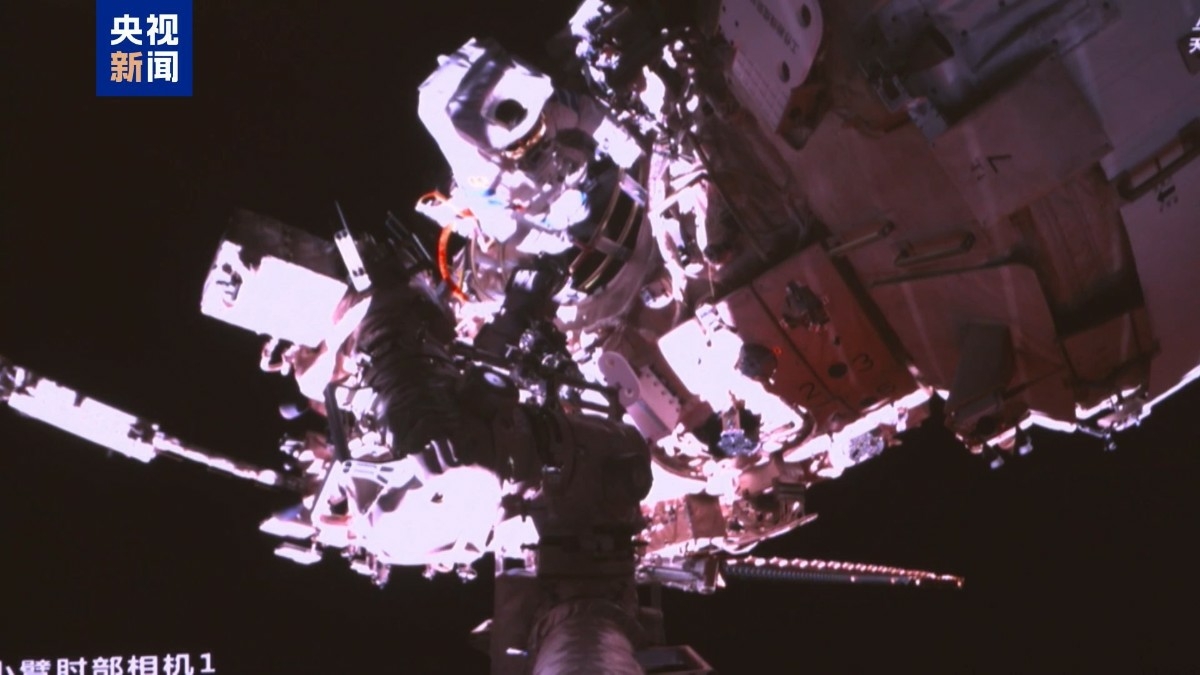
The crew of Shenzhou-21 already has an impressive track record. The three men carried out three extravehicular outings (EVA), these complex operations where the astronauts work outside the station. A true precise orbital ballet, assisted by the robotic arm of the station and the ground teams.

During these outings, which sometimes lasted more than five hours, these astronauts notably installed protection devices against space debris and carried out meticulous inspections of external equipment. Commander Zhang Lu distinguished himself by establishing a new record nationalwith a total of seven EVAs to his credit during his career. A feat which testifies to the experience accumulated by China.
What is the impact of this decision for the Chinese space program?
This extension is not just a question of timing. It’s an affirmation of confidence in the robustness of their equipment and in the preparation of their crews. By pushing the limits of the duration of a standard mission, China is sending a strong signal: its station is reliable, and its astronauts are ready for even greater challenges such as manned lunar missions.

This endurance tested in real conditions aboard the space station Tiangong is a fundamental building block in the construction of a long-term space program. Each experience, each emergency exercise, each inspection consolidates know-how which becomes a major strategic advantage on the international scene. China is no longer content to follow, it is experimenting to lead, hoping to beat the United States in the field of returning man to the Moon.
Frequently Asked Questions (FAQ)
Who makes up the crew of the Shenzhou-21 mission?
The crew is made up of three astronauts (taikonauts): Commander Zhang Lu, who has already flown on the Shenzhou-15 mission, as well as Wu Fei and Zhang Hongzhang.
What is the total duration of the crew’s stay in orbit?
Initially planned to last six months, the mission was extended by approximately one month. The crew will therefore spend almost seven months in total in the Tiangong space station.
What record did Commander Zhang Lu break?
Commander Zhang Lu set a new record for a Chinese astronaut by carrying out the most spacewalks (EVA), with a total of seven during his various missions.