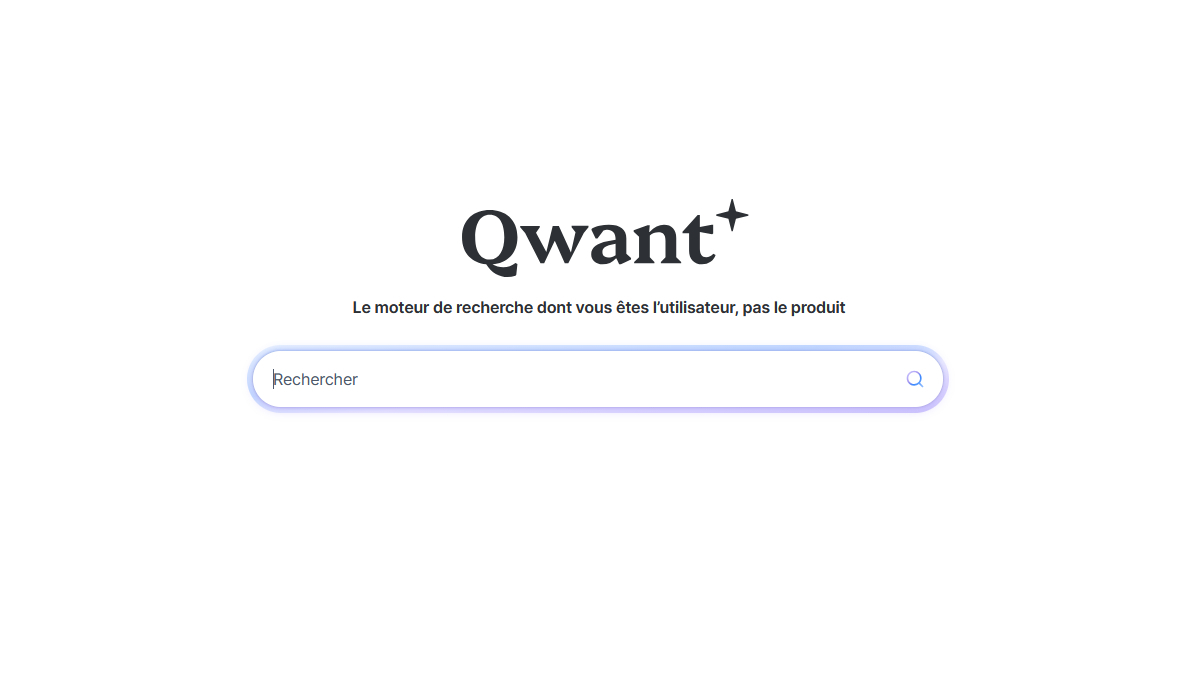
As of June 4, the default search engine on all computer stations in the European Parliament will not be no longer Google, but Qwant. A change which essentially has a political dimension.
Why was such a change decided?
This initiative is in line with the European Parliament’s commitment to digital sovereignty and the protection of users’ personal data.
In an internal email reported by Euractiv and Politico, Qwant is described as a ” European search engine privacy focused “, designed not to track its users or collect their personal information.
The decision also responds to growing pressure from MPs. At the end of 2025, elected officials urged the institution to get rid of foreign technologies, describing Europe’s dependence on American giants as a strategic vulnerability.
A European alternative pushed, but not imposed
The change will be applied automatically on the Mozilla Firefox and Microsoft Edge browsers used within the European Parliament.
All searches made through the address bar will be routed directly to Qwant, a move that affects 720 lawmakers and thousands of staff members.
However, users will remain completely free to manually navigate to other search engines or change their browser defaults if they wish. The objective is to promote a European alternative without imposing it.
On the sidelines of efforts to establish technological sovereignty
The European Commission has unveiled a package of measures aimed at reducing dependence on foreign suppliers and boosting local solutions, notably in cloud and AI.
The choice of Qwant instead of Google for the European Parliament also illustrates a desire to take action. In this sense, it is above all symbolic.
Now in the fold of Octave Klaba’s Synfonium (founder of OVHcloud) and with participation from the Caisse de Dépôts, Qwant relied for a long time on a partnership with Bing, but the relationship with Microsoft ended up causing sparks.
In 2024, Qwant joined German metasearch engine Ecosia in a joint venture European Search Perspectiv to ” contribute to digital sovereignty in Europe “, and with a European search index which is already active.