




The release of the highly anticipated artificial intelligence model V4 from the Chinese start-up DeepSeekplanned for this month, is at the heart of all attention. It is during the Dwarkesh Podcast what Jensen Huangthe charismatic boss of Nvidia, has thrown a wrench into the pond.
The rumor is growing: this new model could turn exclusively on Ascend 950PR processorsthe latest generation of AI chips designed by Huawei.
Such a configuration would be much more than a simple technical feat; it would be a true declaration of technological independence in the face of American hegemony.
Why is Jensen Huang so worried about the DeepSeek V4 model?
Jensen Huang’s main fear is the creation of a technology stack (set of interrelated software and hardware technologies) entirely Chinese and optimized.
If DeepSeek V4, running on Huawei hardware, proves successful, it could establish a new global standard. Jensen Huang warned that if future AI models are optimized in a way that is very different from the US technology stack, and this standard spreads, China “ would become superior » in the United States in this area, even with technically inferior chips to the American versions.
The real issue is therefore not only the competition between two companies, but the potential bifurcation of the global AI ecosystem. The warning is becoming clearer: an AI model optimized for Chinese equipment, if adopted globally, would logically lead to increased demand for this same equipment.
It is the fear not of a copy, but of a alternative viable which is emerging and risks stalling American economic models. The de facto monopoly of Nvidia and the American ecosystem on AI infrastructures would then be directly threatened. For Huang, this is a scenario to be avoided at all costs because it would mark the end of an era of domination.
What are these Huawei chips that are crystallizing tensions?
At the heart of this matter are Huawei’s Ascend 950PR processors. This is the Chinese giant’s response to American sanctions which deprive it of access to GPUs the most advanced from Nvidia, such as puces Blackwell.
While the previous DeepSeek model, the V3, was driven on Nvidia H800 components (a restricted version for the Chinese market, now banned), the transition to V4 on a platform 100% Huawei would mark a spectacular break. This is proof that the Chinese ecosystem is learning to do without American components.
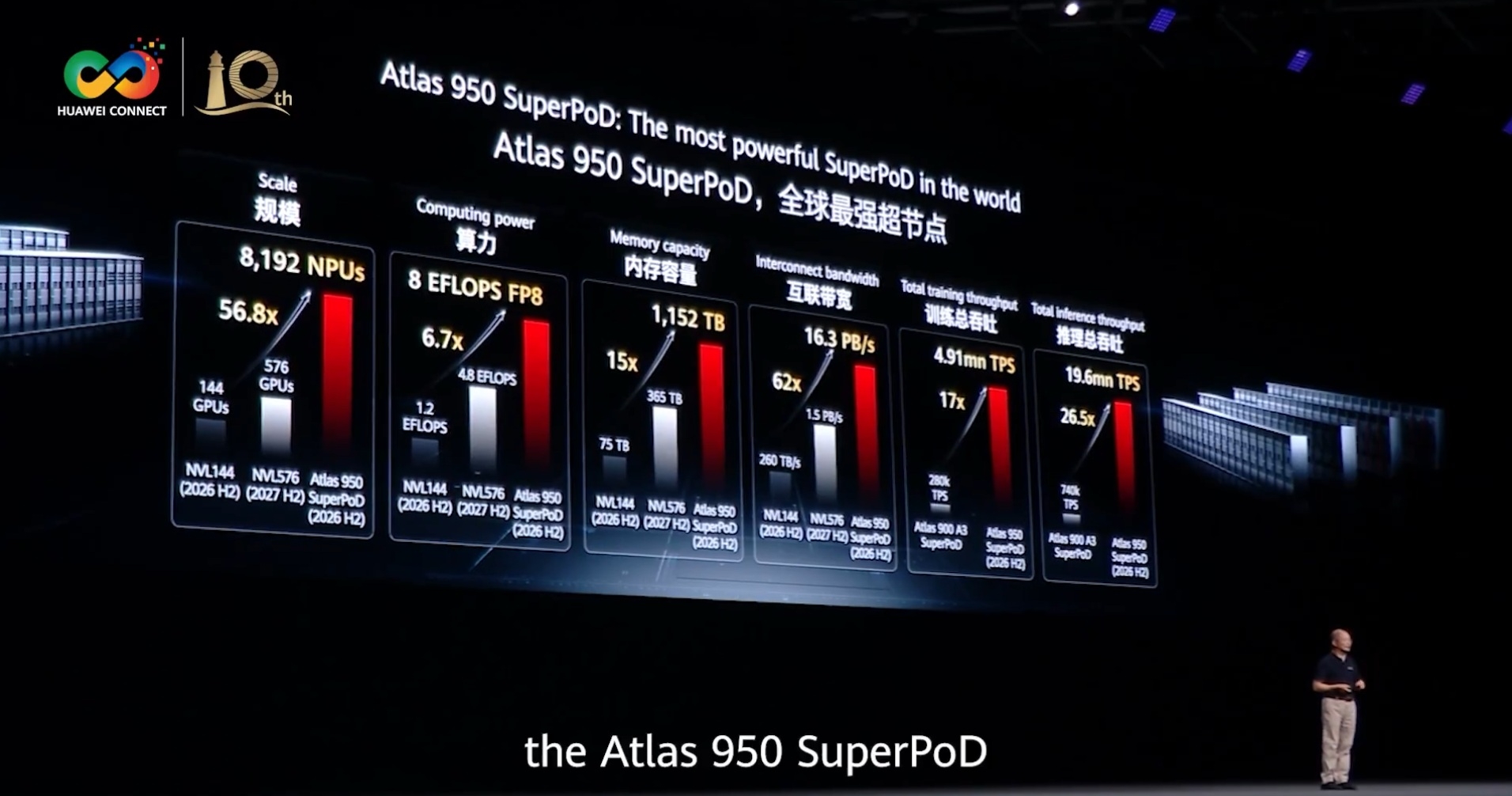

These Ascend chips represent years of research and development to build a sovereign alternative. Although Huang suggests that Chinese chips might be inferior, he admits that China can compensate for this handicap with its huge pool of researchers and his abundant energy.
DeepSeek software optimization for these chips is therefore the keystone that could transform hardware considered inferior into a globally competitive solution.
What are the implications for the geopolitics of artificial intelligence?
The major implication is the potential end of a single AI standard. We could be heading towards a world with two distinct and competing technology hubs: an American hub (Nvidia, Google, etc.) and a Chinese hub (Huawei, DeepSeek, etc.).
This would mean models, hardware and software developed in silos, creating a potential global digital divide. Countries and companies would then have to choose sides, considerably complicating the global technological landscape.
This situation exacerbates the distrust of American legislators. Voices are already being raised in Washington to place start-ups like DeepSeek, Moonshot AI and MiniMax on the export blacklist.
The accusations are serious: China would buy “ what she can » and would fly « what she can’t “. Jensen Huang’s exit is a political-economic analysis that adds fuel to the fire of a rivalry already at its height.


