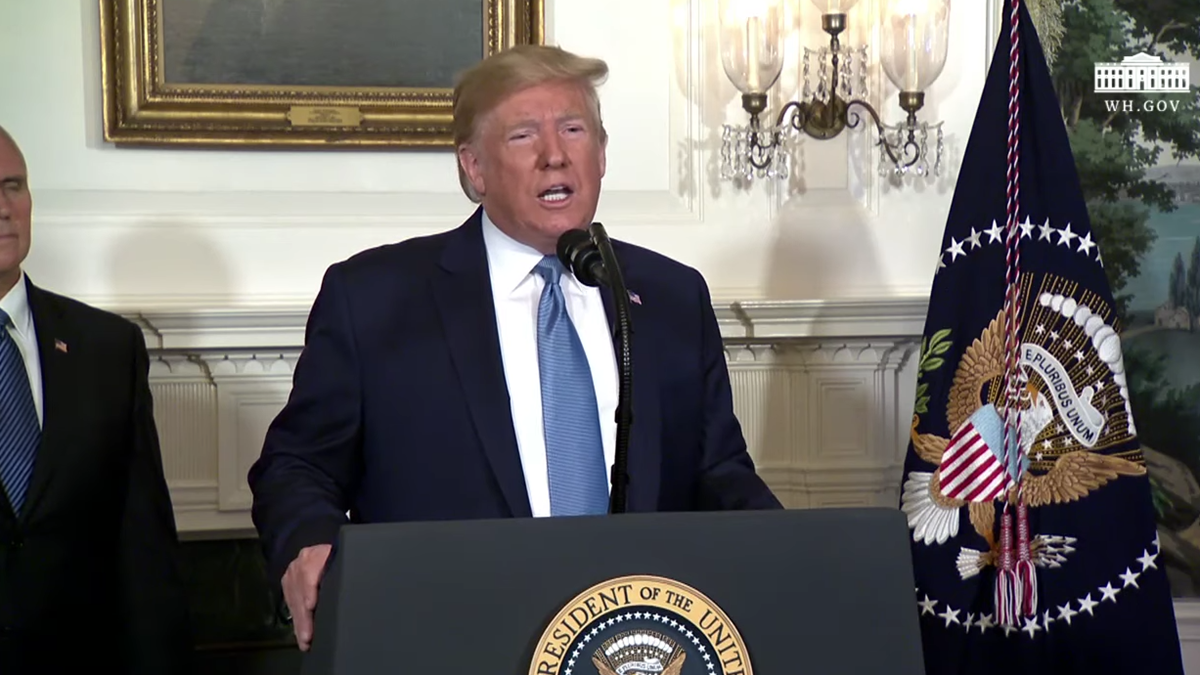
The financial archives of the second presidency of Donald Trump are a reveal that the year 2025 was the most profitable of all his years in power, with personal income exceeding $2.2 billion.
While a large portion comes from cryptocurrency transactions, a significant portion comes from stock market investments whose calendar calls out, reveals the New York Times.
Two episodes, in particular, crystallize suspicions of a mix of genres between the presidential office and private interests. The common thread? Massive purchases in tech just when crucial decisions were being announced from the Oval Office.
Coincidences between announcements and investments
On April 2, 2025, the president announces a plan to customs tariffs high and widespread, causing a shock wave on the markets. The index S&P 500 scollapses by more than 12% in four days, bordering on the “bear market” (bear market defined by a drop of 20% since a recent peak).
Panic is spreading among investors. All except one. On April 8, while Wall Street was at its lowest, the records showed a shopping spree from Trump: 327 transactions in a single day, five times his daily average.
He is picking up shares of tech giants, such as Apple et Nvidiaparticularly affected by the prospect of a trade war. The next day, April 9, there was a dramatic turn of events.
Trump posts on his social network “ THIS IS A GREAT TIME TO BUY!!! » then announces, a few hours later, that he backs up on part of the taxes. The stock market explodes on the riseoffering spectacular gains to those who, like him, had invested the day before.
What is the connection between the White House AI plan and Trump’s stock purchases?
Another event, which occurred a few months later, followed a similar pattern. On July 23, 2025, Donald Trump invested heavily in the technology sector, purchasing nearly 5 million dollars d’actions Amazon, Apple, Meta, Microsoft, Nvidia et Broadcom.
A coincidence? Hard to believe. That same day, the White House unveiled its highly anticipated “ AI Action Plan », a strategic roadmap for the development ofartificial intelligence in the United States.
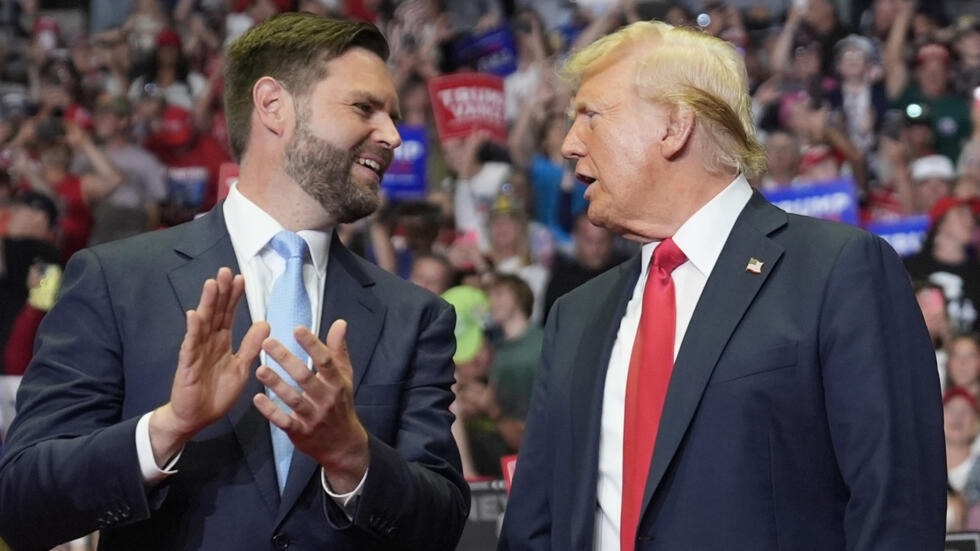

This announcement was likely to reassure the markets and boost the values concerned. Once again, the timing seems almost too perfect. This episode adds to a list of opportunistic transactions, such as an investment in Dell shortly before the company landed a 9.7 billion defense contract the dollars.
Aggravating fact, the New York Times reports that Trump, although legally required to report these purchases, failed to do so on timefulfilling only one low fine for these repeated failures.
How does the White House justify these controversial transactions?
Faced with these barely veiled accusations of insider tradingthe defense of the executive is well established. White House spokesperson Anna Kelly brushed aside the criticism, saying that “ all of the president’s assets are held in fully discretionary accounts managed by independent third-party financial institutions ».
According to her, there would therefore be “ no conflict of interest “. A line of defense that the president himself has taken up. However, sources indicate that the Trump family’s assets are not placed in a ” blind trust » (a blind trust), the only structure that would guarantee a total independence management.
The family representatives assure that they have no influence on the decisions of the brokers but the recurrence of these “happy” operations leaves immense doubt.
The wall between the political decisions that make the markets and the portfolios that benefit from them seems terribly porouscreating a situation that strains public and investor confidence.
What are the ethical and legal implications of these operations?
Beyond the person of Donald Trump alone, these revelations raise a fundamental question about the supervision of the financial activities of the highest political leaders.
The ability of a president to influence stock prices with a simple message or announcement is a formidable economic weapon. When coupled with massive personal investments in the sectors concerned, the line with market manipulation becomes blurred.
It’s a blatant conflict of interest which erodes the credibility of the function. CNBC reports that on stock forums like WallStreetBets from Reddit, reactions are divided between cynical admiration for the audacity and indignation at what is seen as a fundamental injustice.
The notion of mere coincidence is being put to the test and could, in the future, lead to much stricter legislation. Because if the leader of a company is severely punished for insider trading, the question arises: why shouldn’t the leader of a country be?