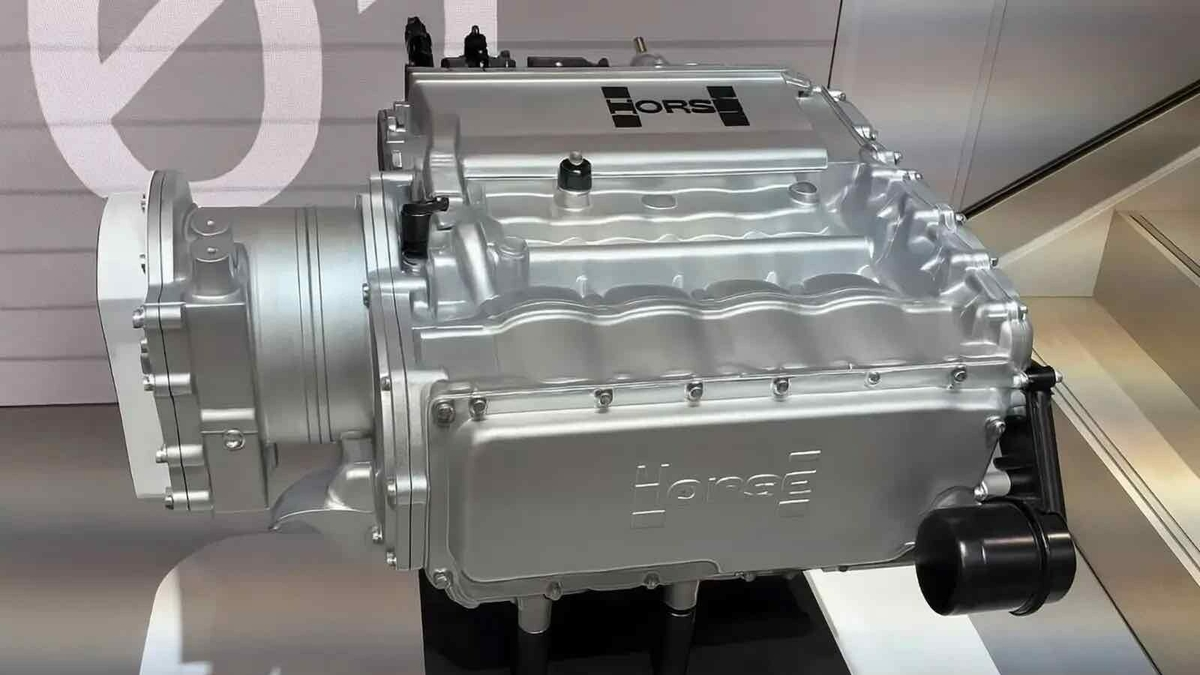
The future of mobility is not just about all electric. Faced with the persistence of anxiety linked to autonomy and the constraints of recharging, hybrid solutions retain their relevance. It is in this context that HORSE Powertraina strategic alliance between Renault, Geely and Aramco, presented an innovative technology: D20 Methanol, a range extender that replaces gasoline with pure methanol.
How does this disruptive technology work?
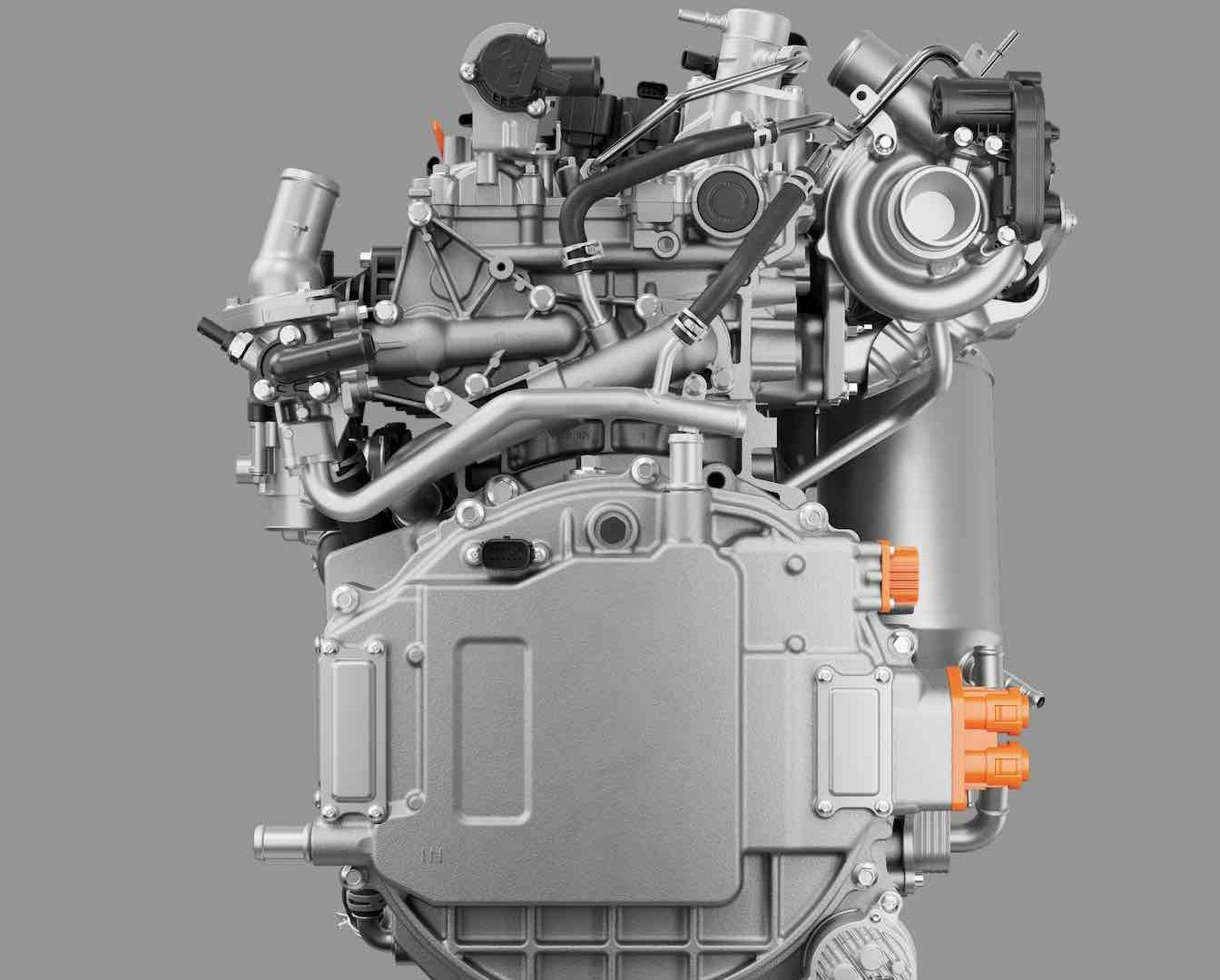
The principle of D20 Methanol is that of an extended range electric vehicle (REEV). The vehicle is still powered by its electric motors. The thermal block acts only as a electricity generator on-board, recharging the battery when necessary. This is a engine thermal 2.0-liter turbo four-cylindercapable of delivering up to 105 kW of electrical power for a total weight of only 170 kg.
The real innovation lies in its generator, a axial flux motor mounted directly on the crankshaft. Unlike conventional radial flux motors, this stacked disc architecture is 46% shorter and offers greater volume power density 63% higher. This compactness is a major advantage for integration into a wide range of future electric vehicles. Furthermore, his electrical efficiency reached a remarkable level of 96.4%.
What are the concrete advantages of methanol?
The announced performances speak for themselves. The system claims a yield of 47% for the conversion of fuel into electricity, a very high figure for a thermal block. Concretely, it takes around 2.1 kWh of methanol to produce 1 kWh of electricity. So, recharge a 40 kWh battery would only require just under 20 liters of fuel. The system also guarantees cold starts in extreme temperatures, down to -35°C.
In terms of emissions, D20 Methanol already complies with future Euro 7 standards for nitrogen oxides (NOx). However, l’impact CO₂ global depends entirely on the origin of the fuel. If it is produced from coal or natural gas, the carbon footprint remains heavy. On the other hand, with bio-methanol ore-methanol (produced from captured CO₂ and renewable hydrogen), the balance can become almost neutral. This is a key point which explains Aramco’s interest in the HORSE alliance, the oil group investing in these synthetic fuels.

What future for this solution on our roads?
This technology is positioned as a solution alternative credible, especially in markets where fast charging infrastructure is limited. Geely, Renault’s partner, is not new to this and has been exploring methanol as a fuel in China for almost twenty years. The arrival of D20 Methanol is therefore part of a long term strategy aimed at diversifying energy sources for mobility.
The main obstacle to massive deployment in Europe remains the almost total absence ofinfrastructures de distribution of pure methanol (M100) for the general public. For the moment, no marketing schedule or production model has been announced. D20 Methanol therefore presents itself above all as a technological manifestoa showcase of HORSE know-how that could well inspire the industry in the years to come.