
The merger of ecosystems following the acquisition of Fitbit par Google was expected, but the result disappoints. Many early loyalists, who used the brand’s products well before its acquisition, feel betrayed by an update that they describe as ” regression “. Forums and social networks, notably Reddit, are full of testimonials describing the application as “ incredibly bad » or even « messy », pointing out incorrect data and navigation which has become a real ordeal.
Why is the new Google Health interface so criticized?
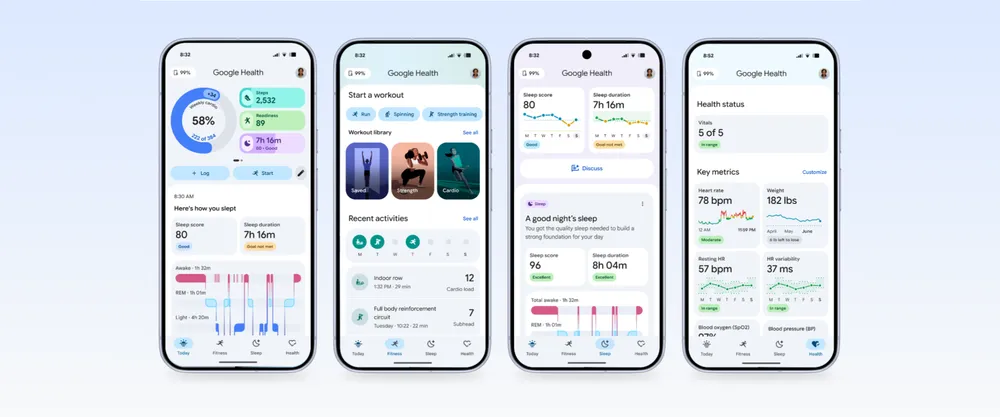
One of the main criticisms leveled at Google Health concerns its design and ergonomics. The former clarity of the Fitbit app has given way to an interface deemed more cluttered and less intuitive. A significant portion of the home screen is now reserved for activity updates and messages from an AI coach, relegating essential statistics to the background. To view data that was previously accessible with a simple scroll, such as exercise days, you now have to navigate through several submenus.
The other major sticking point is the role ofartificial intelligencethe “Google Health Coach”. While some users see it as a useful tool for generating training programs or correcting a sleep log, the majority perceive it as useless “verbiage”. Many complain of having to “ scroll through paragraphs of AI blabla » before accessing their own data, an unwanted intrusion into their personal tracking. It is possible to deactivate the coach, but the section dedicated to it remains prominent on the interface.
How does Google plan to regain user trust?
Faced with this wave of criticism, the company quickly communicated its intentions. Aware of the shortcomings of its application, Google published a blog post detailing a long list of fixes and improvements to come, the deployment of which began the week of launch. The Mountain View firm is committed to listening to feedback and offering regular updates to correct the situation and improve the user experience, which is at the heart of the challenges of the connected health.
This rapid response is crucial to stem the hemorrhage of users. The goal is clear: to prove that Google Health is not an “unfinished” product and that the company takes the concerns of its historic user base seriously. There dashboard customization “Today” and “Health” is one of the priorities displayed, so that everyone can rearrange, add or remove the indicators according to their preferences, a much-awaited change.

What concrete improvements are planned for the application?
Google’s roadmap is precise and directly targets the most frequent complaints. Concerning activity monitoring, fixes are underway so that races are no longer incorrectly labeled as general training and to add details of intermediate times (“splits”) to the summaries. Automatic activity detection on devices like the Fitbit Air will also be refined.
Other improvements affect essential functionalities. Nutritional monitoring, much criticized, will be strengthened with the possibility of creating, viewing and recording personalized foods. Sleep tracking will benefit from a new 24-hour view combining naps and main night, and missing sleep scores will be fixed. Finally, the AI coach will be adjusted to provide “more concise” messages, integrate more graphics and be less talkative about minor activities like a short walk.