




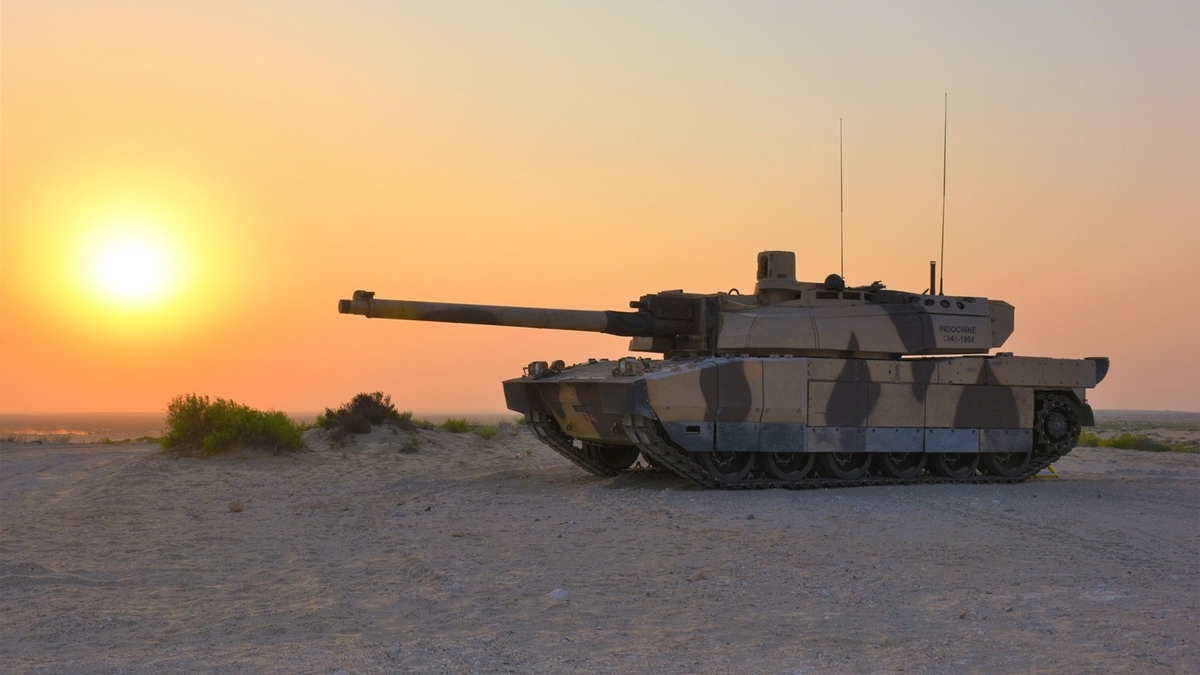
And char Leclerc of the French army managed to shoot down a drone in mid-flight during tests carried out in the United Arab Emirates. This capability was achieved through the use of a howitzer OEFC the 120 mm which shoots 1100 tungsten balls, making the barrel a giant “shotgun”.
This is an opportunity solution for close defense against small tactical drones.
The event, described as “ doctrinal innovation », was carried out in deliberately complex conditions: the target, a small drone, followed an erratic trajectory and a perpendicular approach, the worst scenario.
How can a Leclerc tank take down an aerial target?
The key to this success lies in a specific ammunition: the 120 mm channeled effect shell (OEFC). Originally designed for urban combat and close defense, this shell does not explode on impact but disperses, at a supersonic speed of 1140 m/s, a deadly cloud of more than 1100 tungsten carbide balls.
The Leclerc’s sophisticated fire control, capable of tracking moving targets, was adapted to engage these small aircraft. A new page opens in the fight against dronesintelligently recycling existing capabilities to meet an immediate need without developing entirely new hardware.
Is this innovation the miracle solution against all drones?
This capacity is above all a final ramparta last chance solution. The OEFC shell has a practical range ofabout 500 meterswhich makes it effective only against small tactical FPV (immersion piloting) or observation drones which would approach at a very short distance from the armored vehicle.
It is completely ineffective against longer-range or high-altitude threats, such as Iranian Shahed drones.
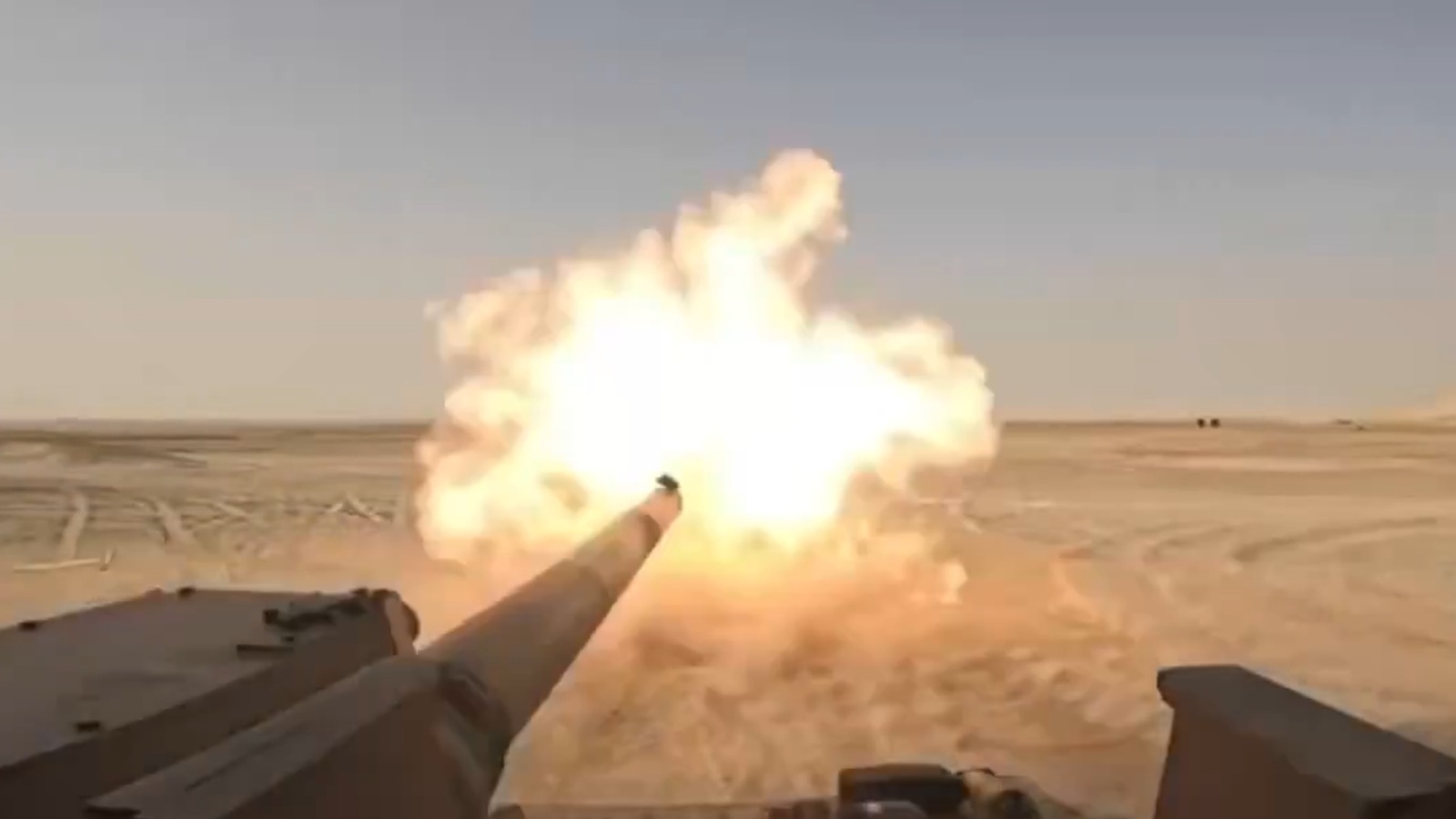

The technical challenges remain numerous, notably the detection and precise assessment of the distance of such a small flying object. The ingenuity ofFrench army lies here in pragmatism: it is not a question of creating a complete anti-aircraft defense system, but of adding a string to Leclerc’s bow to improve its immediate survivability in the face of an omnipresent and low-cost threat.
Why adapt a tank rather than create a new weapon?
The war in Ukraine has highlighted a major strategic imbalance: using missiles worth several hundred thousand euros to shoot down drones costing a few thousand euros is not viable in the long term.
It’s a war of economic attrition. Adapting ammunition already in stock for a new mission is therefore a particularly relevant approach.
This approach, validated by tests carried out in United Arab Emiratesis part of a logic of versatility and optimization of resources. Rather than waiting years for the development of a dedicated system, we offer crews a opportunity capacity and a direct response to an asymmetric threat.
What is the next step for the defense of French armor?
This solution constitutes only one brick in a multi-layered defense. The Army is working on more specialized devices, such as the system Proteuswhich combines a recycled 20 mm cannon with fire control equipped with artificial intelligence.
These dedicated systems are designed to provide more systematic protection and at longer range against drones. In the longer term, the modernization of Leclerc, with the standard XLRprovides for the integration of active protection systems known as “ Hard-kill » (device that intercepts and physically destroys rockets or missiles before impact).
The use of the OEFC shell is therefore a transitional and complementary solutiona reactive shield while awaiting the implementation of these new technologies which will form the bodyguard of tomorrow’s armored vehicles.


