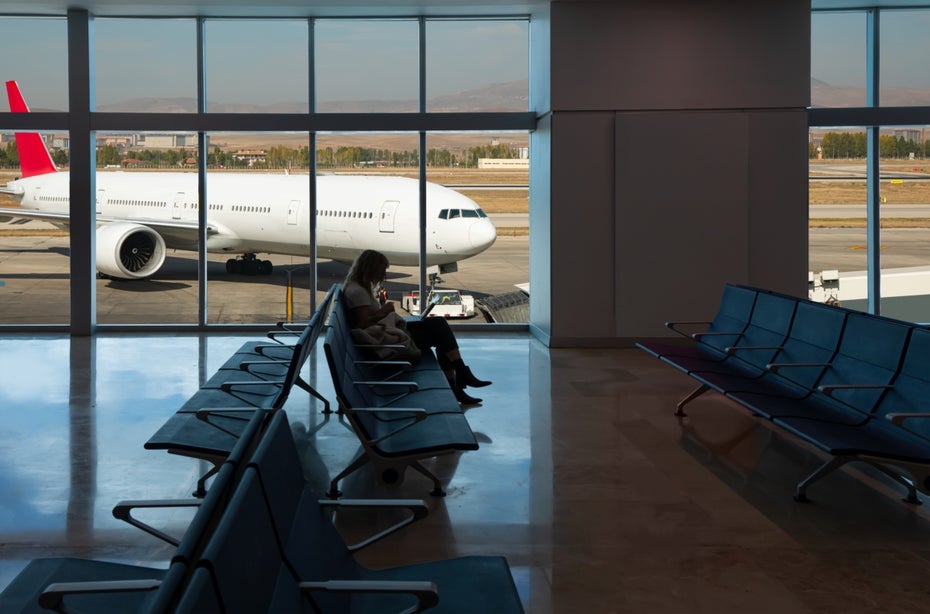
Haneda Airport in Tokyo is one of the largest in the world. In 2024 alone, almost 86 million passengers were handled there, and a plane lands there every two minutes.
Robots are also expected to load cargo and clean aircraft cabins
Now the airport is becoming the setting for an exciting test: humanoid robots will soon be sorting luggage there. And in the future they might also be able to load cargo and clean aircraft cabins.
Editorial recommendations
${content}
${custom_anzeige-badge}
${custom_tr-badge}
${section}
${title}
The test is being conducted by Japan Airlines to address the shortage of human workers. The number of visitors to Tokyo Airport has risen sharply in recent years, but employment figures have not kept up with this increase. According to a press release from Japan Airlines, the test runs will start in May and will last until 2028.
Video shows humanoid robot
A video of an apparently staged demonstration in an aircraft hangar shows one of the humanoid robots walking somewhat unsteadily towards a large metal cargo container and making a pushing gesture. However, the cargo container only starts moving when a human operator starts the conveyor belt to transport the container towards the aircraft.
Japan Airlines wants to test whether humanoid, AI-controlled robots can adapt to human work environments without requiring significant structural changes to the work location, in this case an airport.
Robots in use


Robots in Action: Eight exciting tech helpers in action
Do robots also work in unpredictable work environments?
Humanoid robots have already been tested in pilot projects in automobile factories and warehouses. There they mostly had to carry out the same, predictable tasks. In comparison, humanoid robots face a much greater challenge when it comes to operating in unpredictable work environments.
According to Asia Business Daily, the G1 and Walker E robot models from Chinese manufacturers Unitree Robotics and Ubtech Robotics are being tested at Tokyo Airport. Looking into the future, the price of such robots is also still an issue: According to Arstechnica, humanoid robots still cost tens of thousands of dollars per unit, although mass production has already ramped up, especially in China.

Top Article
${content}
${custom_anzeige-badge}
${custom_tr-badge}
${section}
${title}