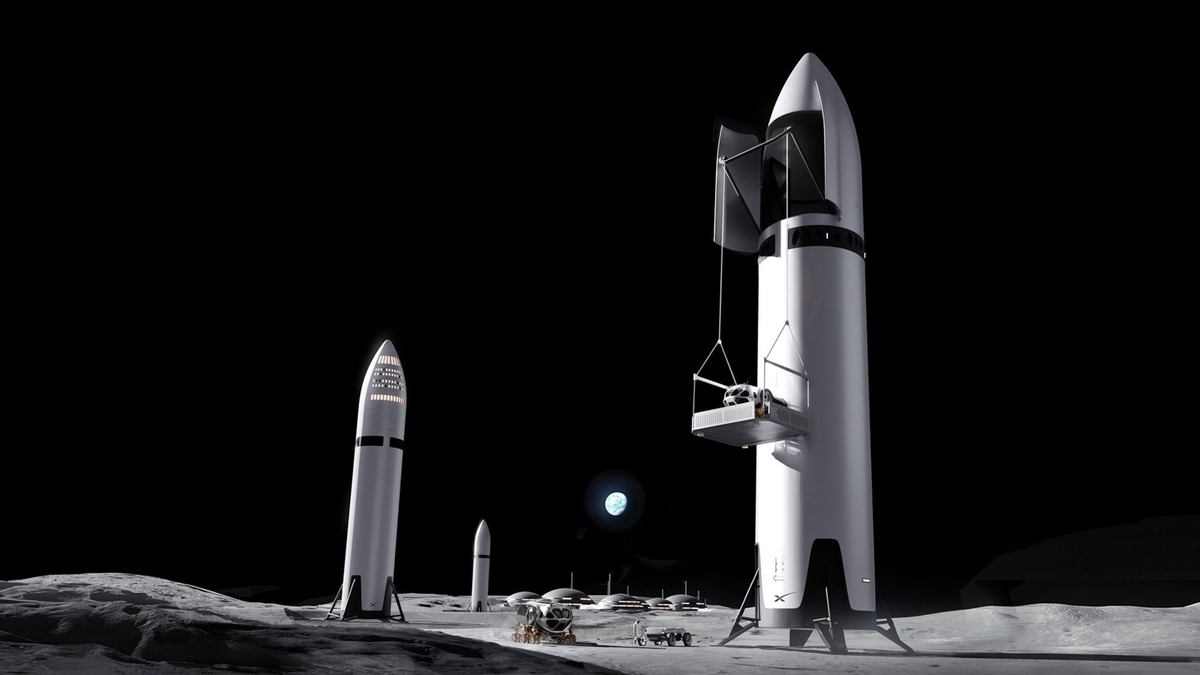
The American space agency has announced a envelope of nearly 600 million dollars to consolidate its lunar exploration program. Who are the lucky ones? Three private companies, already well known in the sector: Astrobotic wins with two missions for a total of 297.9 million, while Firefly Aerospace (144.2 million) and Intuitive Machines (148.3 million) take on one mission each.
Their objective: to transport from 2028 scientific instruments and cargo on our satellite. This is a message sent to the entire aerospace industry which was waiting to see if the agency would slow down after the recent setbacks.
On the contrary, this decision aims to actively prepare the ground for a future permanent base at the South Pole of the Moon by increasing the missions supported by private companies.
What are the details of NASA’s new lunar contracts?
NASA awarded four new missions as part of its initiative CLPS (Commercial Lunar Payload Services), a program aimed at relying on the private sector for rapid and less expensive lunar deliveries.
These contracts are crucial for phase 1 of the project lunar base. Astrobotic, which already has solid experience, will use improved versions of its Peregrine lander with the more ambitious model Griffin-1.
Firefly and Intuitive Machines will do the same with their respective models, the Blue Ghost and the Nova-Ccapitalizing on their previous flights to improve reliability.
Each of these deliveries will carry a trio of scientific payloads standardized, allowing comparable data to be collected from different sites.
The space agency no longer manages the entire program alone and is creating an ecosystem of service providers, even if it means putting them in competition to meet a tight schedule against China.
How does NASA plan to overcome the Blue Origin setback?
The announcement of these contracts comes at a pivotal moment. At the end of May, the spectacular explosion of rocket New Glenn of Blue Origin on its launch pad has cast an icy chill on the calendar.


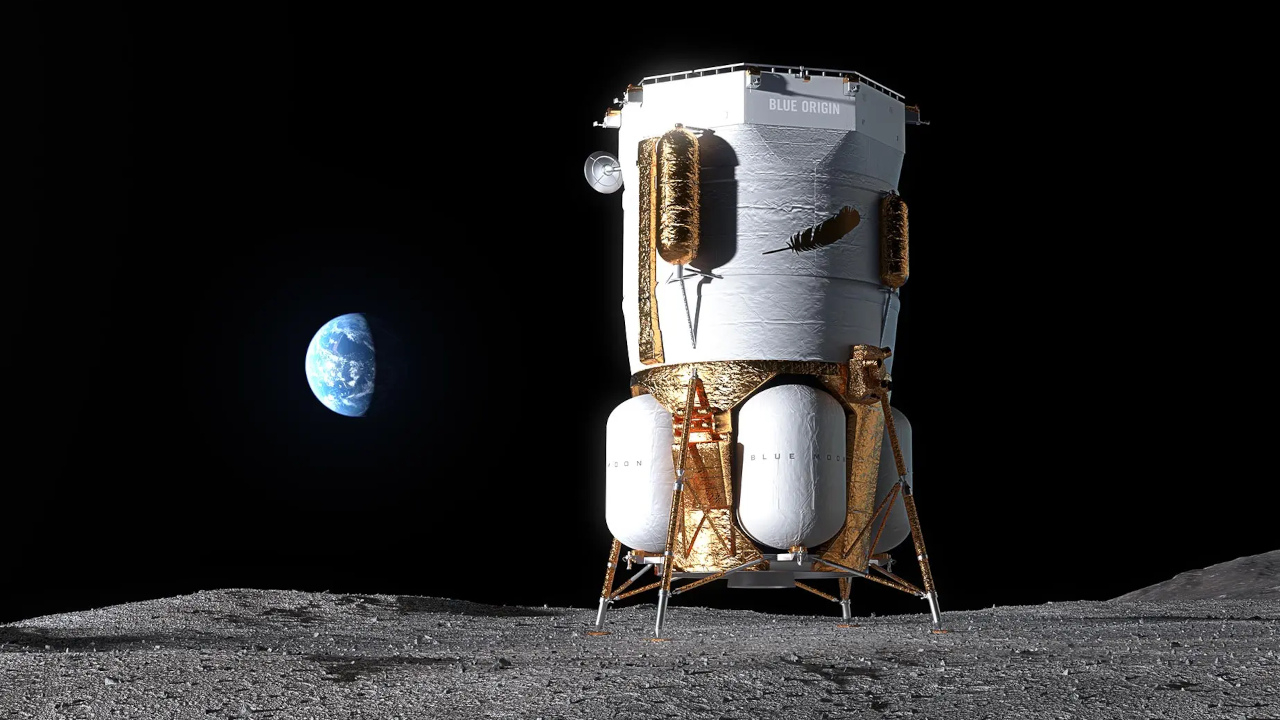
This launcher was to carry the large moon lander Blue Moona centerpiece of the device. Rather than panic, NASA released its plan B. Officials said Tuesday “ explore other options » to launch Blue Moon if New Glenn is not operational in time.
This risk diversification strategy is the keystone of NASA’s new doctrine. By multiplying partners via the CLPS program, the agency ensures a rate of space missions regularly and prevents a single failure from paralyzing the entire program.
It’s a lesson learned from decades past, when reliance on a single system, like the Space Shuttle, showed its limits in a tragic way. Resilience is the new watchword.
What is NASA’s roadmap for its lunar base?
NASA’s plan is divided into three distinct phases. Phase 1, which runs until 2029, is that recognition and installation. The aim is to learn how to land on the Moon reliably, to understand the hostile environment of Lunar South Pole and test technologies.
It is within this framework that the possible reallocation of PROMISEan engineering twin of the Mars rovers Curiosity et Perseverancefor a lunar mission. A quick and economical solution to obtain a lunar robot ultra-performant.
Phase 2, starting in 2029, will see the start of construction of heavy infrastructure : energy generators, communication systems and premiers modules d’habitation.
Phase 3, in the 2030s, will realize the vision of a “semi-permanent” outpost where astronauts can live and work. It’s a real urban planning project extraterrestrial which is preparing and which is estimated in total at approximately 30 billion dollars.
What scientific instruments will be sent to the Moon?
To prepare for the arrival of humans, we must map the dangers. The four missions will therefore carry standardized instruments to collect vital data.
The first is the SCALPSS (Stereo Camera for Lunar Plume Surface Studies), a set of four cameras that will create a 3D view of the impact of the lander’s engine plume on lunar dust.
Understanding how this regolith is lifted is essential to avoid damaging neighboring equipment during future landings.
The second instrument is the LRA (Laser Retroreflector Array), a small passive dome equipped with prisms that reflects lasers fired from orbit. By multiplying these beacons, NASA is building a true lunar GPS networkessential for precision navigation.
Finally, the spectrometer LETS (Linear Energy Transfer Spectrometer) will measure surface radiation in detail, crucial data for design habitats and combinations effectively protecting future lunar residents.