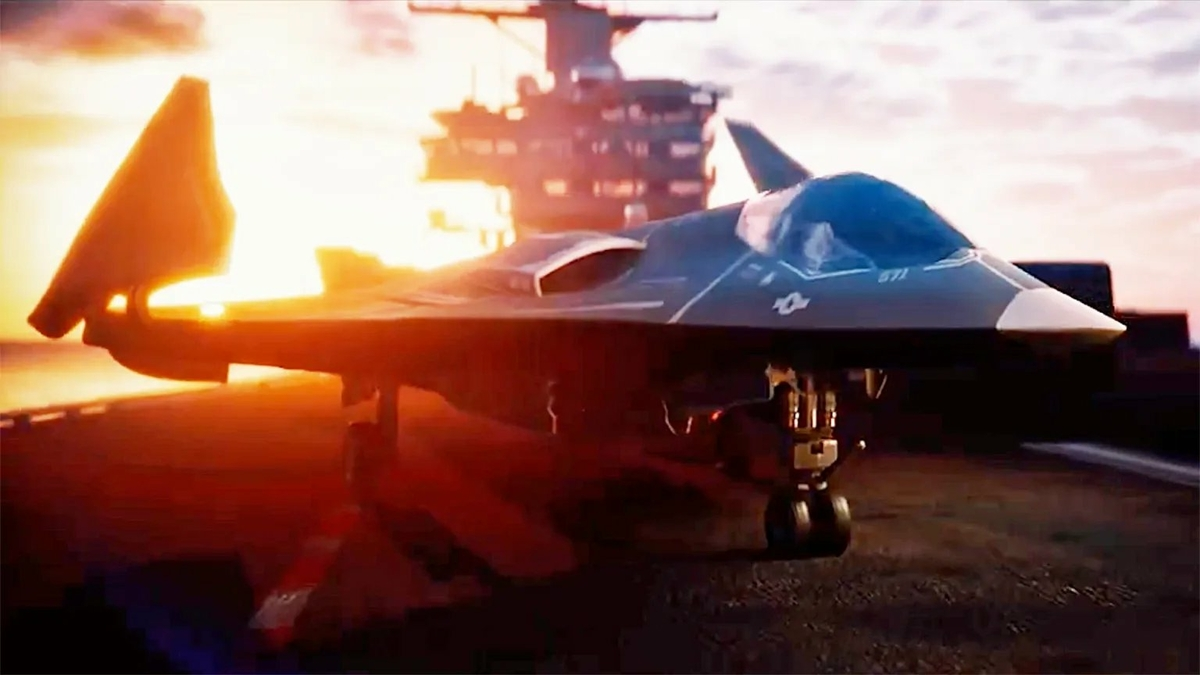
Manufacturer Northrop Grumman has released a conceptual video of its project for the US Navy’s F/A-XX program. The images show a tailless, stealth-designed sixth-generation fighter intended to replace the F/A-18 Super Hornet. This publication comes as the US Navy must choose in August between Northrop Grumman and Boeing for this strategic contract.
The defense giant Northrop Grumman posted a short video online presenting its candidate for the programme F/A-XX new generation combat aircraft for the US Navy.
The objective: to design the successor of the faithful F/A-18 Super Hornet and operate alongside the F-35C. All this, in full announcement by Admiral Daryl Caudle, Chief of Naval Operations, that the final choice between the two competitors, Northrop Grumman et Boeingwould be arrested from August.
The video is therefore a media offensive calculated to make an impression just before the final straight.
What does this new fighter plane really reveal?
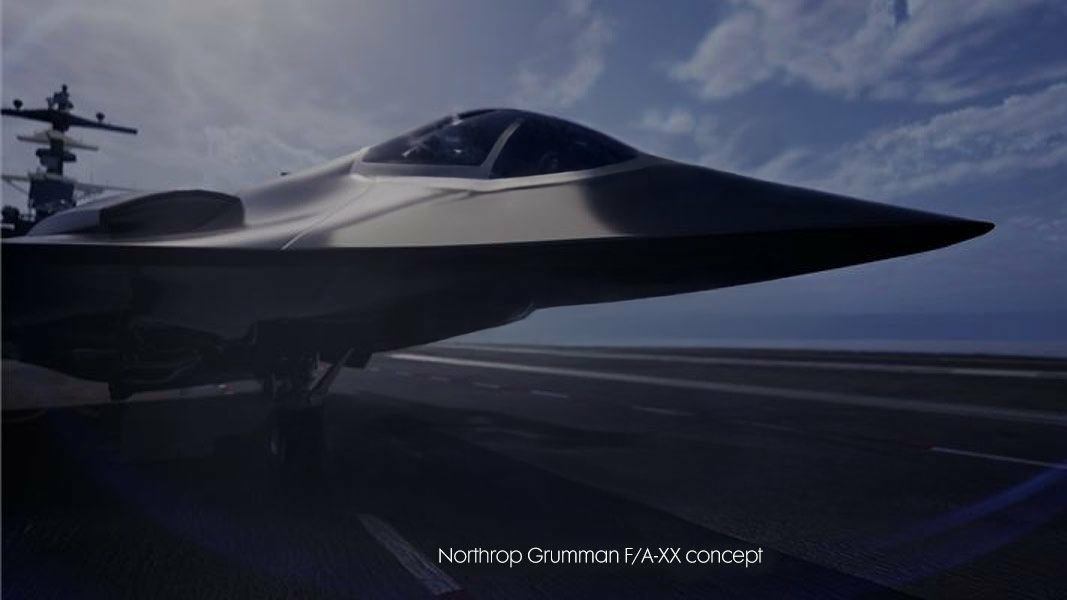
The direct answer is found in its architecture: a radically stealthy design. The 15-second video reveals a war machine with clean lines, a fighter without vertical tail (tailless design), a key feature for minimizing the radar signature.
There we observe dorsal air inlets, positioned far behind the cockpit, a complex technical solution aimed at both discretion and aerodynamic efficiency.
It’s no longer science fiction but the direction that science is taking.fighter plane of the future. The 3D rendering, while potentially modified for security reasons, offers other valuable clues.
The wings, featuring a slight dihedral on their outer sections, are clearly designed to fold, a essential requirement for operations on the cramped deck of an aircraft carrier.
Curved hatches suggest the presence of internal weapons baysanother prerequisite for stealth. The whole, although stylized, depicts a colossal machine, designed to carry a substantial military load while still being able to fit in the elevators of super-aircraft carriers.
Why is this F/A-XX program so strategic for the US Navy?
This is the aircraft carrier survival as a power projection tool. The F/A-XX program must respond to a major constraint: extending the range of opposing weapons.
The US Navy requires a range (distance that can be covered before having to return) approaching 1,000 miles (approximately 1,600 km), or 25% more than current fighters.

This is the essential condition for the carrier group to be able to operate out of range of enemy missiles. This device is also part of a broader ecosystem, called Next Generation Air Dominance (NGAD).
The F/A-XX will thus be the nerve center of a network combat. He will be supported by collaborative combat drones (CCA – Collaborative Combat Aircraft) and stealth tankers. The vision is that of air superiority of sixth generationwhere stealth, endurance, and networking take precedence over pure speed.
What future for the competition against Boeing?
The duel promises to be under high tension, with a possible surprise. If Boeing and Northrop Grumman are the two finalists, Admiral Caudle slipped in a sentence loaded with meaning.
He mentioned, without naming anyone, that “ one of the contractors is in a position where they can’t really deliver in the time frame we need “. A statement that sounds like a very direct warning.
This little sentence sheds harsh light on the colossal industrial challenges. The two companies are already involved in major programs: Boeing with the T-7 Red Hawk and Northrop with the B-21 Raider bomber.
The ability to produce in series, to maintain a schedule and a budget, will therefore be as decisive as the technical performance of the device. With this video, Northrop Grumman undoubtedly wants to emphasize that it is ready. A barely veiled message which could well designate a favorite even before the official decision in August.