




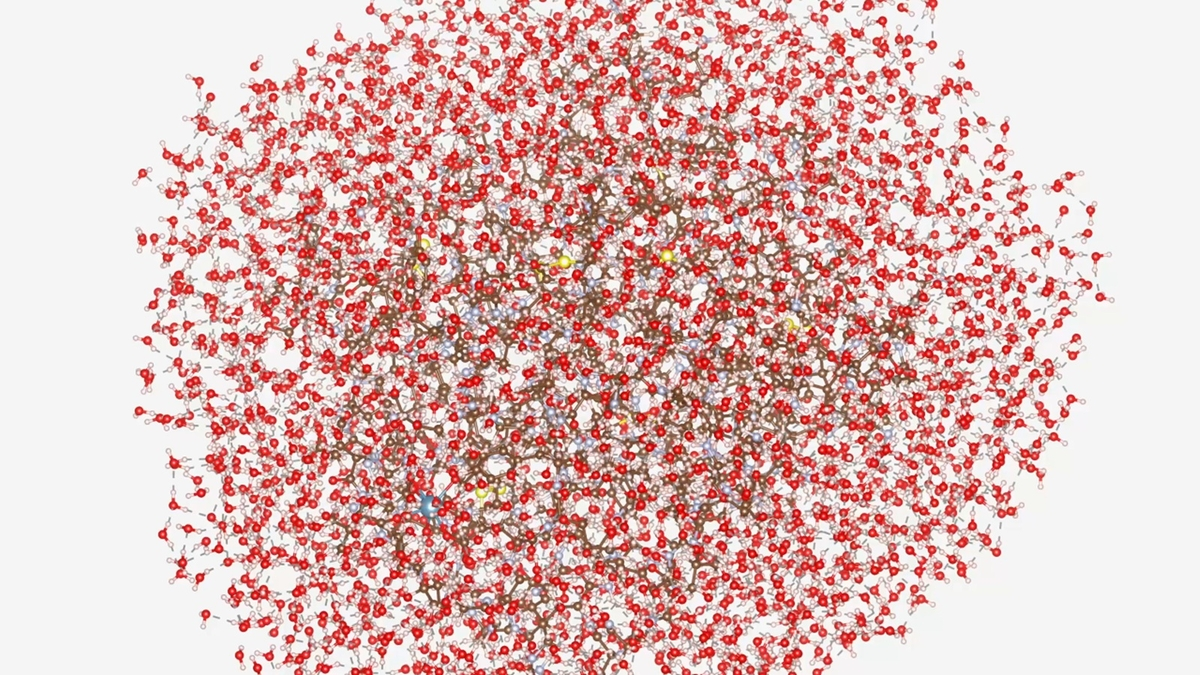
A new frontier has just been crossed. A team of researchers from the Cleveland Clinicfrom the Japanese institute THE KINGDOM andIBM announced that it had modeled a molecule of 12,635 atomsa juggernaut on a quantum scale.
Published in pre-print, this research shatters the previous record which concerned a molecule approximately 40 times smaller. The goal? Simulate with unprecedented precision “ protein-ligand complexes » (the interaction between a protein and a smaller molecule, often a potential drug), a fundamental issue for medical research.
What is this new quantum simulation record?
The record is the simulation of the quantum properties of a complex molecule counting 12,635 atoms. It is the largest biologically relevant molecule ever modeled using quantum processors.
This result was obtained by studying the interaction between a protein and a ligand, a type of molecular simulation crucial for understanding how future drugs might work in the human body.
This leap forward is colossal. Barely six months ago, the same method struggled to overcome a few hundred atoms. The researchers not only succeeded in multiplying the size by forty but they also improved the precision of the calculations by a factor of 210 in a key stage of the process.
This performance builds on previous work, notably the modeling of the Trp-cage molecule of 303 atoms, which had already made an impression.
How was this feat achieved?
The secret lies in a hybrid approach called “ quantum-centric supercomputing » par IBM. Rather than entrusting everything to quantum, the researchers made two types of machines work in tandem.
The brute force of classic supercomputers, Fugaku et Miyabi-Gserved to break down the enormous molecule into smaller, manageable fragments. This is where the magic happens.
These fragments were then analyzed by two quantum processors IBM Heron of 156 qubits. The latter calculated the states and energies of electrons, a task where thequantum computing excels because it “speaks” natively the language of quantum physics.
The results were sent back to the supercomputers to be reassembled in a never-ending ballet of calculations that lasted more than 100 hours. An innovative algorithm, named EWF-TrimSQDwas the key to orchestrating this collaboration and drastically reducing the computational load.
Why is this progress crucial for the future?
This demonstration is a giant step towards a concrete and highly anticipated application: accelerating the drug discovery. Understanding precisely how a drug candidate binds to a target protein is one of the most expensive and complex problems in biomedical research.
Classical computers struggle to provide exact answers for large molecules, forcing laboratories into decades of research and colossal investments.
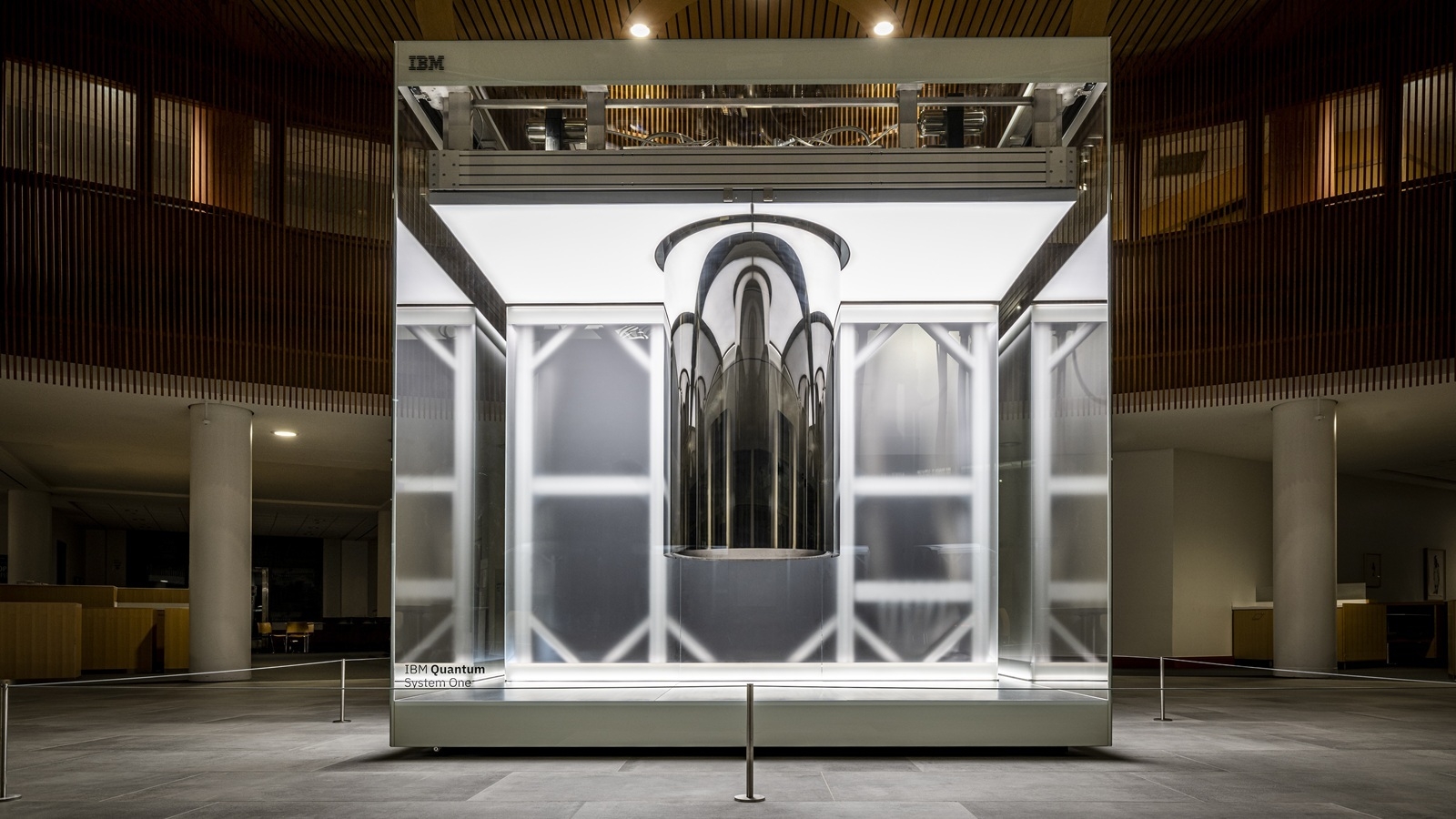

By proving that a hybrid system can already tackle molecules of realistic size, the team opens a new perspective. According to Kenneth Merz, the lead author of the study, this “ significantly extends the scale of possible molecular simulations ».
Ultimately, the goal is to predict the effectiveness of a drug even before laboratory testing, thereby reducing development cycles and costs dramatically.
It’s a door that opens ajar on the simulation of enzymatic mechanisms or catalysts, phenomena today studied almost exclusively through experimentation.
Is this the start of a new era for research?
It is tempting to declare victory, but the researchers themselves remain measured. This record is a first fundamental step rather than an outcome. The question of the quantum advantagethat point where a quantum computer rigorously and systematically outperforms the best classical supercomputer for a given task, remains open.
The current hybrid approach is a clever way to make quantum machines useful now, despite their imperfections and their propensity for errors.
This experiment proves that relevant scientific results can be obtained with existing equipment. Progress is no longer measured only by the number of qubits or error rates but by the size and significance of the problems that we can begin to solve.


