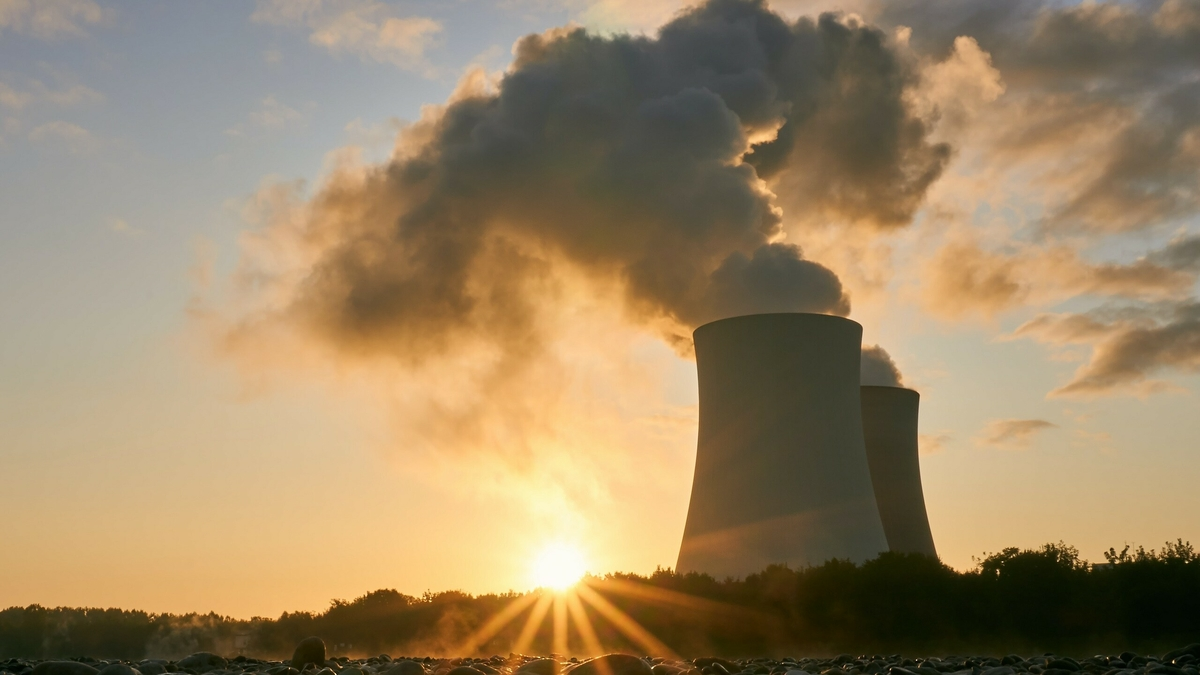
Faced with the intense heat wave, EDF shut down 3 nuclear reactors and reduced the power of 8 others. This measure aims to protect aquatic ecosystems, as hot water discharges from power plants threaten the fauna and flora of already overheated rivers. An exemption was, however, granted to the Bugey power station to guarantee the stability of the national electricity network.
It’s a real headache that has befallen the French energy company EDF. While France was suffocating under a dome of heat from the third heatwave, with several dozen departments on red alertthe operator had to make drastic decisions.
At the heart of the problem lies a physical and regulatory constraint: the cooling facilities. Nuclear power plants are gigantic kettles which need rivers or the sea to evacuate their heat.
But when the latter are already at high temperatures, the system reaches its limits, forcing a difficult choice between energy production and preservation of biodiversity.
Why is the heatwave forcing the shutdown of nuclear power plants?
The main reason is the protection of the river environment. To operate, a nuclear power plant takes water from a river or the sea in order to cool its circuits.
This water, once heated in contact with the system, is then released into its natural environment. However, the Nuclear Safety and Radiation Protection Authority (ASNR) imposes very strict temperature limits not to exceed so as not to harm aquatic life. Excessive water heating can cause fish suffocation and harmful algae blooms.
When the river temperature is already abnormally high due to a heat wavethe room for maneuver for EDF becomes almost zero. Discharging even hotter water would cross regulatory thresholds.
The hotter it gets, the more electricity demand for air conditioning increases, but the less power plants can produce. The only solution is therefore to reduce the power of the reactor, or even to shut it down completely, to limit thermal discharges and stay within the legal framework.
Which nuclear reactors are concretely impacted in France?
The nuclear map of France has taken on the appearance of a medical bulletin. EDF has confirmed the complete shutdown of three reactors strategically located on rivers particularly affected by rising temperatures.
This is reactor no. 2 of I golf (Tarn-et-Garonne) on the banks of the Garonne, from n°3 of the central Bugey (Ain) on the Rhône, and n°2 of Choose (Ardennes), which draws from the Meuse.
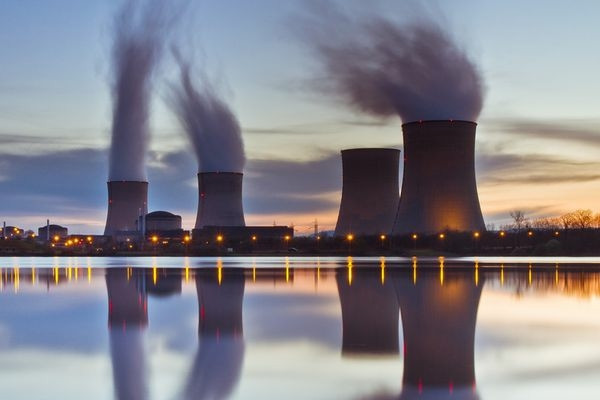

To this list are added power adaptations on eight other units. This concerns the reactors of Saint-Alban (Isère), from Blayais (Gironde), the other units of Bugey (n°4 and 5) and Choose (n°1).
Even the central Tricastin (Drôme) saw its power momentarily curbed before returning to normal. These decisions affect a significant part of our production capacities, weakening the balance of the network when it is most in demand. These adjustments on multiple nuclear reactors illustrate the extent of the phenomenon nationally.
How does the State juggle environmental protection and network security?
Faced with this dilemma, the government had to play a balancing act. To avoid a risk of destabilization of the electricity network, a exceptional exemption was granted to the Bugey power plant.
Published in the Official Journal, this authorization, requested by the network manager RTE (Electricity Transport Network), temporarily allows the plant to exceed the regulatory thresholds for thermal discharges into the Rhône. It is an arbitration which illustrates the increasing tension between ecological imperatives and the need to ensure the continuity of electricity production.
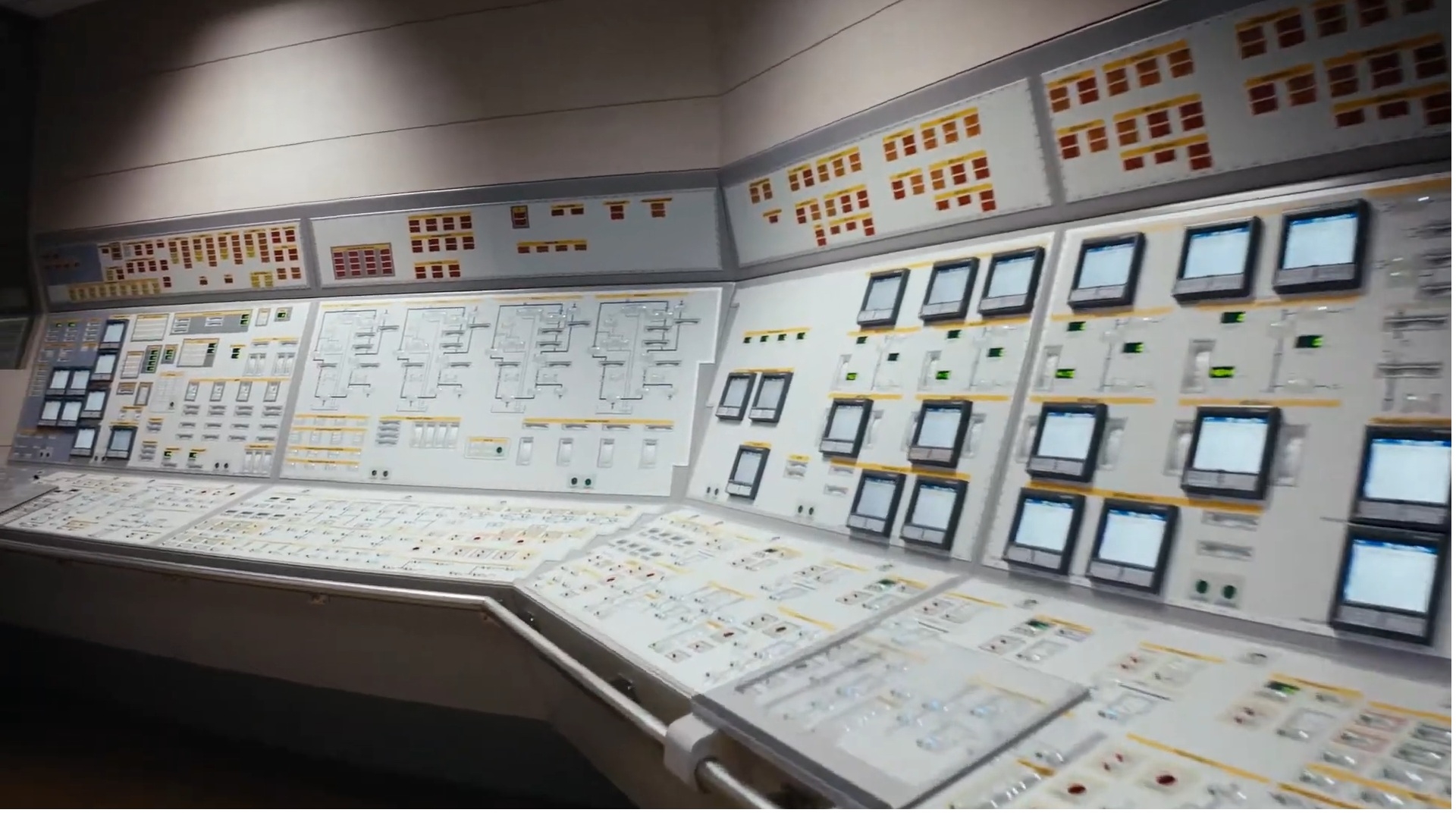

This decision is not without compensation. It is accompanied by a “ reinforced environmental monitoring “. In short, we agree to do heat the river a little morebut keeping a very careful eye on the consequences for the ecosystem.
This situation, which is now repeated almost every summer, raises a fundamental question about the resilience of our energy model. The exemption is a short term solution but it does not resolve the structural problem of the dependence of our nuclear power plants to increasingly capricious waterways.
Is French nuclear power doomed by global warming?
The French nuclear fleet is in any case facing its biggest challenge since its construction. Heatwave episodes, likely to become more frequent and more intense, reveal a systemic weakness.
Power plants built on the banks of rivers, the majority in France, are on the front line. It is a weak point in our energy sovereignty which is exposed to broad daylight, with a dependence on weather that we no longer control at certain times of the year.
This new situation requires us to rethink the future. Future reactors, such as EPR2will have to integrate cooling systems in closed circuit with cooling towersless dependent on river flow, or be massively located by the sea, where the mass of water is capable of absorbing heat without significant variation.
For the existing fleet, costly adaptations will be inevitable. The question now is how and at what cost we will adapt this industrial heritage to a climatic reality radically different from that for which it was designed.