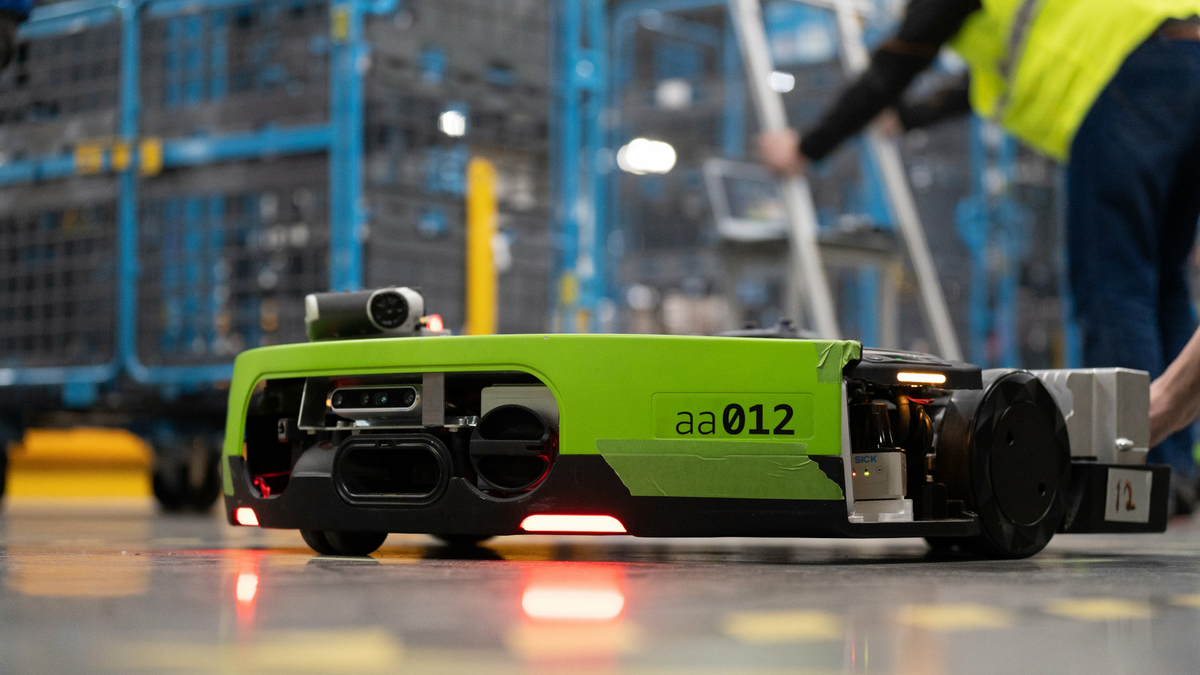
For the automation of its distribution centers, Amazon presents the future generation of its autonomous robot, Proteus. This improved version is designed to interact directly with employees via the natural language.
This progress is part of a 10 billion euro investment plan for the modernization of the European logistics network.
Proteus to transform warehouse work
The main innovation of this new Proteus lies in its ability to understand conversational instructions using advanced AI. Previously, employees had to use programming interfaces to direct these robots.
” You tell him what needs to be done. It determines the priority, the route, the right timing. It becomes your assistant for moving goods “, explains Scott Dresser, vice president of Amazon Robotics.
Deployed in 25 distribution centers across the United States, the first version of Proteus was designed for physically demanding tasks like moving carts weighing up to 400 kg, but only in dock areas. The new version can operate in all distribution centers.
This extension of the scope of action allows you to transport containers as soon as they arrive on site, move them between workstations and support employees over long distances.
Amazon says the technology will allow employees to focus on higher value-added missions such as inventory flow management and quality control. The system is currently in a pilot phase in the company’s innovation laboratories, with deployment planned in Europe for the first half of 2027.
Amazon’s robotics strategy
Proteus is just one piece of the puzzle of Amazon’s ambitious robotics roadmap.
The company also plans to deploy other technologies on a larger scale, such as Vulcanits first robot with a sense of touch, capable of identifying and manipulating objects in dense environments.
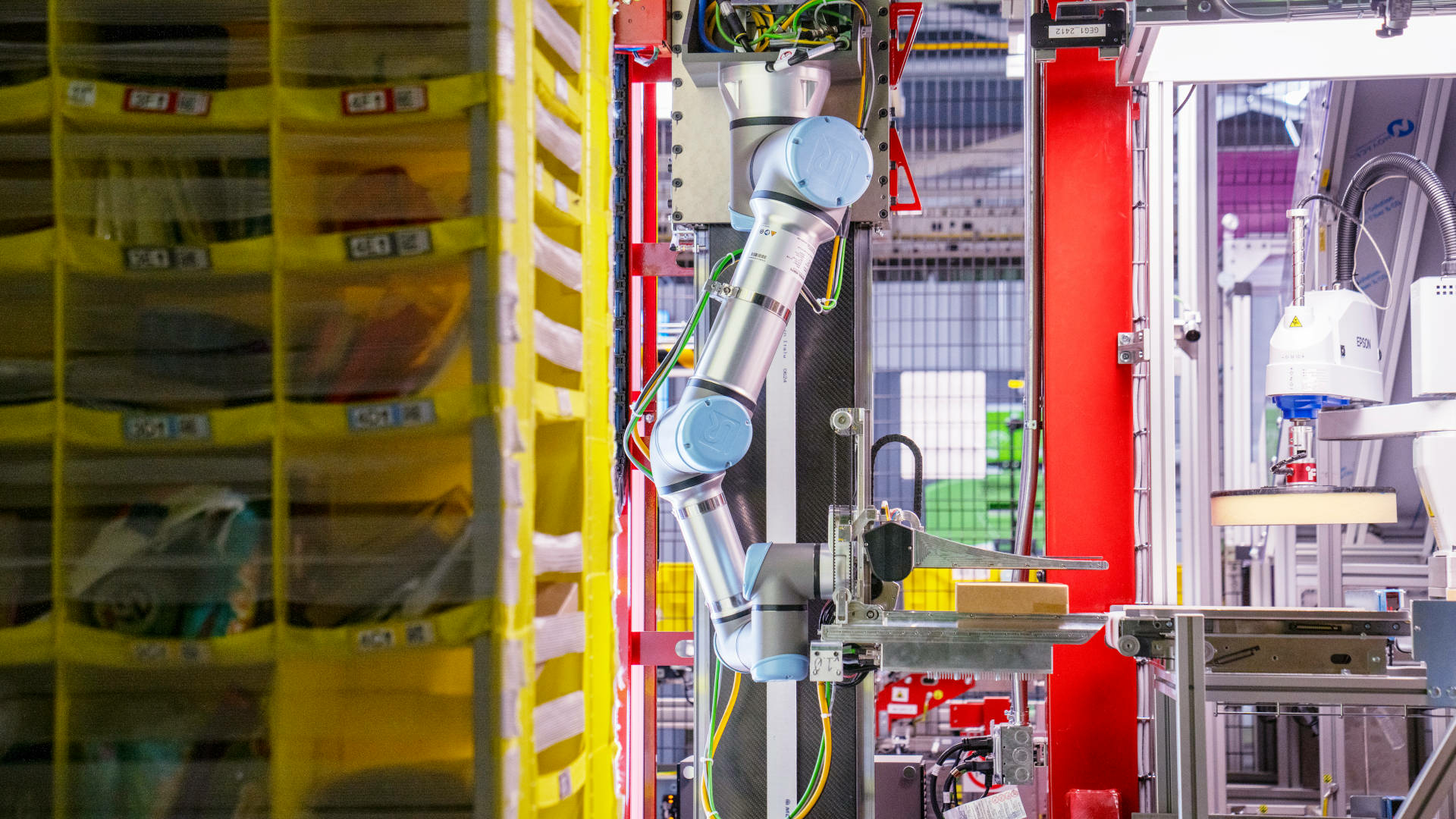

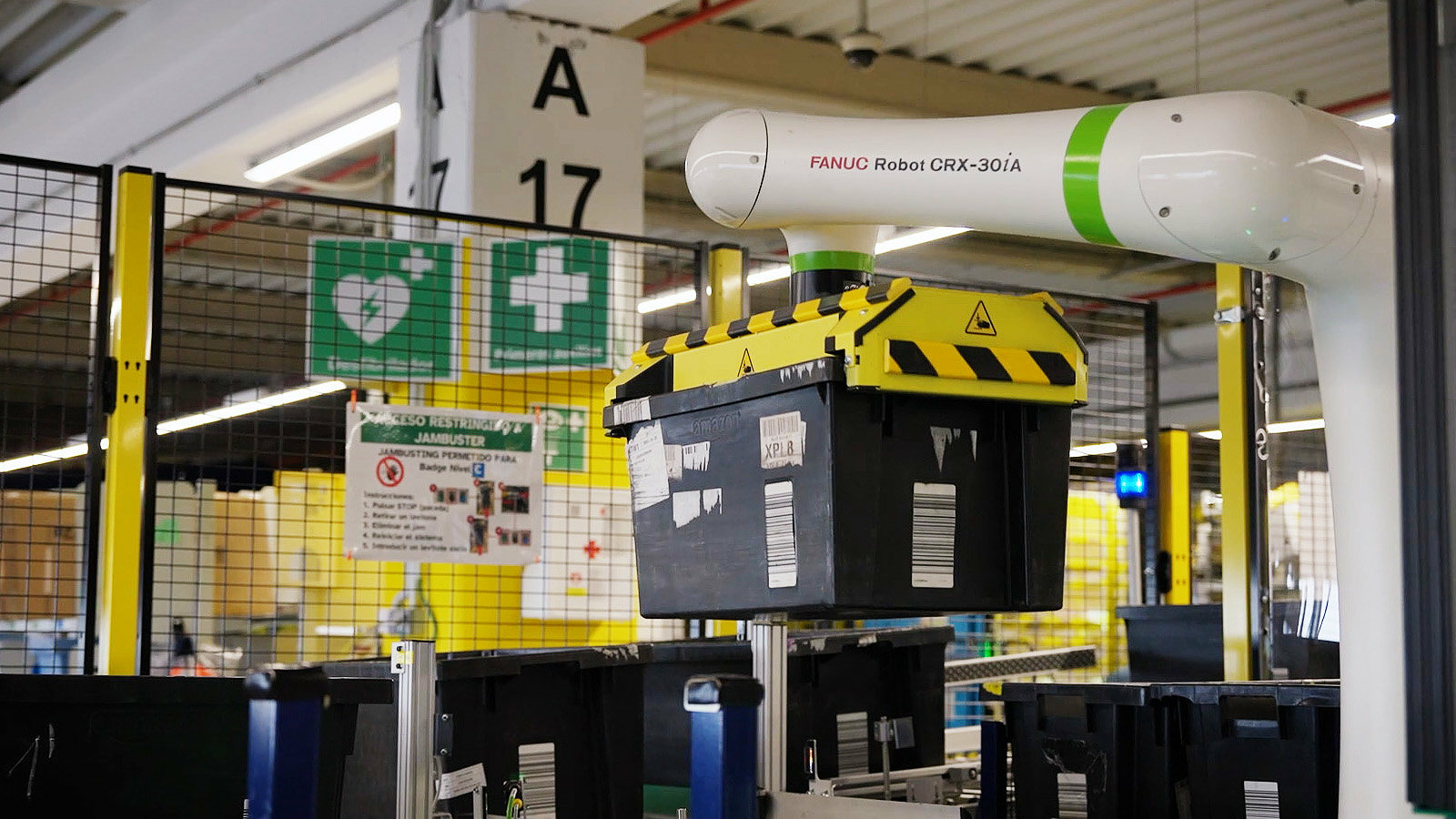
Another innovation, called STARKis a collaborative robotic system for handling bins, starting from the idea of an employee to reduce repetitive and dangerous tasks. Initially tested in Barcelona, STARK is expected to be deployed on 15 European sites by 2027.

What is the impact of this automation on employment?
Amazon insists that this automation is designed to support workers rather than replace them; and is accompanied by the creation of 25,000 additional jobs in its European distribution centers in the years to come.
This essentially involves the creation of new professions in industrial reliability, maintenance and engineering which are being highlighted.
However, safety remains a sensitive point in highly automated installations. Furthermore, even if it concerned different branches, Amazon has significantly reduced its workforce over the last year with the desire to reduce bureaucracy and accelerate the adoption of AI.