In the rapidly evolving landscape of artificial intelligence, companies are constantly seeking innovative ways to integrate AI into their operations to drive efficiency, foster innovation, and maintain a competitive edge. CyberAgent, a leading Japanese internet services company with diverse interests spanning advertising, media, and gaming, stands as a prime example of successful large-scale AI adoption. This case study delves into how CyberAgent leveraged OpenAI’s ChatGPT Enterprise and Codex to empower over 100 teams, achieving remarkable productivity gains and improving decision-making across its extensive business portfolio.
CyberAgent’s journey with AI is not merely about adopting new tools; it’s a testament to a strategic vision that prioritizes technological advancement and employee empowerment. By integrating these powerful AI models, CyberAgent has not only streamlined complex workflows but also cultivated a culture of innovation, demonstrating the tangible benefits of AI at an enterprise scale.
The Challenge: Unlocking AI’s Potential Across a Diverse Organization
CyberAgent operates a vast and varied business empire, encompassing digital advertising, online media platforms, and a highly successful gaming division. This diversity, while a strength, also presented a significant challenge: how to uniformly and effectively deploy cutting-edge AI technologies to benefit each unique business unit. The goal was not just to introduce AI, but to embed it deeply into daily operations, making it an indispensable tool for every employee, from developers and designers to marketers and content creators.
Initial Hurdles and Strategic Objectives
Before the widespread adoption of ChatGPT Enterprise and Codex, CyberAgent faced several common enterprise AI challenges:
- Fragmented AI Initiatives: Different teams were exploring AI solutions independently, leading to duplicated efforts and inconsistent results.
- Skill Gap: A need existed to upskill employees across various departments to effectively utilize AI tools, regardless of their technical background.
- Data Security Concerns: Deploying AI models, especially those involving proprietary data, required robust security protocols and data privacy assurances.
- Measuring ROI: It was crucial to establish clear metrics to quantify the impact of AI integration on productivity, efficiency, and business outcomes.
- Scalability: Any adopted solution needed to be scalable to support hundreds of teams and thousands of employees without significant infrastructure overhaul.
CyberAgent’s strategic objectives were clear: centralize AI efforts, democratize access to advanced AI tools, enhance employee productivity, accelerate development cycles, and improve the quality of decision-making across all business units. They sought a solution that could not only address these challenges but also foster a pervasive culture of AI-driven innovation.
The Solution: ChatGPT Enterprise and OpenAI Codex
After careful evaluation, CyberAgent identified ChatGPT Enterprise and OpenAI Codex as the ideal platforms to meet their ambitious goals. These tools offered the necessary blend of advanced AI capabilities, enterprise-grade security, and ease of integration required for a company of CyberAgent’s scale and diversity.
ChatGPT Enterprise: Empowering Collaboration and Content Creation
ChatGPT Enterprise provided a secure, scalable, and powerful conversational AI platform. Its advanced natural language processing capabilities allowed teams to interact with AI in a highly intuitive manner, transforming how they approached tasks such as content generation, brainstorming, and information retrieval. The enterprise version offered enhanced privacy controls, ensuring that CyberAgent’s proprietary data remained secure and was not used to train public models.
- Content Generation: Marketing teams leveraged ChatGPT Enterprise to quickly draft ad copy, social media posts, and campaign ideas, significantly reducing the time spent on initial content creation.
- Brainstorming and Ideation: Product development and media teams used the AI to explore new concepts, generate creative solutions, and refine ideas, fostering a more dynamic and innovative environment.
- Information Synthesis: Employees could rapidly summarize complex documents, extract key insights, and answer specific queries, improving efficiency in research and decision-making processes.
- Customer Support Enhancements: While not a primary focus for this case study, internal teams utilized the model for drafting responses and improving internal knowledge bases, which indirectly benefits external customer interactions.
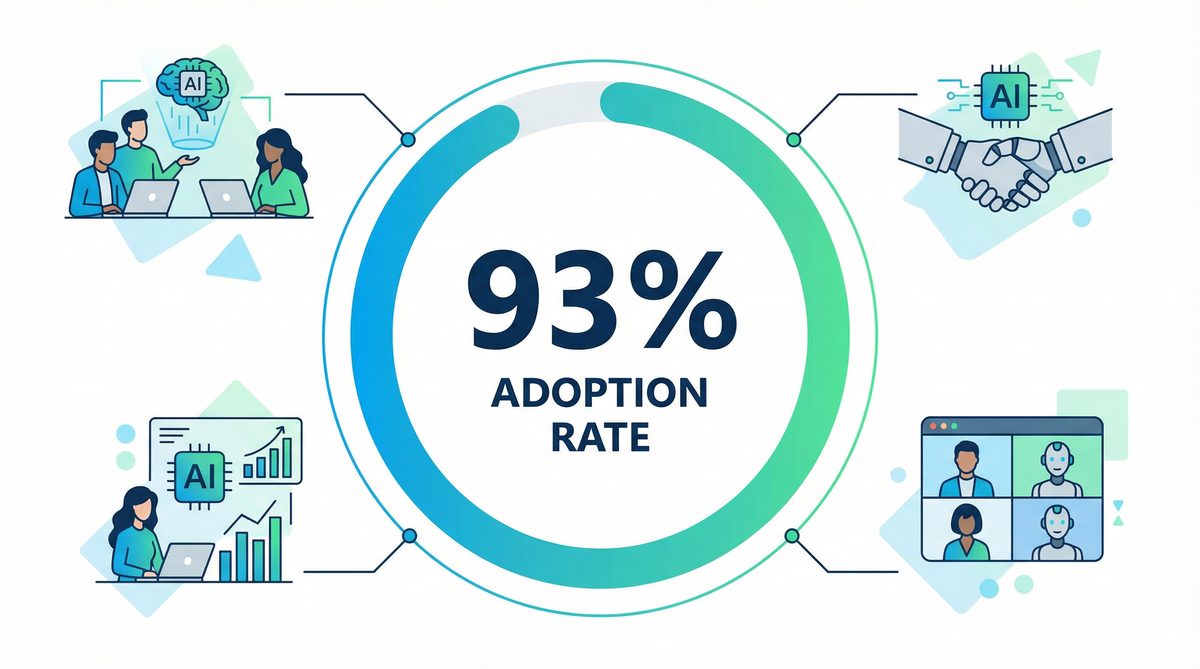
The immediate impact was evident in the astounding adoption rate: CyberAgent achieved an impressive 93% monthly active usage of ChatGPT Enterprise across its organization. This high engagement underscored the platform’s value and its seamless integration into daily workflows, demonstrating a strong return on their investment in AI technology. The ease of use and the immediate productivity boosts made it an indispensable tool for a wide array of tasks, from drafting emails to generating complex reports.
OpenAI Codex: Revolutionizing Development and Documentation
While ChatGPT Enterprise addressed broader communicative and creative needs, OpenAI Codex emerged as a game-changer for CyberAgent’s technical teams. Codex, a model specifically trained on vast amounts of code, allowed developers to translate natural language into code, automate repetitive coding tasks, and enhance code quality. This capability was particularly valuable for a company with a strong emphasis on software development in its gaming and media divisions.
- Code Generation and Refinement: Developers utilized Codex to generate boilerplate code, suggest improvements, and debug existing codebases. This accelerated development cycles and reduced the incidence of errors.
- Design Evaluation: Codex assisted in evaluating UI/UX design specifications by generating code snippets or analyzing design patterns for potential implementation challenges, bridging the gap between design and development.
- Code Review Assistance: The AI model was employed to provide preliminary code reviews, identifying potential bugs, security vulnerabilities, or areas for optimization, thereby streamlining the peer review process. This augmented human reviewers, allowing them to focus on more complex logical issues.
- Maintaining Knowledge Documents (e.g., AGENTS.md): One of the most innovative applications of Codex at CyberAgent was its use in creating and maintaining critical internal documentation. For instance, documents like
AGENTS.md, which detail specific AI agent configurations and best practices, were dynamically updated and refined with the help of Codex. This ensured that institutional knowledge was consistently current and accessible, a crucial aspect for a company with rapidly evolving AI initiatives. For more on how large language models are transforming documentation, see our article on Google Introduces Duet AI Pricing: Unleashing the Power of AI-Driven Productivity.
The integration of Codex significantly bolstered the efficiency of CyberAgent’s engineering teams, enabling them to deliver projects faster and with higher quality. The ability to automate mundane coding tasks freed up developers to focus on more complex problem-solving and innovation, directly impacting the competitiveness of their gaming and media products.
Impact and Outcomes: Tangible Gains Across the Board
The strategic deployment of ChatGPT Enterprise and Codex yielded substantial benefits across CyberAgent’s diverse operations. The impact was measurable in terms of productivity, decision-making quality, and overall innovation capacity.
Enhanced Productivity and Efficiency
The most immediate and widespread impact was a significant boost in productivity. Teams reported substantial time savings on tasks ranging from content creation to code generation. For example, marketing teams could generate multiple variations of ad copy in minutes, a task that previously took hours. Development teams experienced faster iteration cycles due to AI-assisted coding and review processes.
- Reduced Time-to-Market: Faster development and content creation cycles led to quicker launches of new features, campaigns, and products across advertising, media, and gaming.
- Optimized Resource Allocation: By automating routine tasks, employees could reallocate their time to more strategic and creative endeavors, maximizing human potential.
Improved Decision-Making
Access to AI-powered insights and rapid information synthesis capabilities empowered employees at all levels to make more informed decisions. ChatGPT Enterprise facilitated quick analysis of market trends, competitive landscapes, and internal data, providing a clearer picture for strategic planning. The ability to quickly draft and iterate on proposals also contributed to more robust decision-making processes.
- Data-Driven Strategies: AI helped sift through vast amounts of data, identifying patterns and insights that might otherwise be missed, leading to more effective business strategies.
- Scenario Planning: Teams used AI to explore various hypothetical scenarios and their potential outcomes, enhancing risk assessment and strategic foresight.
Fostering a Culture of Innovation
Beyond tangible metrics, CyberAgent observed a profound cultural shift. The widespread availability and ease of use of AI tools encouraged employees to experiment, innovate, and integrate AI into novel applications. This bottom-up innovation was crucial for maintaining CyberAgent’s leadership position in dynamic industries. The transformation of creative workflows is a topic we often explore, and for those looking to deepen their understanding of how to structure and reuse these AI interactions, our article From Prompts to AI Skills: How to Build Reusable Prompt Workflows for ChatGPT, Claude, and Codex delves into transforming simple prompts into powerful, reusable AI skill workflows, covering prompt chaining, template design, and cross-platform compatibility for tools like ChatGPT, Claude, and Codex.
- Democratization of AI: Non-technical employees gained access to powerful AI capabilities, breaking down traditional barriers to innovation.
- Continuous Learning: The integration of AI tools spurred a continuous learning environment, as employees explored new ways to leverage these technologies for their specific roles.
Specific Examples of Impact
The application of these AI tools was highly diverse:
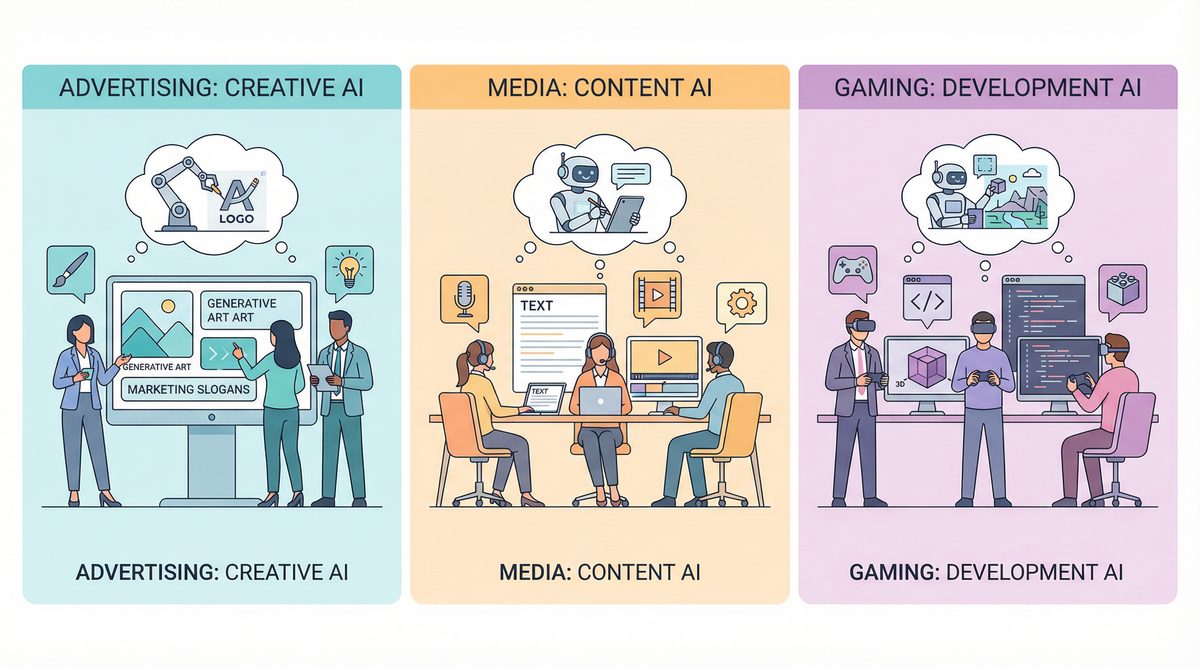
- Advertising Business: Marketing specialists used ChatGPT Enterprise to generate personalized ad creatives and optimize campaign messaging based on target audience profiles, leading to higher engagement rates.
- Media Business: Content creators and editors leveraged the AI to brainstorm article ideas, summarize lengthy reports for quick consumption, and even assist in drafting scripts for video content, significantly speeding up production cycles.
- Gaming Business: Game developers employed Codex for accelerating code development, testing game logic, and even assisting in the procedural generation of game assets or dialogue, thereby reducing development costs and time. The insights gained from large language models in game development are constantly evolving; our insights into Case Study: How a SaaS Startup Cut Development Time by 60% Using OpenAI Codex offer further perspectives.
The success at CyberAgent demonstrates that with the right strategy and tools, large enterprises can not only adopt AI but also integrate it so deeply that it becomes an intrinsic part of their operational DNA. The 93% monthly active usage of ChatGPT Enterprise is a powerful indicator of this successful integration, showcasing user acceptance and the perceived value of the tools.
Lessons Learned and Future Outlook
CyberAgent’s journey provides valuable lessons for other organizations looking to scale AI adoption:
- Top-Down Support and Bottom-Up Adoption: While leadership provided the strategic impetus, the widespread adoption was driven by employees discovering practical applications in their daily tasks.
- Focus on Enterprise-Grade Solutions: Prioritizing secure, scalable, and privacy-conscious AI platforms like ChatGPT Enterprise is crucial for large organizations dealing with sensitive data.
- Continuous Training and Education: Ongoing support and training are essential to ensure employees can maximize the utility of AI tools and adapt to new features.
- Measure and Iterate: Continuously monitoring usage, gathering feedback, and measuring impact allows for refinement of strategies and expansion into new use cases.
Looking ahead, CyberAgent plans to further deepen its integration of AI, exploring more sophisticated applications of large language models and code-generating AI. This includes developing custom AI agents, enhancing predictive analytics capabilities, and further automating complex business processes. The foundational success with ChatGPT Enterprise and Codex has paved the way for an even more AI-driven future for the company.
CyberAgent’s experience serves as a compelling case study of how a large, diverse organization can successfully scale AI across its operations. By strategically deploying advanced AI tools, they have not only achieved significant productivity gains and improved decision-making but have also cultivated a robust culture of innovation, setting a new benchmark for enterprise AI adoption.
Access 40,000+ AI Prompts for ChatGPT, Claude & Codex — Free!
Subscribe to get instant access to our complete Notion Prompt Library — the largest curated collection of prompts for ChatGPT, Claude, OpenAI Codex, and other leading AI models. Optimized for real-world workflows across coding, research, content creation, and business.
Access Free Prompt Library