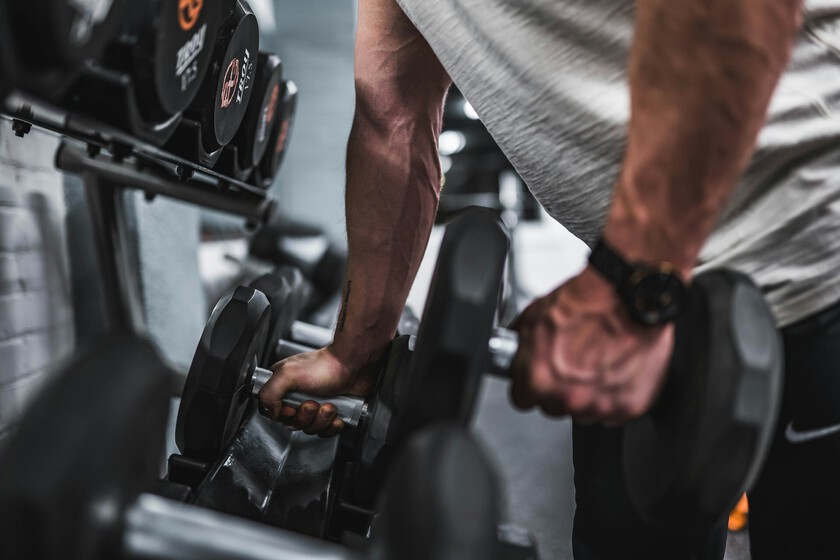
For decades, when we thought about doing physical exercise, our minds almost automatically went to doing more cardiovascular activity. Running, swimming or cycling have been star recommendations to keep the heart healthy and extend life expectancy. Or at least live with a better quality of life. However, little by little we are normalizing the need to prioritize strength exercises at any age.
How long. This is one of the big questions that anyone who needs to quantify the amount of exercise they do per day can ask themselves. There are clear recommendations, such as walking for an hour a day at a brisk pace, but in terms of strength we were quite orphaned.
Now a new and monumental analysis has come to put exact figures on what until now were general recommendations, establishing a precise time window to maximize our years of life.
What has been seen. The finding comes from a large observational study that included 147,374 participants and an exhaustive follow-up that extended up to 30 years. Its good results have been published in the magazine British Journal of Sports Medicine.
And when it comes to lifting weights or doing resistance exercises, intuition could dictate that “the more, the better”, but human physiology provides more limited metrics. The study data found that spending between 90 and 119 minutes weekly in resistance training routines was directly associated with lower overall mortality. In other words, spending between an hour and a half and two hours a week working our muscles is linked to a lower risk of dying from any cause.
We have to be adjusted. What is truly revealing about this study lies in what happens when those 120 minutes of weekly exercise are exceeded. Anyone might think that the longer the time, the less likely you are to develop a major disease, but the reality is that above this time the benefits seem to stagnate.
This shows that maximum efficiency is achieved in that limited period of time, demystifying the need to spend endless days in the weight room to obtain many more protective advantages at the metabolic level that allow us to extend our life a little more or make it of a higher quality.
You have to combine it. Although strength training shines in this study, abandoning cardiovascular exercises would be a profound mistake. Here the research group itself pointed out that combining strength exercises with aerobic activity offered the best possible results, since this duality confirms that a hybrid approach dramatically maximizes long-term survival benefits.
It’s backed up. In the past there were reviews that explored the relationship between training and mortality, this being one more that gives it much more strength so that it ultimately continues to be recommended for consultation to anyone, regardless of age. Because exercise here does not understand age, and strength exercise can be for the youngest, but also for the elderly who need to conserve their muscle to have a better quality of life in their last years of life.
Images | Anastase Maragos
In | In the fever to train strength, the gym has faced competition: more and more people train on the street