In April 1986, just days after the Chernobyl accident, Soviet scientists feared that radiation had turned the area into a biological desert for generations. Exactly the opposite happened. With the disappearance of human activity, the forest recovered the lost ground and the exclusion zone ended up becoming one of the largest wildlife refuges in Europe.
The animal cameras that recorded the war. I told it this week in a report in The New York Times. When Ukrainian conservationist Svitlana Kudrenko installed dozens of camera traps throughout the Chernobyl exclusion zone in 2020, her goal was much more routine: to study how populations of wolves, lynxes, deer, foxes and other species that had thrived after decades without human presence were evolving.
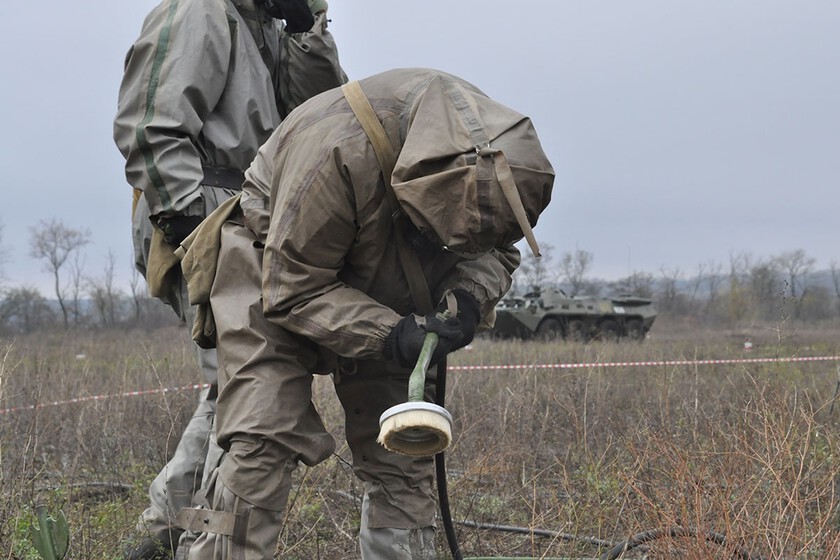
Two years later, Russia invaded Ukraine and turned Chernobyl into a makeshift military base. The soldiers arrived, the tanks went through the forests, the explosions began… and the cameras never stopped recording.
An unprecedented experiment. The Russian occupation barely lasted a little more than a month, but it left behind an extraordinary scientific opportunity. As the cameras continued to operate throughout the invasion, the researchers were able to compare the behavior of eleven species before, during and after the troops’ passage.
In addition, they crossed these images with testimonies from people who remained in the area and with satellite data capable of detecting fires, building an almost real-time portrait of how fauna responds to a war.
The uneven reaction of the animals. One of the most interesting findings was that there was no universal answer. Roe deer, especially shy animals linked to the forest, began to appear much less as the intensity of military activity increased.
Red deer, on the other hand, were detected more frequently, probably because they fled from open areas where tanks, vehicles and explosions were concentrated, thus increasing the chances of being recorded by cameras.

The war changed the forest’s schedules. The differences were not limited to the number of animals observed. Red deer changed their routines and began to be more active during the day and less active at night.
Foxes and hares also reduced some of their nocturnal activity, although the latter reappeared precisely on the days when the satellites detected fires, an indication that they were trying to escape the fire caused by the fighting.
Spaces that did not move. On the contrary, not all the inhabitants of Chernobyl reacted in an obvious way. The researchers found few changes in species such as wolves or Eurasian lynxes, although they acknowledge that the conclusions are more limited because they were photographed much less frequently.
They also raise another possibility: the enormous size of the exclusion zone and the low human presence accumulated over decades perhaps cushioned part of the impact that a similar conflict would have had on a much more altered ecosystem.
The war left another invisible victim: nature. The study, published in the journal Science, does not aim to measure the total ecological damage of the invasion, but rather to observe how the fauna reacted while everything was happening. Even so, its authors remember that armed conflicts also destroy habitats, cause fires, introduce pollution and increase the mortality of numerous species.
As ecologist Kaitlyn Gaynor summarizes, animals are involuntary spectators of human wars and we still know very little about the consequences that these episodes leave them with.
Chernobyl and the paradox. For decades, the exclusion zone symbolized the largest nuclear disaster in history. It later became an unexpected refuge for wildlife.
Finally, the Russian invasion added a third, equally improbable chapter: a natural laboratory where the very cameras installed to study animals ended up recording one of the few involuntary experiments on how an entire ecosystem responds when war breaks out in the middle of the forest.
Imagen | Ministry of Defense
In | The men who closed the new Chernobyl hole: “Destiny gave us an opportunity to test ourselves to the limit”
In | We had been wondering for years why the Chernobyl wild boars were so radioactive. The answer was not in the accident